


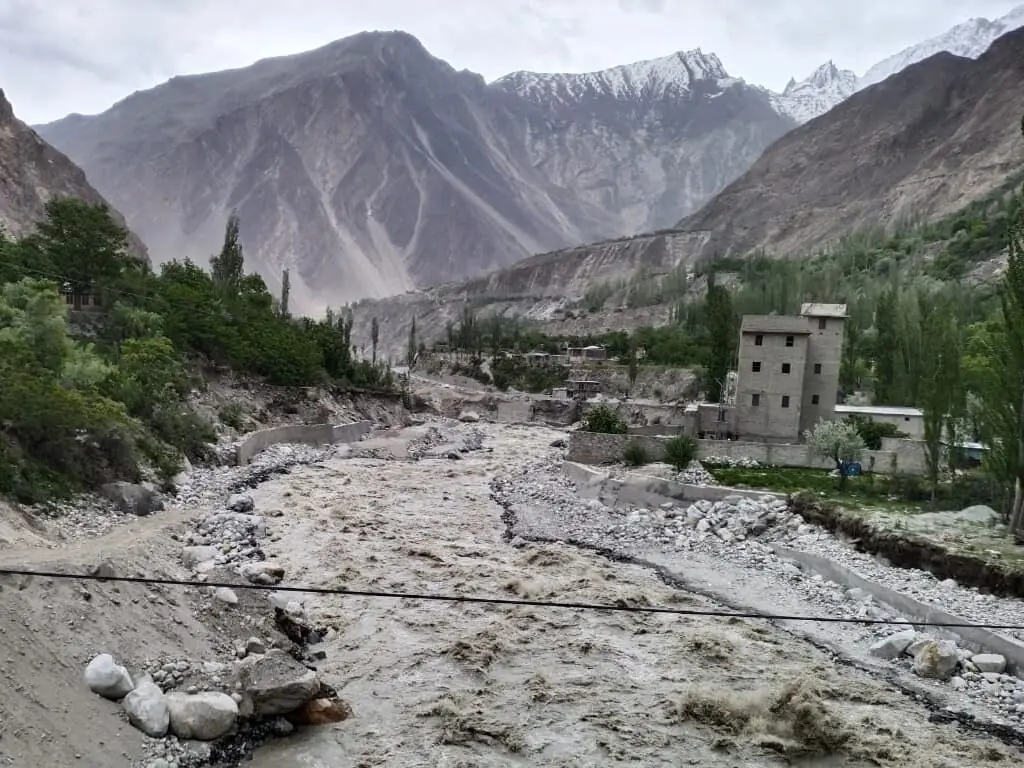

ISLAMABAD: Climate expert Khan Faraz has warned that rising temperatures across northern Pakistan are accelerating glacier melt and increasing the risk of Glacial Lake Outburst Floods (GLOFs) in vulnerable mountain regions.
Citing recent observations by the Pakistan Meteorological Department, he noted that winter rainfall and snowfall remained below normal across northern areas, while persistent clear skies during the first 22 days of February 2026 resulted in unusually high temperatures, particularly in Gilgit-Baltistan.
He explained that a notable rise in minimum temperatures has reduced overnight refreezing — a natural process that normally slows glacier melt. The sustained temperature anomaly is accelerating snow and glacier melt, especially at mid and lower altitudes, while reduced night time cooling is increasing melt water runoff into glacial lakes.
According to the Pakistan Meteorological Department, the rapid melting has led to greater water accumulation in moraine - and glacier-dammed lakes, raising the likelihood of sudden outburst floods in downstream valleys. The department has projected a strong probability of above-normal temperatures over northern parts of the country, including Gilgit-Baltistan and Azad Jammu and Kashmir.
If the warming trend persists, vulnerable districts such as Gilgit, Ghizar, Hunza, Bunji, Chilas and Astore could face an elevated risk of GLOF events in the coming months.
He urged provincial and local administrations to review contingency plans, ensure timely dissemination of early warnings and prepare evacuation arrangements to safeguard communities living in downstream valleys.
Copyright Business Recorder, 2026




















Comments
Comments are closed for this article.