


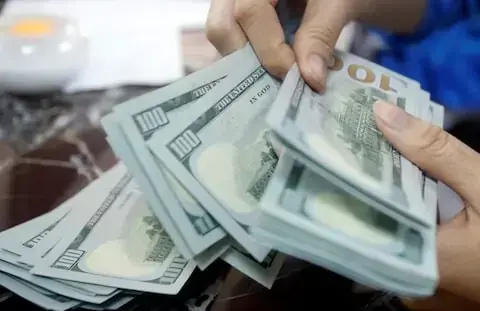

NEW YORK: The dollar resumed its climb on Thursday, rebounding from a brief pullback from three-month highs, as an escalating conflict in the Middle East kept investors on edge and drove demand for safe-haven assets.
Earlier hopes of a de-escalation gave way to a fresh bout of uncertainty, with Iran warning that Washington would “bitterly regret” the sinking of an Iranian warship off Sri Lanka.
The conflict entered its sixth day with more intensive bombing, while Iran vowed to retaliate anywhere for a US attack on a ship thousands of miles from the battle zone.
That kept the dollar in favor, leaving the euro down 0.4 percent at USD1.1579 and sterling 0.3 percent lower at USD1.3329.
The dollar index, which measures the greenback against a basket of six other currencies, was last up 0.5 percent at 99.257.
“De-dollarization has been a huge narrative last year and maybe even part of the year before that. Everyone was looking somewhere else. People are asking: Is the US dollar really a store of value?” said Elisabeth Colleran, co-head of the emerging markets debt team at Loomis Sayles in Boston.
“But this week we see when we have heightened volatility and heightened risk, the dollar certainly rallies, and all currencies, euro included, are pushed down.”
As the turmoil triggered a flight to safety, renewed inflation worries muddied the outlook, leaving some traditional havens behaving unpredictably and forcing investors to reassess which assets truly offer protection.
Investors sold both German Bunds and Treasuries, with benchmark yields on those rising to 2.829 percent and 4.138 percent, respectively.
With the war in focus, currency investors shrugged off Thursday’s economic data.
The number of Americans filing new applications for unemployment benefits was unchanged last week, while layoffs dropped sharply in February, consistent with stable labor market conditions.
Initial claims for state unemployment benefits were flat at a seasonally adjusted 213,000 for the week ended February 28, data showed. Economists polled by Reuters had forecast 215,000 claims for the latest week.
The dollar has risen nearly 1.5 percent for the week thus far, on track for its best weekly gain since November 2024. It’s one of a handful of winners in a volatile few sessions that have dragged stocks, bonds and, at times, even safe-haven precious metals lower.
The spike in energy prices from the Middle East war has stoked fears of a resurgence in inflation that could derail the rate outlooks for major central banks.
Traders have pushed back the time frame for the next easing by the Federal Reserve to either September or October, according to LSEG estimates, though that has in part been driven by upbeat US economic data on Wednesday.




















Comments
Comments are closed for this article.