


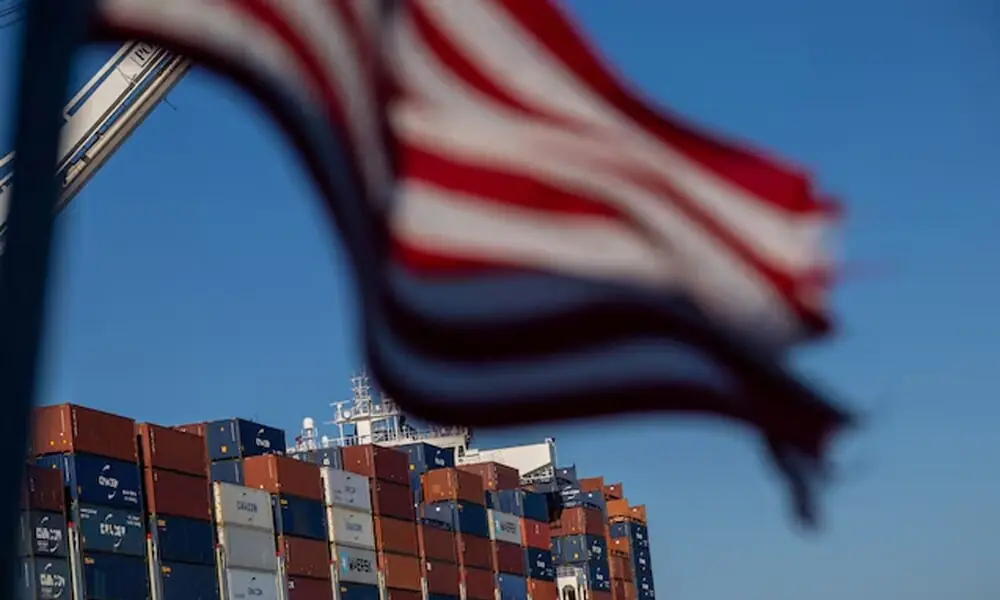

The President asserts the extraordinary power to unilaterally impose tariffs of unlimited amount, duration, and scope. In light of the breadth, history, and constitutional context of that asserted authority, he must identify clear congressional authorization to exercise it.
IEEPA’s grant of authority to “regulate … importation” falls short. IEEPA contains no reference to tariffs or duties. The Government points to no statute in which Congress used the word “regulate” to authorize taxation. And until now no President has read IEEPA to confer such power. We claim no special competence in matters of economics or foreign affairs.
We claim only, as we must, the limited role assigned to us by Article III of the Constitution. Fulfilling that role, we hold that IEEPA does not authorize the President to impose tariffs—Supreme Court of the United States Judgement in case of LEARNING RESOURCES, INC. v. TRUMP
President Donald J. Trump opened his State of the Union address by declaring that the American economy was “roaring like never before” and that the United States had become the “hottest” country on Earth after emerging from what he described as a period of crisis.
The President on February 24, 2026 delivered the longest address in modern history at one hour and forty-seven minutes, surpassing previous record set by President Bill Clinton, and used the platform to highlight border enforcement, domestic manufacturing revival, and renewed national confidence.
Praising Republican lawmakers for supporting his economic programme, he asserted that the United States now had “the strongest and most secure border in American history”. He connected these achievements to a broader economic strategy centered on reshoring industry, confronting unfair trade practices, and using tariffs as leverage to restore American industrial strength.
The Administration framed tariffs not as an isolated instrument but as a central pillar of economic sovereignty designed to protect American workers, counter supply chain exposures, and rebalance global trade relationships.
The president invoked national security authorities under section 232 of the Trade Expansion Act of 1962 and emergency powers under the International Emergency Economic Powers Act to justify actions against China, Canada, Mexico, the European Union, and dozens of other trading partners.
Trump administration also relied on section 122 of the Trade Act of 1974 to impose a temporary 15 percent tariff on most imports following Supreme Court’s February 20, 2026 decision in the Learning Resources Inc. v. Trump and V.O.S. Selections v. United States, in which the Court ruled 6-3 that IEEPA “does not authorize the President to impose tariffs”.
The government estimated that section 122 tariff would apply to approximately USD 1.2 trillion of imports, or roughly 34 percent of annual goods imports, and would expire after 150 days.
Data show that tariff escalation represented one of the largest tax increases in modern American history. Tax Foundation estimated that the combined tariffs in 2025 increased federal revenues by USD 131.8 billion in that year alone and would have raised USD 171.1 billion in 2026, equivalent to 0.54 percent of GDP, making them the largest tax hike since the Omnibus Budget Reconciliation Act of 1993.
Tax Foundation Data further indicate that customs duties surged from USD 79 billion in calendar year 2024 to USD 264 billion in calendar year 2025. Tax Foundation calculated that the weighted average applied tariff rate rose from 1.5 percent in 2022 to 13.8 percent before the Supreme Court invalidated IEEPA tariffs.
Estimates suggest that after the ruling, the applied rate would settle at 6.7 percent in 2026 under section 232 tariffs, rising temporarily to 10.3 percent during section 122 period. Household impact has been tangible and measurable. Their Analysis indicates that the 2025 tariffs amounted to an average tax increase of approximately USD 1,000 per US household.
Projections suggest that with IEEPA struck down, section 232 tariffs alone would increase taxes by about USD 400 per household in 2026, whereas the temporary section 122 tariffs would raise the burden to roughly USD 600.
Similarly, after-tax income would decline by 1.1 percent for households between 40th and 60th percentiles under combined tariffs, translating into a nominal burden of about $610 in 2026 for that income group.
The facts highlighted by Tax Foundation confirm that even the top one percent would face nominal increases exceeding $9,500 under combined scenarios, although their proportional income loss would be smaller.
Revenue implications extend beyond static collections and conventional estimates project that section 232 tariffs would generate USD 634.9 billion from 2026 through 2035, whereas the temporary 10 percent section 122 tariff would generate USD 25.3 billion in 2026.
Revenue estimates that incorporate broader economic slowdown associated with tariffs reduce the projected ten-year collections from section 232 and section 122 combined to approximately USD 515 billion.
Retaliatory measures imposed by foreign governments are estimated to reduce ten-year revenue by an additional $136 billion due to lower US output and incomes. The macroeconomic consequences reveal a more complex picture than revenue totals alone suggest.
The estimates indicate that the permanent section 232 tariffs would lower long-run US GDP by 0.2 percent and reduce employment by approximately 154,000 full-time equivalent jobs as highlighted by Tax Foundation.
The imposed retaliatory tariffs affecting USD 223 billion of US exports are projected to reduce GDP by another 0.2 percent. Additionally, similar tariffs during the 2018–2019 trade war reduced GDP by 0.2 percent and employment by 142,000 jobs. Fact-based research highlights that tariffs raise domestic prices, reduce real incomes, and contract economic output.
The trade balance data undermines the claim that tariffs materially shrink deficits. Commerce figures indicate that the total trade deficit fell by only USD 2.1 billion in 2025 compared to 2024, primarily due to an increase in the services surplus whereas the goods deficit widened by USD 25.5 billion.
The fundamental relationship between domestic saving and domestic investment explains why tariffs alone cannot permanently eliminate trade deficits. The United States continues to attract foreign capital to finance investment and fiscal deficits, which structurally sustains net imports regardless of tariff levels.
Based on the previous measures on the tariff, the Federal Reserve Bank of New York warned in August 2018 that tariffs aimed at narrowing trade deficit would reduce both imports and exports with little net effect on the deficit.
The National Bureau of Economic Research (NBER) found in March 2019 that US importers bore the full burden of tariffs through higher after duty prices. The International Monetary Fund concluded in April 2019 that broad 25 percent tariffs between the US and China would generate significant losses for both economies.
The United States International Trade Commission reported in May 2023 that production gains of USD 2.8 billion in protected steel and aluminum sectors were offset by USD 3.4 billion in losses in downstream industries.
A strategic question facing policymakers is whether the geopolitical leverage and industrial policy goals justify the measurable economic costs.
The Trump Administration has successfully used tariff threats to negotiate revised arrangements with the United Kingdom, Japan, the European Union, and Taiwan, often reducing reciprocal tariff rates to 15 percent or 19 percent from higher proposed levels. They also secured temporary pauses from China and structured frameworks addressing export controls on rare earth minerals.
The diplomatic leverage gained through tariff pressure has yielded concessions that might not have been secured through conventional negotiations. The Policy recommendation should therefore distinguish between permanent protectionism and tactical leverage. Evidence supports maintaining targeted national security tariffs where clear strategic vulnerabilities exist, particularly in semiconductors, critical minerals, and defence sensitive supply chains.
The analysis cautions against broad universal tariffs that function primarily as revenue tools and risk suppressing growth. The government should consider pairing any remaining tariffs with pro-investment tax reforms to offset negative capital formation effects.
The executive branch should prioritise negotiated settlements that reduce retaliation and restore certainty for exporters, particularly in agriculture and manufacturing. This tariff war has reshaped the American trade environment in historic fashion.
The numbers confirm that the policy has generated unprecedented customs revenues and temporarily raised applied tariff rates to levels not seen since the mid-20th century. The models demonstrate that the economic costs, while modest relative to total GDP, are real and measurable in reduced output and employment.
The political narrative highlights strength and industrial revival, whereas the economic data highlights trade-offs that business leaders and lawmakers must carefully weigh.
A sustainable strategy for the United States is one that preserves leverage, protects genuine national security interests, restores predictability to global commerce, and aligns tariff policy with long-term growth and competitiveness rather than short-term fiscal gains.
Copyright Business Recorder, 2026
The writer is a lawyer and author, is an Adjunct Faculty at Lahore University of Management Sciences (LUMS), member Advisory Board and Senior Visiting Fellow of Pakistan Institute of Development Economics (PIDE)
The writer, an Advocate Supreme Court, Adjunct Faculty at Lahore University of Management Sciences (LUMS), member Advisory Board and Visiting Senior Fellow of Pakistan Institute of Development Economics (PIDE), holds LLD in tax laws
The writer is a corporate lawyer based in the US with extensive expertise in financial regulations, including Virtual Asset Service Providers (VASPs), corporate governance, and global economic policies. He holds an LLM from Washington University in St. Louis and has completed the Management Development Program at the Wharton School. He has developed regulatory frameworks for North American and South American Financial Institutions and has consulted and trained bureaucrats of different regions. He can be reached at [email protected]




















Comments
Comments are closed for this article.