


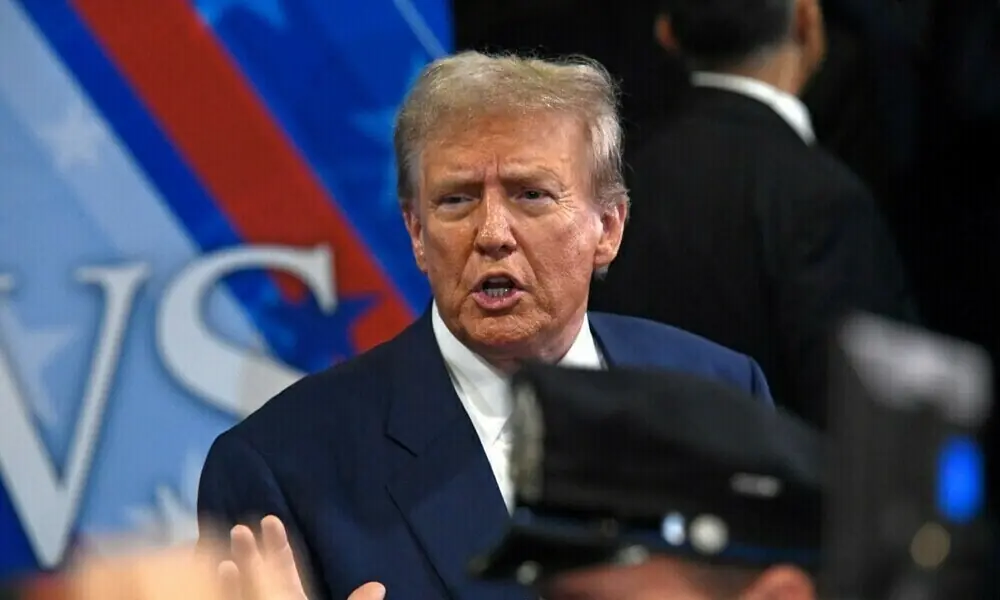

In a moment charged with urgency and geopolitical drama, President Donald Trump convened what many described as a decisive, even “divorce-like,” meeting with his closest advisers, weighing the prospect of direct intervention against Iran.
Naval deployments were reportedly positioned, rhetoric sharpened, and speculation surged across capitals and newsrooms alike. Yet, almost in parallel, a starkly different message emerged from Brussels.
NATO, speaking through its Secretary-General before the European Parliament, made clear that Iran lies outside the alliance’s mandate and that the internal affairs of a sovereign state are not NATO’s battlefield. In so many words, Europe refused to be drawn into another war.
This divergence marks a notable inflection point in the post–Cold War history of the transatlantic alliance. For decades, the United States and its European partners moved in near lockstep through Afghanistan, Iraq, Libya, and Syria—conflicts justified in the language of security, democracy, and humanitarian intervention. This time, however, the line was drawn.
Copyright Business Recorder, 2026
The writer is a former Press Secretary to the President, An ex-Press Minister at Embassy of Pakistan to France, a former MD, SRBC Macomb, Detroit, Michigan

























Comments
Comments are closed for this article.