


Prince Karim Aga Khan IV: an extraordinary visionary, a builder of institutions
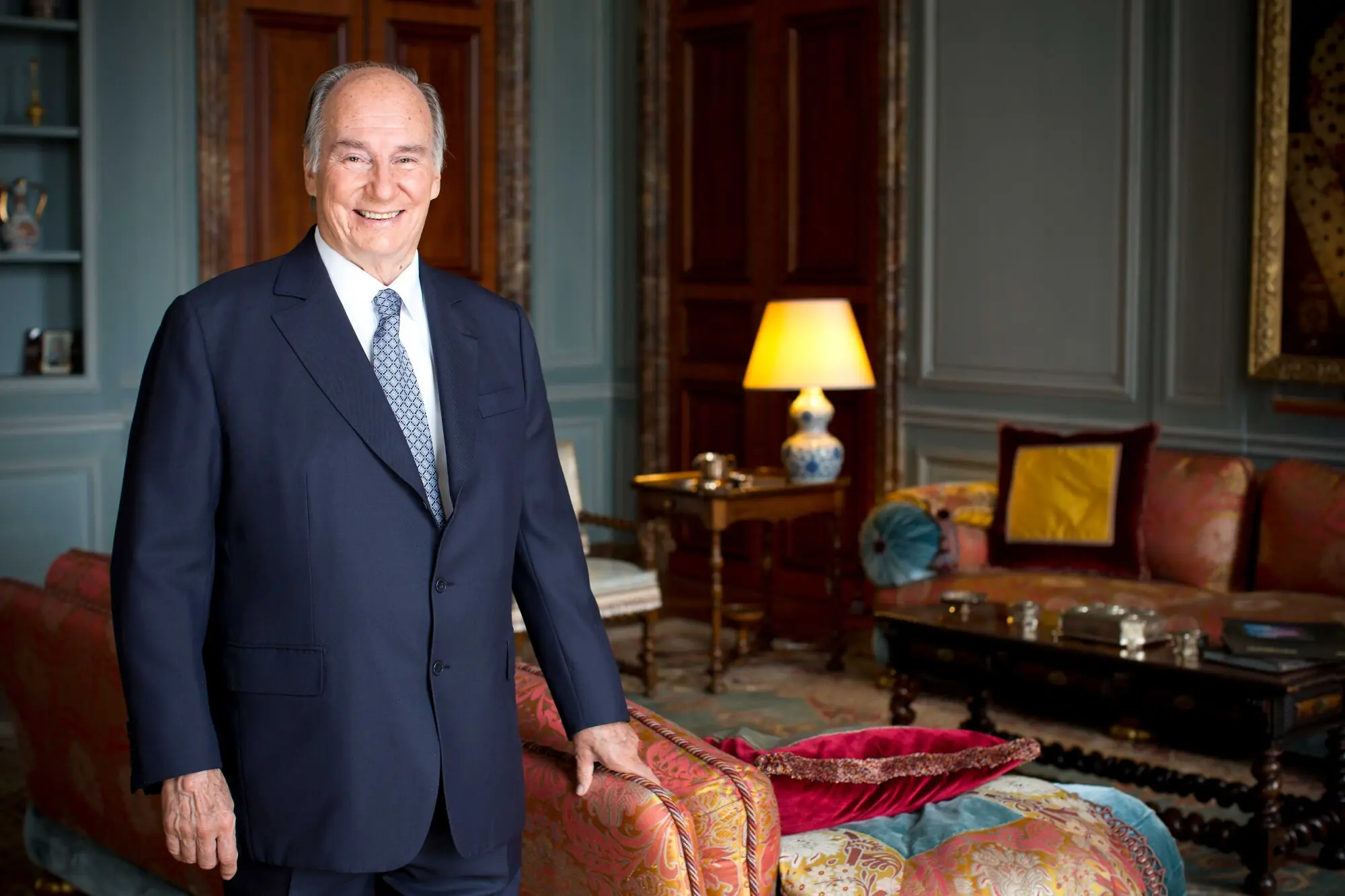

Over its 1,400-year history, the Muslim Ummah has been blessed with many visionary leaders, among them caliphs, scholars and explorers who founded new kingdoms, advanced learning, discovered cures for deadly diseases and articulated ideas that changed the world.
In modern times, however, there are few examples of leaders who have devoted so much of their attention and resources to improving the quality of life of ordinary people. Among those who have His Highness Prince Karim Aga Khan IV stands out as a stalwart who passionately advocated the importance of inspiring hope, especially for those striving to “find the first rung of the development ladder”.
While designating 20-year-old Prince Karim as his successor in 1957, his grandfather Sir Sultan Mahomed Shah Aga Khan III had astutely observed the importance of appointing a leader who could guide the Ismaili community in the recently dawned “atomic age”.
Prince Karim quickly recognized that the modern world required the institutionalization of many of his grandfather’s social and economic initiatives. At the same time, he saw the importance of taking a holistic approach that simultaneously addressed issues of education and health alongside economic opportunity and cultural advancement.
He brought this unique vision to life by establishing multiple development agencies, each designed to address specific development related issues and collectively known as the Aga Khan Development Network (AKDN). Through the impact of the combined efforts of these institutions, Prince Karim Aga Khan was fortunate to witness millions across Asia and Africa pulled out of poverty during his own lifetime. From an array of his visionary development initiatives, let us look at just four examples.
Education and health:
In an address to thousands of donors and volunteers in Karachi in 1994, Prince Karim explained why he established Aga Khan University (AKU), Pakistan’s first private university. The path to bring back the glory which once belonged to the Ummah, he observed, Í - educating its women and men. This conviction led him to build scores of schools, health centres and teaching hospitals in rural and urban locations in multiple countries. At their apex stands AKU, founded in 1983, and now operating across Pakistan, East Africa, the United Kingdom and Afghanistan, with high-quality programmes in education, health and research.
AKU’s success and positive impact encouraged Prince Karim to establish in 2000, the University of Central Asia (UCA), through an international treaty with the governments of Kazakhstan, Kyrgyzstan and Tajikistan. Together, the programmes and campuses of these two not-for-profit, private, regional universities span a dozen countries. Several individuals across the globe have the distinction of establishing one institution of higher education but founding two universities in one lifetime has few, if any, parallels.
Rural development:
A second powerful strand of Prince Karim Aga Khan’s vision was to improve the quality of life of rural populations. The Aga Khan Foundation (AKF) established in 1967, brought this to reality through its innovative Aga Khan Rural Support Programme (AKRSP) in northern Pakistan in 1982. AKRSP’s community-driven model became a template later adopted by governments and donors.
Today, AKF also operates innovative programmes in education, health, livelihoods and promotion of civil society in some two dozen countries, resulting in a quantum change in the quality of life of millions, as do the Foundation’s partnerships with major international development agencies including the World Bank as well as private corporate and individual supporters.
Economic Development:
A third pillar of Prince Karim’s work focused on improving economic conditions for Muslim communities and the wider societies in which they live. To attain this challenging objective, he established the Aga Khan Fund for Economic Development (AKFED) in 1984. AKFED has since promoted over 150 ventures in financial services, manufacturing, energy, tourism and communications across 15 countries, with the twin aims of catalysing growth and building resilient enterprises. At the Enabling Environment Conference of 1968 in Kenya, Prince Karim spoke passionately about the importance of collaboration between government, business and voluntary sectors for sustained economic empowerment of marginalized populations, including women.
AKFED’s micro credit institutions supported small and medium sized enterprises in dozens of countries. Their success led AKFED to enter commercial banking through the acquisition of Habib Bank Limited (HBL), denationalized in 2004 by Pakistan. Today HBL stands out as the nation’s largest bank, operating in a dozen countries, providing credit to millions of small and large borrowers and income for tens of thousands of shareholders.
Promotion of Culture:
Prince Karim was convinced that culture is integral to development. Without comprehending the wisdom, literature, art and music of its centuries old culture, modern Muslim societies risk losing their bearings. Thus, was established in 1988, the Aga Khan Trust for Culture (AKTC), which became the home of the Aga Khan Award for Architecture founded in 1977 and recognised today as the premier architectural prize for buildings in the Muslim world and beyond. Over time, AKTC “expanded its scope from architecture to incorporate other programmes and projects to leverage culture for the socio-economic development of communities in the Muslim world.” Its programmes serve to preserve dozens of heritage sites across Pakistan, India, Egypt, Malaysia, Mali, Zanzibar and elsewhere - linking preservation with education, skills, tourism and livelihoods.
AKTC’s Aga Khan Music Programme and Music Awards recognize excellence in diverse genres ranging from religious recitations to classical as well as contemporary compositions and performances of the music of Muslim societies.
Finally, the success of AKDN institutions owes much to several defining characteristics. Penultimate among these is the long-term view it takes of development, which often requires decades to show lasting results. An uncompromising objective of all AKDN institutions is to attain internationally recognized excellence in the quality of their programmes within the resources available. Another striking feature is the remarkable support all not-for-profit AKDN institutions receive from tens of thousands of volunteers from all walks of life, the efforts of 90,000 employees.
Perhaps the genius of Prince Karim Aga Khan IV may lie best in the stability and continuity of the development efforts he commenced under the AKDN agencies as the Ismaili Imamat transitioned seamlessly to Prince Rahim Aga Khan V in February 2025, continuing to bring hope to millions.
Copyright Business Recorder, 2026
The writer, Sitara-e-Imtiaz, Hilal-e-Imtiaz, is Chairman of the University of Central Asia and Founding President of the Aga Khan University, as well as a former Federal Minister of Education and Science & Technology

























Comments
Comments are closed for this article.