


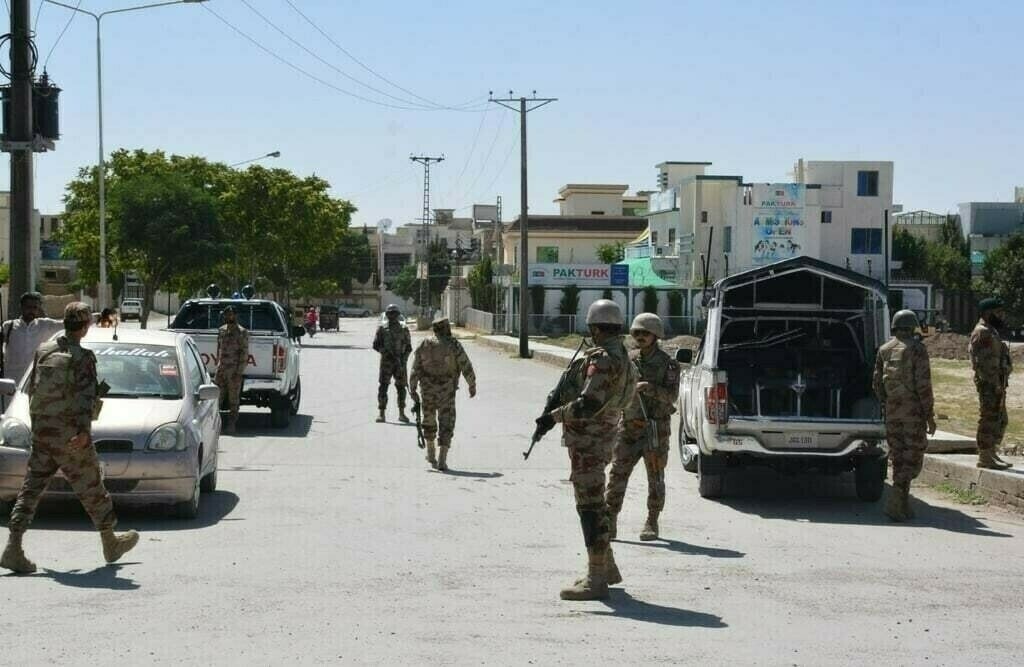

ISLAMABAD: After a marked decline in violence in December 2025, the start of the new year saw resurgence in terrorist attacks, resulting in increased fatalities among militants, civilians, and security personnel, according to figures released by the Pakistan Institute for Conflict and Security Studies (PICSS).
The report disclosed that combat-related deaths in January 2026 rose by 43percent compared to December 2025. In January, 242 militants were killed, along with 73 civilians and 46 members of the security forces. In addition, 12 militants were injured, while at least 71 civilians and 52 security personnel sustained injuries.
The PICSS reported that January saw 87 militant attacks nationwide, marking a 28percent increase from the 68 attacks recorded in December 2025. Of these, 38 attacks took place in mainland Khyber Pakhtunkhwa, 20 in the province’s tribal districts (erstwhile Fata), and 27 in Balochistan and two in Punjab.
Balochistan emerged as the primary theatre of militant activity, as well as, security operations. The province reported the highest monthly militant toll since the current wave of militancy began there in 2001.
While Balochistan remained relatively peaceful for most of the month, a sharp surge in violence during the final two days drew attention to the province. Coordinated attacks by the banned Balochistan Liberation Army (BLA) on at least 12 locations, followed by intensified security operations, highlighted the escalation.
Compared to the previous month, the civilian deaths increased by 143 percent, militant deaths by 35 percent and security force fatalities by 7 percent.
At least 53 suspected militants were arrested, 48 of them from Lahore. No militant attacks were reported in January from Sindh, Azad Jammu and Kashmir, Islamabad or Gilgit-Baltistan.
A senior security expert affiliated with a reputable Islamabad-based university told Business Recorder that the success of counter-terrorism operations cannot be assessed in black-and-white terms, as it invariably falls within a grey area. Counter-terrorism operations are effective in neutralising short-term threats. The capability of personnel of our Law Enforcement Agencies (LEAs) to carry out Intelligence-Based Operations (IBOs) is growing day by day. For instance, in 2021, Pakistan was losing 37percent LEAs’ personnel. In 2025, Pakistan lost only around 16percent LEAs’ personnel compared to 67percent of terrorists. The numbers are self-explanatory. Notwithstanding, in the long run, the ongoing operations are of limited utility. “The need of the hour to maximise the utility of the operations is to take communities onboard, the security expert said, requesting anonymity.
He said that terrorists inside Pakistan have been weakened to a greater extent. Pakistan successfully eliminated more than 3500 militants in 2025, which can be termed a great success. He explained that the reason for the continued threat is straightforward. The Afghan Taliban, Tehreek-e-Taliban Pakistan (TTP), Al-Qaeda, Islamic Stat-Khorasan Province (ISKP), and the East Turkestan Islamic Movement (ETIM) are living in safe havens in Afghanistan. It must be stated unequivocally that the Afghan Taliban TTP, Al-Qaeda, ISKP, ETIM and other similar outfits are terrorist organisations, with no meaningful distinction among them. When such groups are in power, they provide sanctuary to their ideological counterparts. Terrorists are being recruited, trained, and equipped in Afghanistan and, after completing their training, cross the border to carry out attacks inside Pakistan.
He said that the persistence of violence is therefore directly linked to this cross-border dynamic. While Pakistan continues to eliminate terrorists within its own territory, recruitment and indoctrination are simultaneously taking place in Afghanistan.
According to the UN Security Council’s 2025 report, the TTP actively propagates jihad in eastern Afghanistan and operates with relative freedom. This unchecked recruitment complicates Pakistan’s counter-terrorism efforts. Although terrorist attacks have increased by 34 per cent, the overall damage on the Pakistani side has declined, while militant losses have risen. Counter-terrorism operations must; therefore, be assessed in a holistic context. Even the United States failed to fully eradicate terrorist networks in Afghanistan, underscoring the complex and enduring nature of the threat.
Copyright Business Recorder, 2026




















Comments
Comments are closed for this article.