


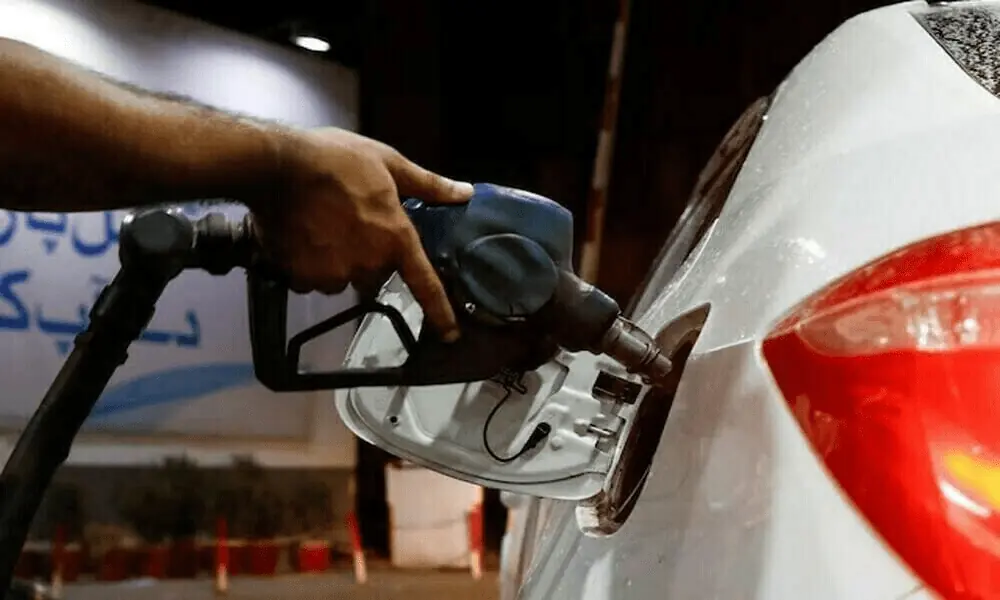

KARACHI: Vice President of the Federation of Pakistan Chambers of Commerce and Industry (FPCCI) Amaan Paracha strongly criticised the government’s decision to increase petroleum levy on petrol and diesel, stating that on one hand the full benefit of the decline in global oil prices is not being passed on to consumers, while on the other hand higher taxes on petroleum products are subjecting the public to mental distress, as they are already burdened by inflation.
Paracha urged the government to transfer the benefit of reduced global oil prices to the domestic market in order to control inflation and lower the high cost of doing business in the country.
He said that the government increased the petroleum levy on petrol by Rs 4.65 per litre, raising it from Rs 79.62 to Rs 84.27 per litre. In addition, the levy on diesel was increased by 80 paisa per litre, taking it from Rs 75.41 to Rs 76.21 per litre. He added that had the levy been kept unchanged, petrol could have become cheaper by about Rs 4.50 per litre.
Paracha further stated that taxes on petroleum products in Pakistan are among the highest in the world, yet the benefits of these taxes are not being transferred to public development and welfare.
The public and the business community continue to pay high taxes, but despite this, the government complains about low tax collection, even though corruption is widespread in the country and the pace of development remains extremely slow.
He said that globally, whenever there is a reduction in petroleum prices, the benefit is passed on to consumers.
However, instead of reducing prices, whenever oil prices rise in the international market, the government immediately increases domestic prices. In this way, by raising taxes, the public is deprived of relief, and instead of reducing petroleum product prices, they are kept unchanged while the levy is increased.
Copyright Business Recorder, 2026


























Comments
Comments are closed for this article.