


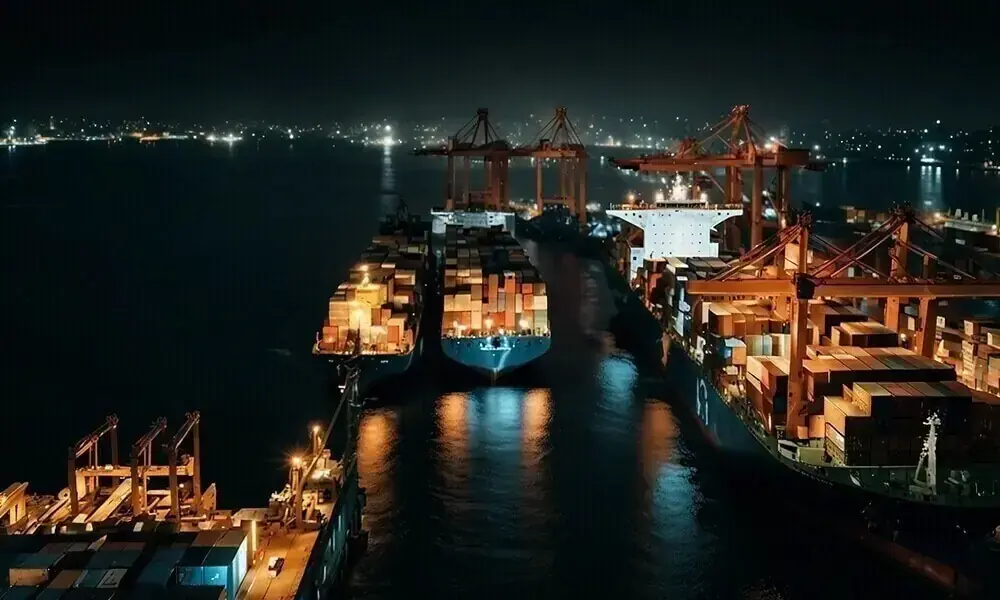

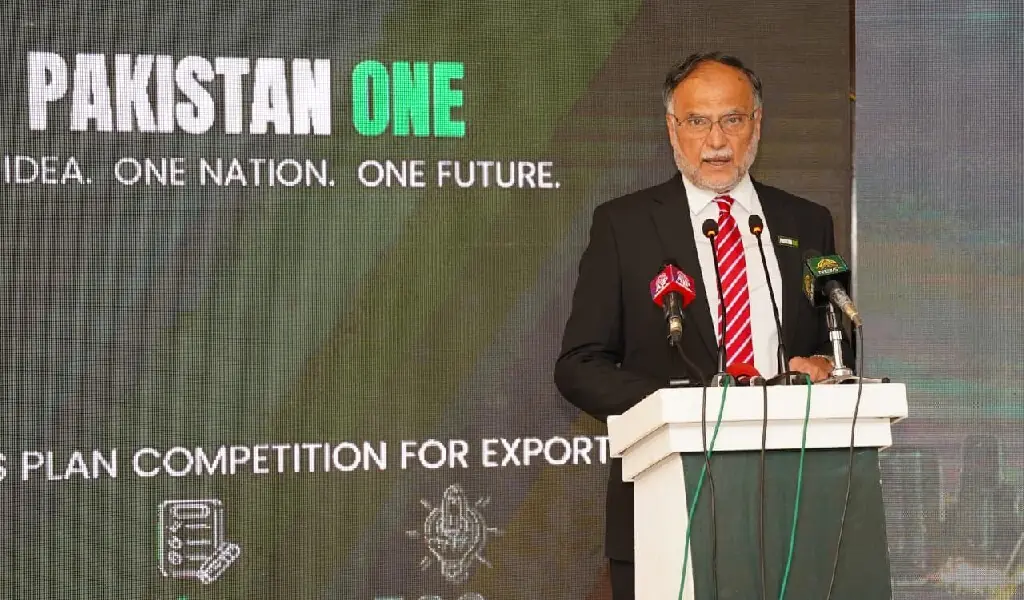
ISLAMABAD: The Ministry of Commerce is unaware of any export emergency plan, a brainchild of Minister for Planning, Development and Special Initiatives Ahsan Iqbal, which he made public during a press conference last week.
Background discussions with officials of the Ministry of Commerce and other relevant departments indicate that no such plan exists on the ground yet.
“We have no information about any export emergency plan proposed by the Planning Minister.
Nothing concrete has been shared with the ministry, nor has anything been conveyed by any quarter, including the Prime Minister’s Office (PMO),” said an official on condition of anonymity.
READ MORE: Pakistan needs to declare ‘export emergency’ to revive growth: Ahsan Iqbal
Pakistan’s exports have continued to decline for the fifth consecutive month. Exports fell by 20.41 percent in December on a year-on-year (YoY) basis, pushing the trade deficit to USD 19.20 billion during the first half of the financial year 2025–26.
“Since Pakistan is under an International Monetary Fund (IMF) programme, no fiscal incentives can be offered to exporters to boost exports,” the official added.
Exporters have consistently demanded three key measures: energy prices comparable to regional competitors, timely payment of refunds, and a reduction in interest rates. However, the government cannot address these issues without IMF approval.
The government recently held detailed discussions with the business community and exporters under the umbrella of the Prime Minister’s Office.
“We have heard the suggestions of the business community and exporters to revive industry and enhance exports, and recommendations are now being finalised based on the proposals discussed during those meetings,” said a well informed source.
Meanwhile, the Ministry of Commerce is also preparing a separate plan focused on Saudi Arabia to increase Pakistan’s share in that market.
When contacted, Minister for Planning, Development and Special Initiatives Ahsan Iqbal said, “these are our recommendations to the Prime Minister.”
In support of exporters’ he outlined proposals including declaring an export emergency, setting up a dedicated hotline at the Prime Minister’s Office, and ensuring timely disbursement of exporters’ refunds.
However, sources said efforts are being undertaken in silos, and no coordinated strategy exists to address the country’s broader economic challenges.
Industry and exports cannot survive under the current tariff structure, they said, adding that the cross-subsidy mechanism must be eliminated entirely. “The solution to Pakistan’s economic problems lies in industrial job creation, not in forcing industry to subsidise the domestic sector.”
The persistent decline in exports underscores mounting pressure on Pakistan’s trade performance, as exporters grapple with subdued global demand and a high cost of doing business. Textile exporters have already reported contractions due to rising input costs.
According to industry representatives, unless electricity prices are reduced to 7–8 cents per unit, the textile sector will remain uncompetitive in international markets.
The current electricity tariff of around 12 cents per unit is not economically viable, while rising LNG prices have further increased the cost of running captive power plants.
Rana Ihsaan Afzal Khan, Coordinator to the Prime Minister on Commerce was also approached for his comments on the proposal of Minister for Planning, Development and Special Initiatives but he did not respond to the query.
On December 28, 2205 Pakistan Textile Council (PTC) urged Prime Minister Shehbaz Sharif to declare an ‘Export Emergency’ and resolve the textile sector’s longstanding issues, warning that continued erosion of export competitiveness — combined with rising costs, taxation distortions, and energy pricing disparities — has pushed exporters to the brink of collapse.
PTC has suggested following measures, including: (i) restoration of the 1 percent full-and-final tax regime on all exports with withdrawal of advance tax; (ii) waiver of even the 1 percent tax for exporters achieving over 10 percent year-on-year export growth; (iii) abolition of super tax on the five major export sectors; (iv) immediate withdrawal of the gas levy for export sectors and fixation of gas prices at Rs2,600 per MMBtu and electricity at Rs24 per unit for all export sectors, regardless of captive or grid connections; (v) rationalisation of gas pricing for the fertiliser sector, including price caps to prevent pass-through, as the sector is currently earning abnormal profits and distorting the gas market; and (vi) immediate restoration of items excluded from the Export Facilitation Scheme (EFS) for duty-free import.
Copyright Business Recorder, 2026






















Comments
Comments are closed for this article.