


Think tank slams Pakistan’s economic growth claims
- Economic Policy and Business Development think tank says numbers reflect import-driven accounting effects rather than genuine expansion in productivity
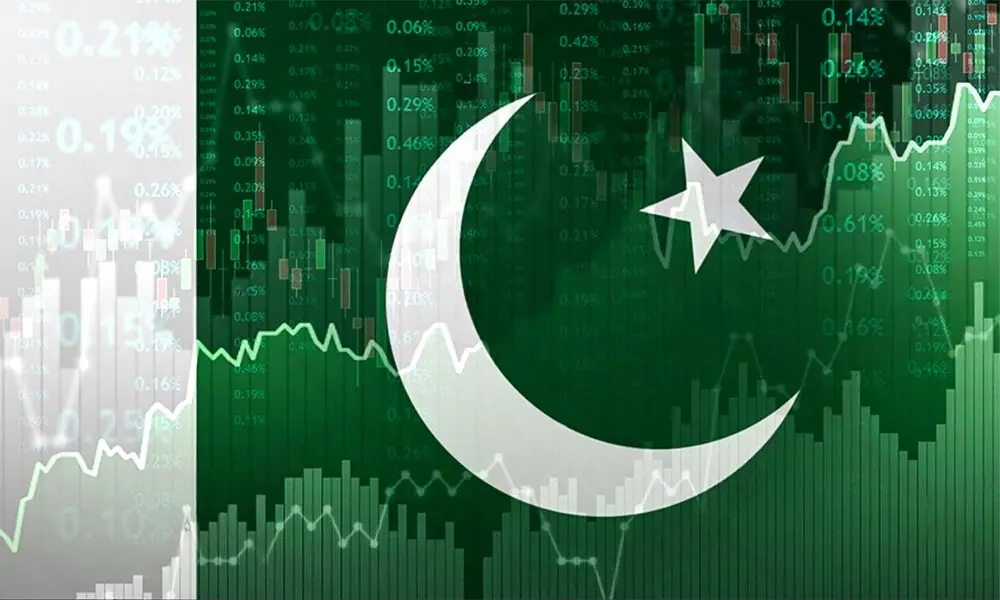

ISLAMABAD: Pakistan’s claim about the economic growth for the first quarter of 2025-26 has come under sharp criticism from the Economic Policy and Business Development (EPBD) think tank, which says the numbers reflect import-driven accounting effects rather than a genuine expansion in the productivity.
The National Accounts Committee (NAC) approved a 3.71 percent Gross Value Added (GVA) growth for Q1FY26, with agriculture growing 2.89 percent, industry 9.38 percent, and services 2.35 percent.
However, the EPBD, in a factsheet on quarterly GDP, said the figures are “difficult to reconcile with ground realities” and warned that growth without real business activity will remain confined to paper.
According to the think tank, the most striking contradiction lies between domestic output estimates and trade performance.
Despite positive growth reported in agriculture and food-related manufacturing, food group exports fell sharply by 25.8 percent, while food imports rose 18.8 percent during the quarter.
“If domestic production were genuinely expanding, exports should strengthen rather than collapse,” the think tank noted, arguing that rising imports are being used to prop up measured growth.
Agriculture’s reported 2.89 percent expansion has also been questioned. The EPBD pointed out that severe flooding had raised expectations of stagnant or negative agricultural growth. Instead, official data showed expansion, even though important crops declined by 0.75 percent, driven by a 1.2 percent fall in cotton production and the absence of a wheat crop in Q1. The think tank said this disconnect suggests overestimation in certain sub-sectors.
READ More: Oversized provinces stalling Pakistan’s economic growth, says EPBD
Industrial sector growth of 9.38 percent was another area of concern. The EPBD highlighted that this expansion was largely driven by a 25 percent-plus increase in electricity, gas and water supply, which was not the result of higher physical output but of heavy subsidies, increased from Rs 20 billion to Rs 118 billion. Such fiscal support, combined with deflator adjustments, inflated value addition without reflecting real production gains, it said.
Similarly, construction sector growth of 21 percent does not align with underlying indicators. Cement production rose by 15.32 percent, while imports of transport equipment more than doubled, indicating that construction activity is increasingly import-dependent rather than based on domestic supply chains. Manufacturing data further underscores structural weaknesses. EPBD noted that declining cotton output led to a 12 percent drop in cotton ginning, while cotton exports fell by around 10 percent. Textile production and exports, however, increased due to the use of imported cotton and synthetic fibres, reinforcing concerns that growth is assembly-led with weak backward linkages. The think tank also flagged a reversal in the sugar sector, where Pakistan has moved from exports towards imports.
Services sector growth of 2.35 percent remained modest and slowed on a quarter-on-quarter basis, reflecting subdued demand and limited momentum in the broader economy.
The EPBD said that GDP figures are showing a widening gap between local production and trade performance, raising questions about the quality and sustainability of the reported recovery. “Without a real increase in business activity, growth will remain cosmetic,” the think tank said.
Calling for policy correction, the EPBD urged the government to frame market-oriented policies, allow the private sector to lead investment, and create a stable environment for independent business activity. Only private-sector–driven investment, it said, can deliver sustainable and genuine economic growth, rather than headline gains driven by imports, subsidies and statistical adjustments.
Copyright Business Recorder, 2026

















Comments
Comments are closed for this article.