


National Grid Company seeks 3% value-added tax exemption on machinery imports
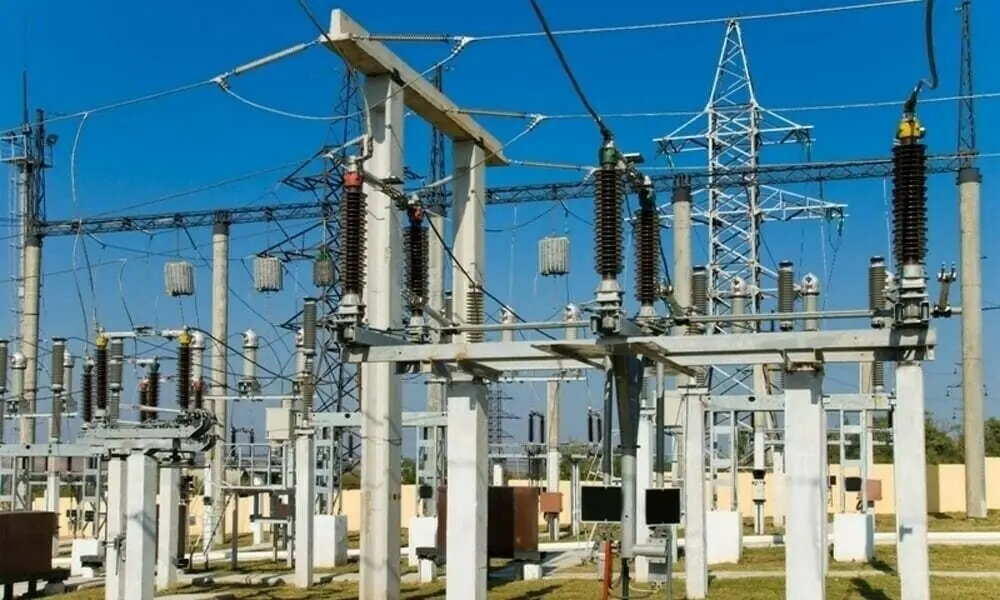

ISLAMABAD: The National Grid Company (NGC), formerly known as the National Transmission and Despatch Company (NTDC), has sought exemption from the 3 percent value-added tax on the import of machinery and equipment for development projects, sources told Business Recorder.
The company has been in continuous correspondence with the Federal Board of Revenue (FBR) and the Power Division to resolve this longstanding issue; however, no success has been achieved so far.
In continuation of its earlier letters dated May 29, 2023, and December 8, 2025, the NGC has requested the Joint Secretary (Transmission), Power Division, to take up the matter with the Ministry of Finance for granting the exemption from the 3 percent value-added tax being charged by Customs authorities on the import of transmission-related equipment for in-house consumption.
READ MORE: NGC seeks 86pc hike in ‘UoSC’
According to NGC, as an infrastructure development entity, it imports equipment exclusively for its own operational use. Under Serial Nos. 2(i) and 2(ii) of the Twelfth Schedule to the Sales Tax Act, 1990, goods imported by manufacturers or registered service providers for in-house consumption are exempt from value-added tax.
Despite meeting these conditions and having already incorporated “service provider” as an additional declared business activity, Customs authorities continue to levy the tax, resulting in ongoing operational and financial challenges. NGC has shared its correspondence with the tax authorities in this regard.
Given the significance of the matter and its direct impact on NGC’s development projects, the transmission company has sought the Power Division’s support on the following issues:
(i) pursuing the Ministry of Finance for an amendment to the Twelfth Schedule to explicitly include “transmission of electricity” under the exempt categories; and
(ii) issuing interim directions to Customs authorities to refrain from charging the 3 percent value addition tax on NGC’s imports until such amendment is formally incorporated.
At the time of the split of NTDC, the Power Division had noted that the entity was facing serious challenges, including a lack of vision and strategic planning, outdated and cumbersome business processes, an unresponsive management structure, and, above all, an inefficient project management framework.
As a result, the transmission system has become increasingly unstable and unreliable, while project execution has frequently been delayed, leading to substantial financial losses to the national exchequer.
On average, transmission line projects initially planned for completion within two to three years have been delayed to seven to eight years.
Member (Technical) NEPRA, Rafique Ahmad Shaikh, who recently completed his second term at the regulator, stated in one of his additional notes that the continued operation of power sector entities within the public sector—coupled with the failure to implement meaningful corporatization or privatization—has resulted in cumulative losses amounting to trillions of rupees. These losses are largely driven by inefficiencies in planning, execution, and operations.
Rather than improving, the sector has become increasingly burdened with structural inefficiencies, threatening its long-term viability.
One of the most prominent examples cited is the NTDC, which, under its licence, is mandated to provide a congestion-free transmission network to ensure efficient and cost-effective power delivery.
Despite repeated directives and enforcement actions, the NTDC has consistently failed to plan, implement, and operate its transmission system in line with this mandate. Consequently, consumers continue to bear the operational and financial costs of these inefficiencies.
According to Shaikh’s additional note, available on NEPRA’s website, the Authority had historically acknowledged these persistent shortcomings.
In January 2021, NEPRA decided not to pass the financial impact of NTDC’s inefficiencies—particularly merit order violations—onto consumers. This approach remained in place from September 2019 and August 2020 through October 2023.
However, in May 2024, this policy shifted, allowing for the potential release of previously withheld payments related to out-of-merit operations.
The operation of power plants in violation of the Economic Merit Order (EMO) has remained a recurring issue, primarily due to the transmission system’s inability to evacuate power efficiently.
The Monitoring and Enforcement Department has regularly quantified the monthly financial impact of these violations over the past five years, with comprehensive assessments also conducted by independent consultants and a third-party firm. These studies have unanimously attributed the resulting inefficiencies and associated financial losses to the NTDC’s operational and planning failures.
Copyright Business Recorder, 2026


























Comments
Comments are closed for this article.