


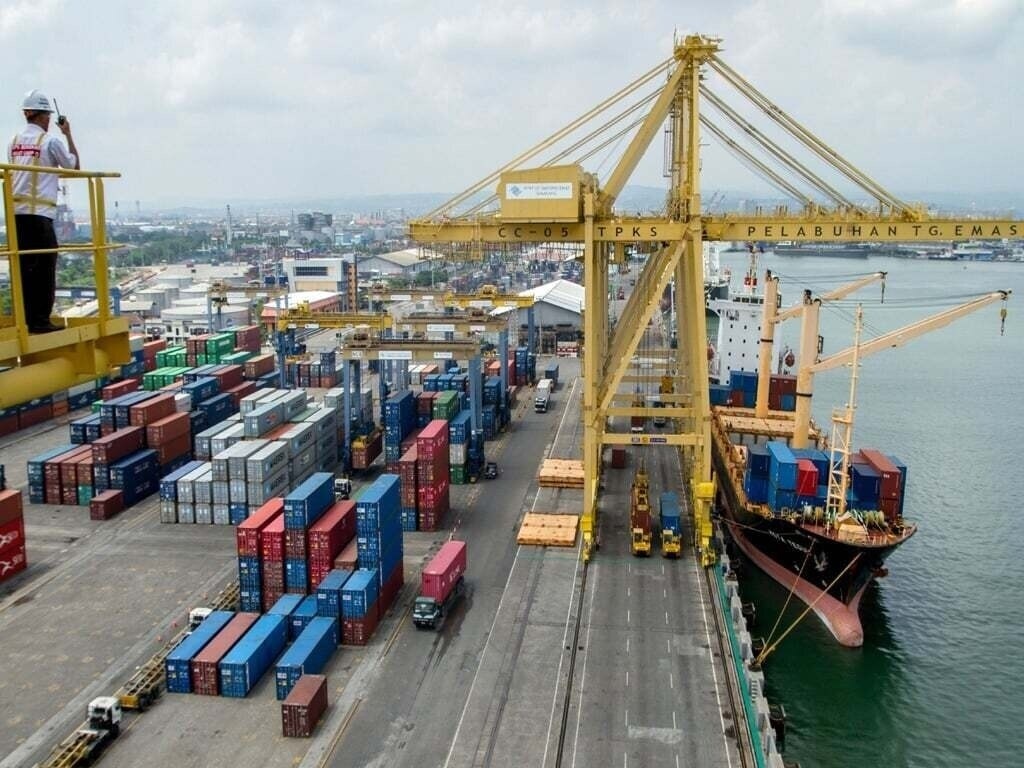

In the world of global trade, the efficiency of a port can make or break a country’s economic edge. This problem is more pressing for Pakistan, as we are facing increased competition from the neighbouring countries, as they become more competitive, many of which are already outperforming us in terms of port efficiency.
According to a recent World Bank report on Container Port Performance (CPPI) 2020–2024, while Pakistan’s Port Muhammad Bin Qasim has experienced significant improvements, Karachi Port, the largest and busiest seaport of the country, has only made modest strides. The outcome? Pakistan is lagging behind in the increasingly competitive global maritime industry.
The World Bank’s benchmarking index, the CPPI, ranks ports based on their turnaround times. By taking into consideration, the time it takes for a container ship to dock, unload, load and finally depart, while also accounting for the number of container moves per call, it helps to measure the efficiency of a port’s operations. Faster turnaround times mean reduced operating costs for shipping companies, quicker deliveries for businesses, and eventually, lower prices for consumers.
Because reduced idle times also result in lower fuel consumption and thus reduced emissions, faster turnaround times can thus translate to environmental benefits as well. The CPPI sets a standard for port efficiency by monitoring more than 400 ports worldwide. For Pakistan, it reflects the performance of our seaports, and currently, Karachi Port is not coping well.
During the years 2020-2024, Port Qasim’s efficiency has significantly improved, which was evident by its CPPI score being increased by 35.2 points (from 7.6 in 2020 to 42.8 in 2024), placing it in the top 10 most improved ports worldwide. In stark comparison, however, Karachi Port, which is the country’s busiest port, was seen to make negligible progress in the same period, and despite some infrastructural upgrades, the port’s overall development was seen to be slow and fragmented.
Considering the regional picture, South Asian ports are currently involved in a fierce competition for dominance. According to the CPPI report, the Jawaharlal Nehru Port (JNPT) in India saw more than a 30 point increase in its efficiency score within the same time period, thus ranking among the top performing group globally.
Reasons for this improvement can mainly be attributed to the Indian government’s efforts to digitize and streamline operations while making significant capacity investments. Likewise, the Mundra Port, also in India, continues to hold the top spot on the efficiency index because of its integration of logistics and automation.
Behind the numbers: policy lessons and the way forward
Although Pakistan’s Port Qasim is a significant example of regional success, demonstrating how modernization and strategic investments can yield tangible outcomes, the country still faces the risk of falling further behind if significant improvements are not made to the Karachi Port.
An analysis has revealed that significant infrastructure improvements were made to Port Qasim between 2020 and 2024, including the installation of a new DP World-operated berth (QICT) and a dredging project to accommodate larger vessels. These improvements allowed for quicker turnaround times with higher volumes.
However, Karachi Port remains constrained by land and berth limits, despite the addition of the South Asia Pakistan Terminal (SAPT) a few years ago. Future up-gradation plans such as the future phases of KPT Pakistan Deep Water Terminal have progressed slowly, limiting access to larger ships. Karachi Port should thus prioritize dredging its existing channels and renovating its oldest berths for accommodating modern container ships.
Integrating digital platforms to plan crane movements can also reduce stay times. Although some progress was made in this regard, i.e., adoption of Pakistan Single Window—and recent PortVerse—containers are frequently awaiting clearance at the Karachi Port and trucks can be seen standing in lines outside the terminals. Additionally, Pakistan Port Authorities should institutionalize CPPI benchmarks by implementing real-time performance dashboards for vessel wait time, berth productivity, and dwell time, while setting clear improvement targets.
Copyright Business Recorder, 2025
The writer is a Research Economist at the Pakistan Institute of Development Economics (PIDE). She can be reached at: [email protected]


















Comments
Comments are closed for this article.