


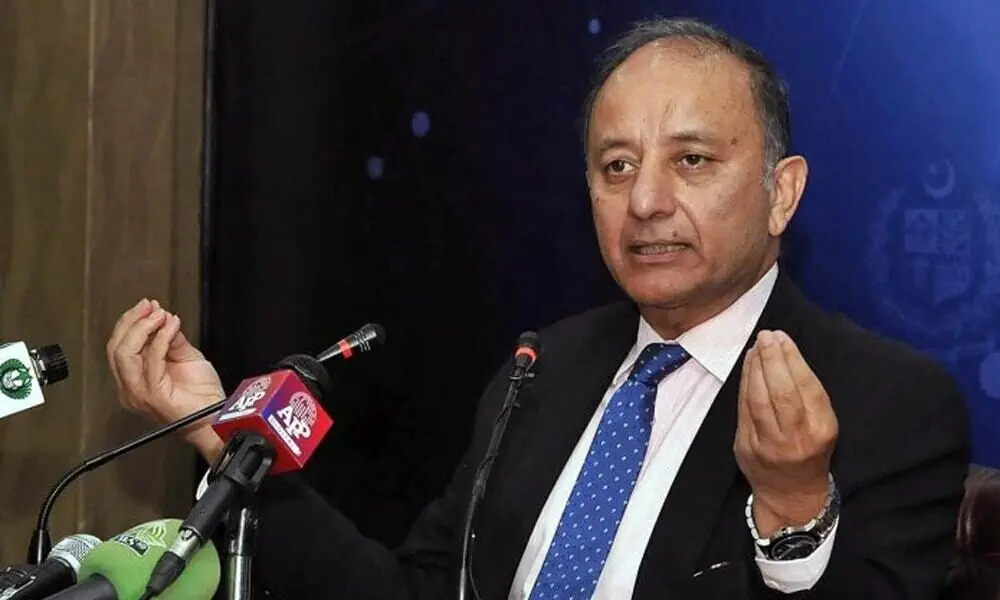

ISLAMABAD: Federal Minister for Climate Change and Environmental Coordination, Senator Dr Musadik Malik has called for stronger international and domestic investment in green skills development to secure a just, climate-resilient and economically competitive future, as global economies rapidly transition toward clean energy, low-carbon growth and sustainable industrial transformation, according to a press release issued here on Friday.
Speaking as keynote at a high-level side event titled “Building Green Skills for a Sustainable Pakistan” at the Pakistan Pavilion during the UN Climate Summit (COP30) in Belém, Malik said that the world is witnessing unprecedented structural shifts in economic and industrial systems, with trillions of dollars now flowing into renewable energy, climate-smart infrastructure, battery technology, green transport systems and circular economies. These transitions, he noted, are reshaping the nature of jobs, market competitiveness, global trade rules and national development models.
Dr Malik said that despite being among the world’s most climate-vulnerable countries, Pakistan holds strong potential due to its young population, entrepreneurial capacity, expanding technology ecosystem and growing recognition that the future of employment will be green, inclusive and innovation-driven. “Developing green skills is no longer optional. It is essential for strengthening climate resilience, enabling our clean-energy transition, enhancing resource efficiency and unlocking access to global green investment,” he said.
He warned that new trade instruments such as the European Union’s Carbon Border Adjustment Mechanism (CBAM) are placing increasing pressure on countries to decarbonise supply chains and develop a workforce capable of meeting emerging compliance standards. A failure to re-skill workers in time, he said, risks leaving developing economies behind as global markets tighten environmental requirements and shift toward carbon-priced exports.
The minister stressed that the transition to a low-carbon economy must also be just and equitable, ensuring that communities and workers dependent on traditional, fossil-fuel-linked livelihoods are supported rather than displaced. “For countries like Pakistan, the green transition must protect workers while also opening new pathways for economic mobility. Climate action must go hand in hand with the development of human capital,” Dr Malik said.
While Pakistan has embedded climate action into national frameworks, policies and sectoral plans, Dr Malik said that policies alone cannot deliver the transformation needed without a workforce capable of implementation — including technicians who can operate solar and wind systems, engineers who can build resilient infrastructure, farmers who understand climate-smart techniques, and innovators able to develop home-grown climate technologies.
He called on development partners, financial institutions, international organisations and the private sector to collaborate with Pakistan in expanding climate-relevant education, vocational training and technology access. “Investing in people is central to achieving long-term climate ambition and economic modernization,” he said.
The side event brought together policymakers, researchers, multilateral development banks and technical experts to assess how developing nations can close the fast-growing gap between the demand and supply of climate-relevant skills. The session was moderated by Syed Bulent Sohail, Managing Partner of Sohail C Partners LLP and Pro-Vice Chancellor of Sohail University.
Tátilla Pamplona, State Attorney of Pará and President of the OAB Commission at COP-30, stressed that legislative and governance frameworks must embed justice, equity and labour safeguards to ensure that the clean-energy transition delivers social protection and opportunity rather than exclusion.
World Bank Climate Change Adviser, Paola Ridolfi, outlined the financial and institutional support being extended by multilateral banks, noting that climate targets will not be met unless countries invest systematically in training the labour force required for emerging green value chains.
Craig Hanson, Managing Director at the World Resources Institute, warned that the world will need nearly double the number of climate-skilled workers by 2050, while current supply is expanding too slowly to support global de-carbonization.
Copyright Business Recorder, 2025

























Comments
Comments are closed for this article.