


Excessive taxation is a dangerous pill, one that may be swallowed in the short term, but without structural correction it corrodes economies from within and has brought down empires. Be it the French Revolution, where an unequal tax system bankrupted the monarchy and ignited revolt, the Boston Tea Party, where a levy without representation birthed a new nation, Tunisia’s Mejba Revolt in 1864, when a doubled head tax sparked a countrywide uprising, the Egyptian bread riots of 1977, when IMF-imposed subsidy cuts and indirect taxes forced the government to reverse policy within days, or the Arab Spring in the Middle East and North Africa where fiscal pressures and regressive taxation contributed to explosive social anger.
Even further back, Rome’s late empire collapsed under crushing levies on peasants and traders that eroded productivity and drove depopulation. In Mughal India, mounting taxes hastened decline and rebellion. And, in the modern era, from Sudan’s 2018 fuel tax protests to Lebanon’s 2019 “WhatsApp tax” uprising, the story keeps repeating itself.
In Pakistan, the resentment over backbreaking taxation combined with failure to deliver inclusive economic growth and prosperity is real and rising, and the dissatisfaction is broad-based and across political and party lines. Over the past two years, the combined weight of taxes, inflation and energy prices has consumed household incomes and made doing business near impossible. Public confidence has collapsed, not because people oppose paying taxes, but because the rates keep increasing against the same nil return.
The debate has even turned ugly in some instances as recently, for instance, a tax professional’s well-reasoned critique of income tax rates on X (twitter) drew an FBR official’s distorted public rebuke, followed by a wave of online backlash that ended with the professional’s account suspended for violating Pakistan’s laws. The optics were horrible as the state appeared thin-skinned and arbitrary in the face of legitimate criticism.
What is most worrying, however, is the creeping use of security instruments in the hands of the tax authority, an entirely illogical and counterproductive approach. In fact, the exact opposite of what a reforming revenue system should be doing.
The major difficulty in expanding the tax base is that people don’t want to pay because they don’t see delivery; and there can’t be delivery without people paying. But trust, not coercion, is the missing piece. Optics are important. When ordinary citizens are paying up over half of their incomes in direct and indirect taxes while watching the state apparatus grow more bloated, privileged, and dysfunctional, the social contract can obviously not survive.
Take a salaried individual earning Rs 500,000 a month, modest in terms of purchasing power parity, but still on the higher side of the income distribution. Their income tax alone is about Rs 106,000—an effective rate of 21 percent. Nearly every rupee spent after that carries an additional 18 percent sales tax, pushing the total effective burden close to 40 percent.
Add fuel levies, cross-subsidies in electricity tariffs, duties, PTA surcharges on phones, and countless hidden distortions across the economy that feed into consumer prices, and the real figure rises somewhere between 50 and 70 percent of income usurped by the government. Saving is no relief either as capital gains taxes or economic instability penalize prudence as much as consumption.
And if the burden on individuals is unbearable, the treatment of businesses borders on self-destructive. An exporter earning USD 100 must pay a cascade of levies—export development surcharge, advance income tax, turnover tax, minimum tax on inputs, rent tax, EOBI, social security, stamp duties, welfare funds, and more—amounting to 7 to 11 percent of turnover, or roughly 73 to 116 percent of profit based on margins of 6-15 percent, 116 percent effective rate applicable on a profit of 6 percent due to various taxes being based on turnover instead of profit. No economy can remain competitive under this kind of fiscal predation. Unsurprisingly, factories are closing, no one wants to invest in Pakistan; and the country’s export and tax base is further shrinking as firms relocate or wind down altogether.
And the situation has now gone from an inability to expand the tax base to crippling the existing tax base as over the last few months 139 large-scale textile production units have shut down only across Lahore, Multan and Faisalabad. The implications extend beyond just lost output and revenue.
The July to October 2025 trade deficit has increased by 38 percent year-on-year as exports are stagnant while imports are increasing. Against USD 17.8 billion in textile exports, the sector imported over USD 8 billion of inputs (textile and chemicals), leaving less than USD 10 billion in foreign exchange retention compared to USD 14 billion in FY22 as domestic upstream segments are unable to compete with imported inputs despite having removed them from the scope of the Export Facilitation Scheme.
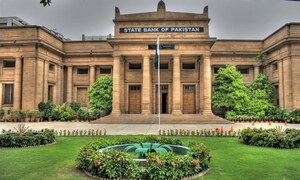
What is most alarming is that the government completely missed this trend due to underreporting in PBS’ (Pakistan Bureau of Statistics’) import statistics, all because someone at PRAL—an FBR-owned and operated entity—forgot to update a query for over seven years. And the same import numbers were likely used for countless calculations and forecasts on the basis on which numerous policy decisions were made across the government and private sector; one may judge the quality of those decisions for themselves. When this is the value-for-money the public is getting for paying over half their incomes in taxes, it shouldn’t be any wonder that those who can avoid it.
Excessive taxation and stagnant incomes are also fuelling an exodus of talent unwilling to work endlessly to feed bureaucratic inefficiency. The labour market is emptying out, and productivity is declining along with morale. As more productive segments exit the workforce, domestic businesses face shortages of skilled labour, driving up costs, lowering competitiveness, and reducing overall output. The problem is compounded as fewer workers mean higher wage pressures for businesses already squeezed by energy and tax costs, while reduced productivity further undermines the economy’s growth potential.
Those who remain are also increasingly seeking remote jobs with foreign firms, drawn by higher salaries indexed to foreign currencies. While this provides short-term income for individuals, it comes at a heavy cost to the economy. The value created by local labour is captured abroad as foreign companies extract the productivity, and foreign governments collect the taxes. Meanwhile, the domestic IT ecosystem stagnates as local firms lose both clients and talent, investment in innovation dries up, and the country forfeits an entire generation of potential entrepreneurs to digital outsourcing.
Yet, the government’s response is only committee after committee to “review” the “possibilities”. Take the example of double advance tax on exporters under the fixed and normal tax regimes. The policy has been in effect for around eighteen months and there is broad-based consensus, including from within the government, on its distortionary nature and counterproductive impact on export growth. Even the Finance Minister has acknowledged this, saying the government will reconsider it in the next budget.
The message this sends, however, is that the government fully recognizes how damaging the policy is, yet has no qualms about continuing it at the cost of crippling exports, which are ironically the first “E” in its flagship 5Es Uraan Pakistan framework.
Keep in mind the issue is not even about tax rate per se; it is about double advance taxation, a measure so ill-conceived that it drains working capital from exporters only to facilitate the state’s cash flow and revenue shortfalls. With export houses already shutting down, the budget is simply too late. If there is political will to impose new taxes through a mini-budget to meet revenue shortfalls, there should be equal willingness to remove those destroying growth in the same manner.
Two years into the IMF programme and three years into this crisis, the economy may look stable, but the stability is only one of paralysis. Despite higher taxes and revenues, the finance ministry has still breached the 60 percent debt-to-GDP ceiling set under law. Fiscal sustainability mechanisms and other checks and balances on the government exist only on paper. The Special Investment Facilitation Council (SIFC) was meant to be a solution, but it remains constrained by the same ossified bureaucratic hurdles it was supposed to be jumping through.
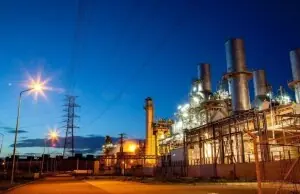
The whole-of-government approach is just another slogan as Ministries and Departments each cling to their own mandates, not considering the broader economic implications of their policies. Take for example the levy on gas supply for captive power generation. Everyone agrees that it is incorrect in its calculation; it comes out negative when calculated according to law.
Yet, for only Rs. 35 billion worth of gains in the power sector, which themselves have been largely wiped out by consumers exiting the grid for solar, the gas sector has been pushed to collapse with a Rs. 109 billion shortfall in the cross subsidy, USD 378 million in estimated losses to E&P companies, and USD 12/MMBtu RLNG diverted to domestic consumers with an USD 8/MMBtu subsidy.
Similarly, the Finance Ministry shows little concern for how excessive and distortionary tax policies erode industrial viability and, in turn, reduce power consumption, which comes back to haunt the same Ministry in the form of increasing circular debt. The Planning Commission, whose role is precisely to evaluate such inter-linkages, is missing in action, detached from the coordination and analytical oversight that economic management demands.
The simple fact is that the government cannot keep taxing a shrinking economy and expect it to hold. Instead of forming yet another committee, it might be worth enacting the recommendations of the last one for a change. Everyone already knows what needs to be done; the space for it will have to be created by the Finance Ministry.
Copyright Business Recorder, 2025

PUBLIC SECTOR EXPERIENCE: He has served as Member Energy of the Planning Commission of Pakistan & has also been an advisor at: Ministry of Finance Ministry of Petroleum Ministry of Water & Power
PRIVATE SECTOR EXPERIENCE: He has held senior management positions with various energy sector entities and has worked with the World Bank, USAID and DFID since 1988. He is former secretary general of APTMA. He has many international publications and has been regularly writing articles in Pakistani newspapers on the industry and economic issues which can be viewed in Articles & Blogs Section of this website.











Comments
Comments are closed for this article.