


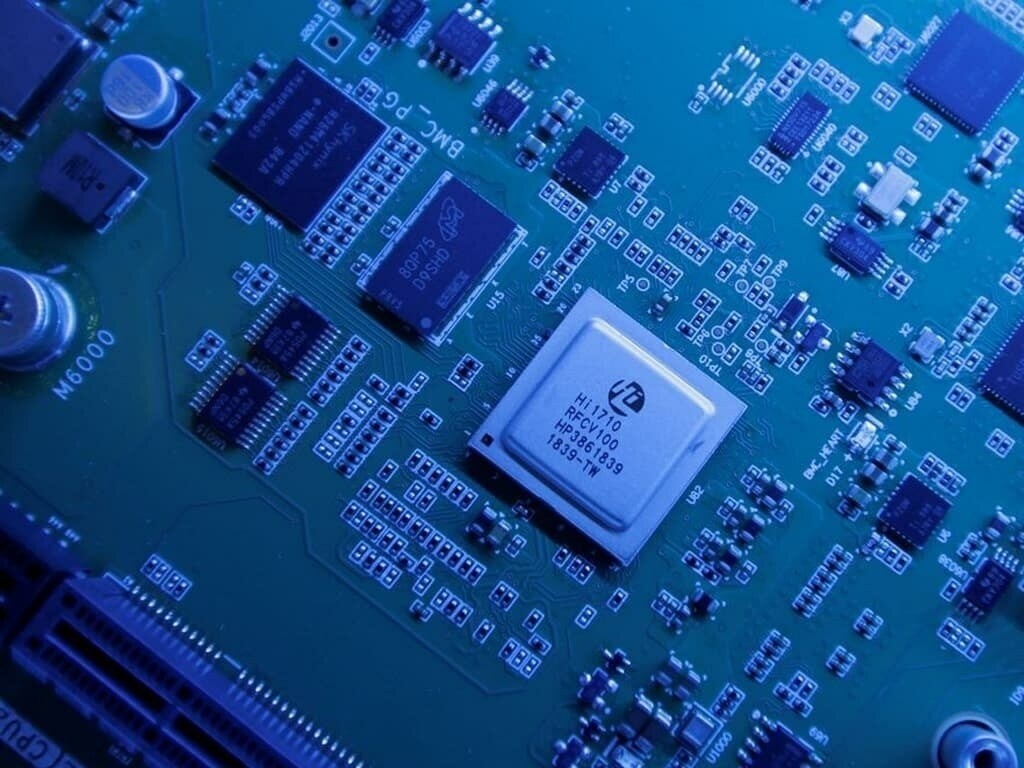

With grand fanfare the Prime Minister (PM) recently announced entering the huge Semiconductor Sector of the world. While most Asian countries have ventured into this industry, Pakistan seriously lags mainly because of lack of focus and workable road map. Despite all the glitter of the inauguration by the PM the output or product of the effort requires clarification.
As reported, the global Semiconductor industry is valued over USD 600 billion. The programme has been named ‘INSPIRE’ (Imitative to Nurture Semiconductor Professionals for Industry Research and Education). Rs 4.5 billion has been allocated for the project to be spearheaded by Ministry of Information Technology (MoIT) and executed by the Pakistan Software Export Board (PSEB). The Chairman of National Semiconductor Task Force, PSEB Chief and IT Minister also participated in the event.
Pakistan started off well by producing Silicon from our local sand. The National Institute of Silicon Technology (NIST) produced the wafers to build Semiconductors in the decade of the seventies. The Crystal Pullers are still there lying idle for decades that followed. The National Institute of Electronics (NIE) was tasked to build electronic devices. There was an Electronics Wing in the Ministry of Science and Technology (MoST) headed by an Electronics Adviser.
In the year 1992 fresh from my Intel experience, I was able to convince the ministry to develop a Silicon Wafer Fab to produce semiconductors locally. It was decided to set up the facility within NIE which was to be later transferred to the private sector following the PIDC model.
A market study was also carried out to identify Integrated Circuits (ICs) most widely used in the country. Plan was to transfer middle of the road technology (1 to 2 Microns) which could serve both local and foreign demand. Before the project could be launched the government of Benazir Bhutto was changed.
As President, Farooq Leghari took keen interest in the development of technology in the country. He had formed a committee of experts to identify projects. The de-regulation of the Telecom Sector was also an outcome of this effort.
The government of Nawaz Sharif wanted the private sector to lead the effort. The PIDC model was shelved. Instead, it was decided to follow the Israeli approach of finding a direct foreign technology partner/investor. The Prime Minister (PM) of Israel approached the President of Intel with a blank cheque to establish a Semiconductor Facility at Tel Aviv. All Intel conditions were accepted.
Today the facility is fully functional. ICs are being designed and fabricated there. At the time of the Musharraf took over in 1999, I was in California exploring the possibility of such a technology partnership. The sudden change of government proved to be a setback.
Finally in the year 2002 when I took charge of Pakistan Science Foundation (PSF), my focus shifted to energy and mining sectors. At that juncture, Pakistan fell from a surplus to an energy deficient country. Since 2004 I have focused on developing the Black Gold at Thar as an energy resource instead of the Hi-Tech Silicon-based ICs.
Pakistan needs a fast-track development plan to fabricate ICs. It must be a top-down not bottoms-up approach. Under professional leadership a Semiconductor Facility should be established either in Islamabad or Lahore in collaboration with a foreign entity.
There are several Semiconductor companies that are willing to download their low-end facilities under an agreement to buy back finished products to meet some of their dwindling needs while serving the local market in Pakistan. It is time to act urgently as we are already late in entering this vital sector. Instead of research and education we need to produce our own Semiconductors. Historically, product-driven projects have met with success in the country. Building of the Nuclear Device, Tanks and Fighter Aircrafts are examples of success.
Strategic Plans Division (SPD) did manage to set up a Semiconductor Fab in Hassanabdal, which was shut down as there was no sustainable business plan. There were no buyers of the ICs produced by them as the technology was obsolete. Based on my experience both local and abroad, such long-term technology development initiatives are not viable due lack of long-term policy continuity. The Semiconductor Research and Development Institute (SRDI) in Iran had to face difficulties in the procurement of Silicon Wafers to produce the much-needed ICs.
Pakistan has advantage of high-grade Silica Sand, Silicon Wafer Pullers, and qualified experts both in the country and abroad.
It is time to put the pieces together with a workable business plan to fabricate the most widely used ICs used in the ever-expanding handheld devices being assembled in the country. Instead training human resource, Pakistan needs to produce Semiconductor devices by following the Intel-Israel model of fast-track technology transfer.
Both PSEB and MoIT are the end users of ICs, manufacturing and technology transfer is not their forte. NIE campus in Islamabad can be converted into an SRDI-like facility in Tehran to launch this vital initiative for the domestic production of ICs. It is time to enter the market at the production end. In the world of technology, it is called ‘Leap Frogging’, which calls for planned large steps not small Turtle like crawling that have been ongoing for decades. Message is loud and clear to act not crawl or nurture.
Copyright Business Recorder, 2025
The writer is an ex-Chairman Pakistan Science Foundation; email: [email protected]

























Comments
Comments are closed for this article.