


Once a dispute reaches finality via judgment, it cannot be revisited: SC
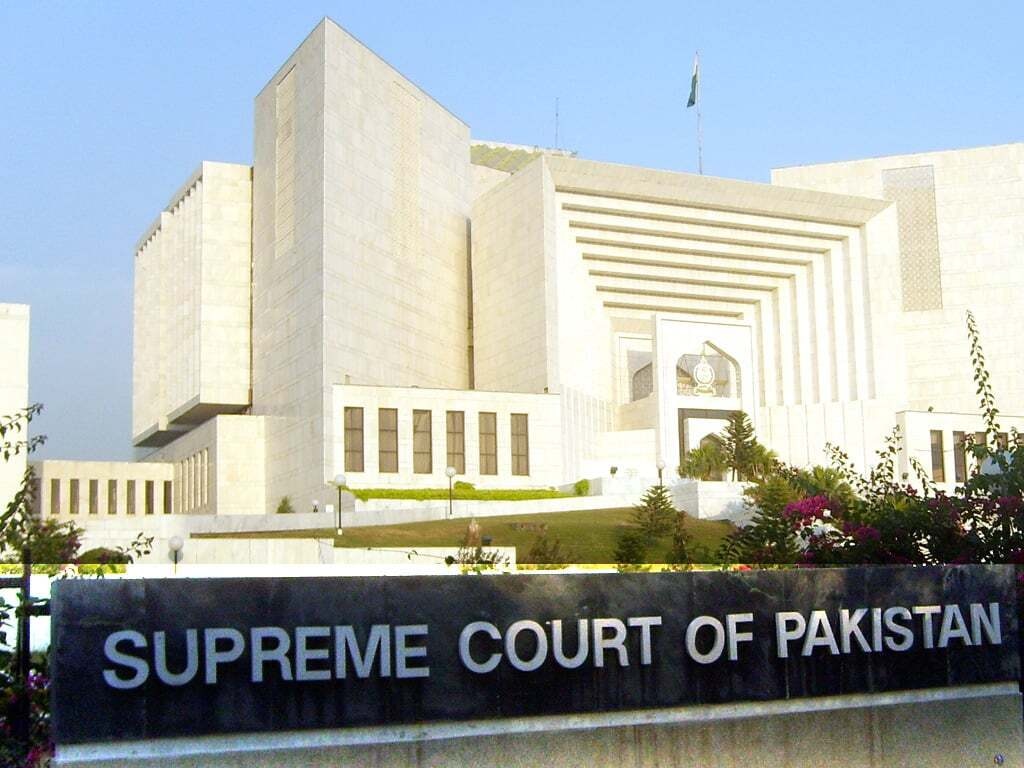

ISLAMABAD: The Supreme Court of Pakistan has ruled that once a dispute between the two parties reaches finality through a judgment, it cannot be revisited, especially by a lower forum.
A six-page judgment, authored by Justice Muhammad Shafi Siddiqui, said that the prime aim of this principle of law is to uphold the administration of justice and prevent the misuse of legal procedures by ensuring that the outcome of litigation remains conclusive. It aims to prevent the multiplicity of legal proceedings stemming from the same cause of action.
The facts of the case are that the director, Intelligence and Investigation, detained and seized Hino Prime Movers and issued notice under Section 17 of the Customs Act, 1969. Aggrieved, the petitioners (Burki & Co. and M/s. Ameer Muhammad Association) filed a constitution petition (D-7925 of 2015) before the Sindh High Court, pleading it did no violation of the terms and conditions of para-9(ii) (1) and (5) of the Import Policy Order, 2013.
However, the SHC on 26.04.2016 passed a judgment declaring that the prime movers imported under the garb of clause 9(ii) of the IPO, 2013 were found, for onward sale, in the showrooms of the petitioners and were not utilised for which the IPO, 2013 was introduced; thus, they were rightly detained and seized. On 23 June 2016, the apex court upheld the SHC verdict.
26th amendment case: SC asks petitioners why they want constitution of ‘selected’ bench
The petitioners, after having exhausted the remedy up to the Supreme Court, then underwent a second round of litigation on account of a showcause notice issued, where an order-in-original dated was passed with clear findings that the Supreme Court had already set the controversy of violation of IPO, 2013, at rest.
Despite the conclusion of controversy, the petitioners approached the Customs Appellate Tribunal, Bench-II, Karachi, which then reversed the findings of the order-in-original and allowed the appeals of the petitioners, being contemptuous in all respects, the Court noted.
The Court noted that in the present case, the dispute has effectively reached finality, and even under the doctrine of past and closed transactions, the matter should not have been reopened in a subsequent round of litigation by the Tribunal.
Doing so would constitute an abuse of the court’s process.
The judgment said that under the doctrine of election, the petitioners challenged the detention and seizure before the Sindh High Court and ended up getting a conclusive observation with regard to the relief claimed in Constitution Petition No.D-7925 of 2015, and the same questions were then agitated before the Customs Appellate Tribunal, Bench-II, Karachi.
The judgment said that the petitioners cannot have a second bite at the cherry by yet again seeking a declaration from the adjudicating authority, including but not limited to the Tribunal, on whom the interpretation of the relevant provision of IPO, 2013 was binding. The findings of the Tribunal are otherwise not sustainable under the law.
Copyright Business Recorder, 2025


























Comments
Comments are closed for this article.