



Bill Emmott in his 2017 book “The Fate of the West” argued how America’s collapse almost certainly triggers the collapse of Western civilization, though he concludes that America will reassert its dominance through US alliances (NATO, Five Eyes) and innovation.
China then genuinely lagged behind, having only Pakistan as an all-weather ally and lagging far behind the United States in technological and financial innovation. When US Treasury Secretary Scott Bessent recently declared, “It’s China versus the world,” Emmott’s observations strike a chord as the old-world order quickly dissolves with the coming of the AI age.
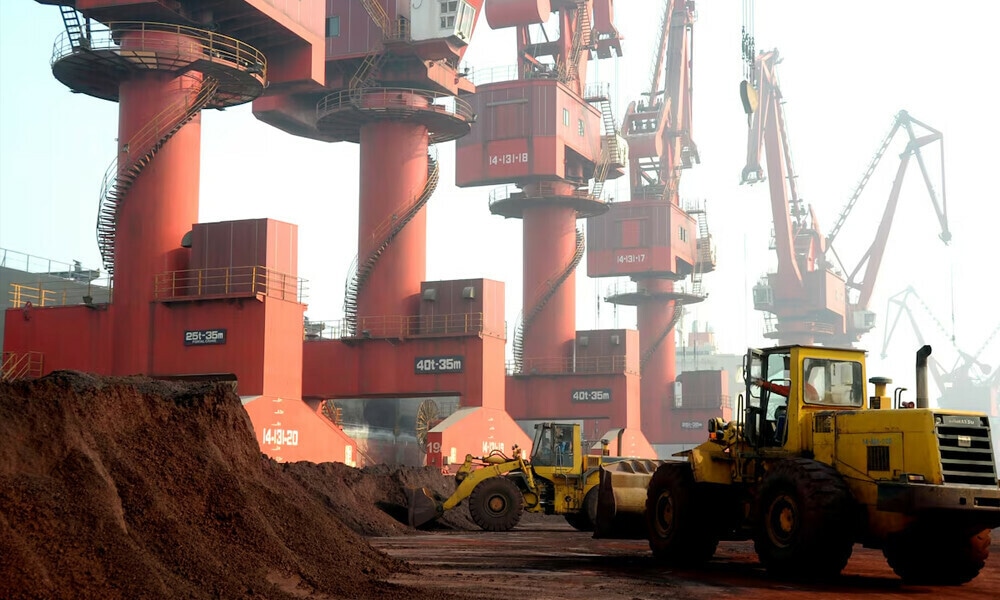
China had wisely anticipated the importance of rare earth minerals and the coming of the AI age. The words of Deng Xiaoping, who remarked during his southern tour in 1992, “The Middle East has oil; China has rare earths,” reiterate this point. Beijing now processes almost 90 percent of the world’s rare-earth elements (REE), controlling nearly three-quarters of global cobalt refining.
China also leads global lithium production chains. Its latest restrictions on rare earth exports, published as Announcement No. 62 (2025) by the Ministry of Commerce, mark a near-unprecedented escalation in the US–China trade conflict. The rule requires foreign companies to declare end use and obtain export permits if their products contain even trace amounts, sometimes as little as 0.1 percent, of rare earth materials sourced from China.
This dominance was not accidental, nor did it occur overnight. In 1991, China passed laws designating rare earths as strategic and restricting foreign mining companies from working with local firms. When the US attempted to revive its domestic industry, Beijing flooded global markets with supply, collapsing prices and bankrupting American producers like Moly Corp.
When forced to lift export quotas after a 2014 WTO ruling, China ramped production by 25 percent in 2022, again collapsing prices. Beijing has thus repeatedly used both production quotas and market manipulation to maintain control.
The recent escalation has spurred policymakers and think tanks into reassessing what strategic levers each side truly holds. While China has dominance over rare earths, the United States retains what Scott Bessent calls “structural advantages,” from aircraft engines to advanced semiconductors. Yet Beijing’s foresight in securing critical minerals continues to pay off. Only a handful of firms, like Lynas Rare Earths, operate outside Chinese processing networks.
The Australian company Lynas operates a Malaysian facility bankrolled by Japan despite opposition from Beijing in 2010, and recently signed a non-binding MoU with US firm Noveon Magnetics to build a rare earth magnet supply chain for defense and commercial applications.
With each Virginia-class nuclear submarine requiring roughly 4,600 kilograms of rare-earth elements, and future vessels requiring substantially more, the US remains in a compromised position.
As the escalation has shifted from confrontation to coordination, US Treasury Secretary Scott Bessent and Chinese Vice Premier He Lifeng have decided to meet in Malaysia this week in a bid to defuse the tariff standoff. Their dialogue comes ahead of a higher-stakes summit between President Trump and President Xi in South Korea, where rare earths and Taiwan are expected to dominate the agenda.
At the same time, Europe has sharpened its stance. Bundesbank President Joachim Nagel, speaking in Washington, called on the EU to act “in a more offensive way” toward Beijing. These events indicate that both the EU and the US are trying to contain China’s overreach in minerals and manufacturing, with the US using its industrial strength as leverage and Europe relying on its regulatory power.
Together, the Malaysia talks and the South Korea summit will stress-test whether the West can maintain a united front in an emerging world where China and Russia continue to contest Western dominance.
Beijing’s strategy appears to be focused on controlled ambiguity rather than outright confrontation. Its export rule has not been reversed but not fully enforced either. The Commerce Ministry’s statement that “compliant export for civil use can get approval” indicates flexibility on paper while preserving leverage in practice.
The restrictions, set to take effect on December 1, have put immediate pressure on the US government, creating a short window of hope for investors and businesses. Interestingly, in a move to avoid a head-on collision with the US, China has deliberately avoided targeting Taiwan’s chip production directly, since the five newly restricted elements reportedly differ from those used in TSMC’s wafer processes. This suggests Beijing is flexing its muscle with precision rather than aggression.
Washington’s responses, such as tighter audits on Chinese stocks or new investment curbs, appear peripheral compared to Beijing’s which can disrupt entire industries with a single export rule.
Amid this great power rivalry lies a quieter opportunity for Pakistan. The country’s geography, once defined by its borders, may soon be defined by its bedrock. The Reko Diq project in Balochistan, one of the world’s largest undeveloped copper-gold deposits, now sits at the intersection of competing global strategies. Its revival under Barrick Gold, backed by US and Canadian investment, signals Washington’s renewed interest in the region’s mineral corridors.
At the same time, China continues to deepen its footprint through CPEC, extending its logistical reach from Gwadar to the western frontiers of Balochistan.
This dual engagement places Pakistan in a uniquely strategic position. Just this month, Pakistan dispatched its first consignment of rare-earth and critical minerals to the United States as part of its USD 500 million agreement with US Strategic Metals.
Much like Australia’s Lynas, the crisis has enhanced Pakistan’s strategic value. While China views Pakistan as a corridor to the Arabian Sea under CPEC, the United States now sees it as a gateway to mineral diversification and industrial security.
Managing this balance will require more than diplomacy; it will demand strategic nonalignment built on economic logic.
Pakistan’s policymakers should recognize how minerals are becoming instruments of statecraft. Rather than seeing Reko Diq purely as an extraction project, Islamabad must frame it as an industrial ecosystem, building local refining capacity, attracting neutral partners such as Japan and South Korea, and positioning itself as a processing hub for critical materials.
The objective should be to sell access rather than control. In an era when raw materials shape geopolitical leverage, Pakistan’s minerals can become either a tool of autonomy or a trap of dependency.
For the United States, this is a testing moment when a rival challenges its superpower status. History suggests that when cornered, America innovates. After the Pearl Harbor attack in 1941, the United States mobilized with extraordinary speed, developing radar, jet engines, and the atomic bomb, turning vulnerability into technological supremacy. When Riyadh flooded global oil markets in 2014 to crush America’s shale producers, prices collapsed from over USD 100 to below USD 40. Instead, American firms mastered hydraulic fracturing and horizontal drilling, overtaking Saudi Arabia as the world’s largest oil producer within years.
The question is: Can America repeat this pattern? From Pearl Harbor to the atomic bomb took less than four years. The shale revolution needed fifteen. Rare earth processing may require even longer. Mountain Pass in California, America’s only rare earth mine, was shuttered twice: first when China undercut prices in the early 2000s, then again in 2015 when Chinese oversupply bankrupted its operator Molycorp.
When China acquired General Motors’ rare-earth magnet business in 1995, it shipped entire American factories to China along with the engineers who built them. Building equivalent expertise from scratch, while competing against state-backed Chinese producers willing to operate at a loss, may take decades.
The challenge is not whether America can innovate, but whether it has the time that innovation requires.
Efforts to rebuild domestic refining, invest in mineral recycling, and reshore semiconductor fabrication are already underway under the US CHIPS and Science Act. Washington recently took a 15 percent stake in MP Materials and instituted price floors to shield it from Beijing’s market tactics.
Yet the current crisis reveals these efforts arrived late. If America can channel its historical strength, its entrepreneurial agility, and technological daring, it can turn dependency into opportunity once more.
Bill Emmott’s confidence in the West rested on this idea: that open societies, though chaotic and divided, ultimately renew themselves through innovation. This new cold war will test whether the pillars of Western civilization, free trade, multilateral cooperation, and democratic governance, can still endure in an age defined by data, minerals, and machine intelligence. Last week’s events suggest the test has begun, and America struggles to find its footing.
For Pakistan, this might be a defining moment. The world’s new power struggle comes with crypto, metals, and machines rather than armies or currencies. Pakistan’s USD 500 million minerals deal with Washington and its multi-billion-dollar CPEC infrastructure with Beijing place it at the center of this contest.
The country that emerges stronger will sell access without surrendering control, build refining capacity rather than just extraction sites, and attract neutral partners like Japan and South Korea to balance great power pressure.
The countries that will endure are those that can adapt, balance, and innovate. As America once proved in its shale revolution, survival belongs to those who reinvent resources, not those who merely control them.
Copyright Business Recorder, 2025
The writer is an economist and an educationist























Comments
Comments are closed for this article.