


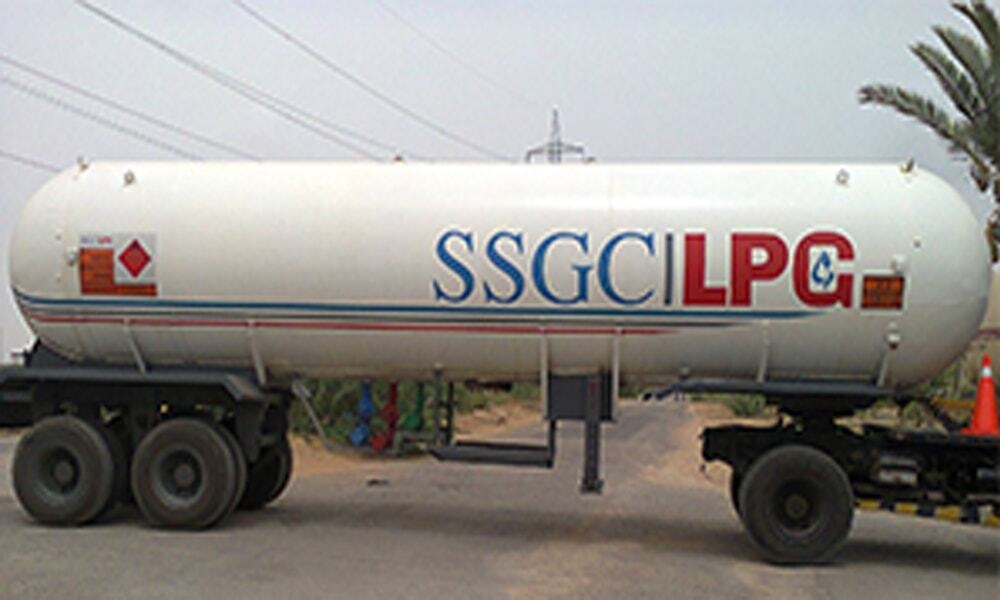

Liquefied Petroleum Gas (LPG) has become an indispensable component of Pakistan’s energy supply, providing a vital bridge fuel for millions of households and industries beyond the reach of the national gas grid.
As indigenous gas reserves continue to decline and energy demand rises, LPG offers a cleaner, portable, and more accessible alternative to traditional fuels such as biomass and kerosene.
However, the reliability and safety of this vital energy chain hinge on a fleet of road tankers, commonly known as LPG bowsers that transport the fuel from terminals and refineries to storage and filling plants nationwide. While these bowsers enable nationwide access, their operation poses significant risks that require rigorous technical and safety compliance, given LPG’s highly flammable nature.
Understanding LPG and its hazards:
LPG, a mixture of propane and butane, is stored as a liquid under pressure. Upon release, it expands rapidly into a heavier-than-air gas that can accumulate in low-lying areas, forming explosive mixtures with air. With an expansion ratio of 1:250 from liquid to vapor, even minor leaks can turn catastrophic if not swiftly contained.
Pakistan’s safety codes mirror international benchmarks such as ASME Section VIII and NFPA 58, which define design, construction, and operational standards for LPG pressure vessels and transport systems. Adherence to these standards is the foundation of safe LPG movement.
The LPG bowser: a mobile pressure vessel:
An LPG bowser is not a conventional vehicle; it is a mobile pressure vessel engineered for high-pressure containment, typically designed for a working pressure of about 17.2 bar (250 psi) and hydrostatically tested up to 26 bar (375 psi). Each unit integrates critical safety components such as emergency shut-off valves, pressure relief devices, excess flow valves, roto gauges, and grounding systems to prevent static discharge.
Bowsers operating in Pakistan must be manufactured by OGRA-registered fabricators and certified by the Department of Explosives. Built with high-grade steel and subjected to strict inspections, these vehicles form the backbone of the LPG logistics network.
Regulatory oversight: a multi-agency framework:
Pakistan’s LPG transport sector operates under a multi-agency framework involving OGRA, the Department of Explosives, the National Highway Authority (NHA), and Regional Transport Authorities (RTAs).
OGRA issues transportation licenses under the LPG (Production & Distribution) Rules, 2001, ensuring safety and operational compliance. The Department of Explosives handles registration and certification of pressure vessels. NHA enforces axle load and road-worthiness regulations, while RTAs oversee vehicle fitness certification.
While the existing regulatory structure provides comprehensive coverage, relevant transport associations have highlighted the need for greater coordination between the Department of Explosives and OGRA, as both are involved in safety-related licensing. Industry stakeholders and policymakers alike stress that harmonization of roles could enhance efficiency, reduce duplication, and support a more streamlined national licensing frame work. Currently, OGRA caps bowser capacity at 30 metric tonnes (with a 15% allowance). The unregistered bowsers operating outside regulatory oversight represent a latent risk to public safety, infrastructure, and the environment.
Safety, training, and inspections:
Under Ogra’s mandate, periodic inspections and third-party certifications are mandatory for all LPG transporters. Safety relief valves, fire extinguishers, and emergency shut-offs are checked regularly. The Authority has also issued detailed Standard Operating Procedures (SOPs) for safe loading, unloading, and parking of bowsers to minimize potential hazards.
Driver training remains another critical aspect. Ogra, in collaboration with the National Logistics Cell (NLC), organized specialized driver training programs covering firefighting, emergency response, and ethical conduct. Drivers are the first responders on the road, and empowering them with the right skills ensures that safety begins behind the wheel.
Understanding the risks: BLEVE and beyond:
Among the most catastrophic scenarios is a Boiling Liquid Expanding Vapor Explosion (BLEVE), triggered when an LPG vessel exposed to external heat undergoes structural failure. The explosion and resulting fireball can devastate everything within a large radius. Preventive measures such as maintaining safe distances, regular valve inspections, and ensuring firefighting readiness are crucial to mitigating such outcomes.
Emergency preparedness and public awareness:
Public awareness forms the final layer of defense in the LPG safety chain. In case of leaks or fires, communities must understand how to react: evacuate downwind, avoid ignition sources, and alert emergency services immediately.
The tragic Multan incident in January 2025, which caused multiple fatalities and widespread damage, highlighted the dire consequences of delayed evacuation and limited public knowledge. Since then, OGRA has enhanced coordination with provincial disaster management authorities, Rescue 1122, and local governments to improve community preparedness through awareness drives and mock emergency drills.
Towards a culture of safety: recommendations and best practices:
LPG bowsers are essential to sustaining Pakistan’s energy accessibility, but their safe operation is a shared responsibility. Continuous collaboration among OGRA, the Department of Explosives, NHA, RTAs, and local authorities is key to ensuring consistent safety enforcement and public protection.
A policy shift towards harmonization of roles, mandatory electronic tracking of bowsers, and enhanced enforcement of fitness and licensing standards will further strengthen the sector’s integrity. Simultaneously, promoting a safety-first mindset within the LPG industry, from operators to drivers, can transform the entire supply chain into one driven by accountability and prevention.
Conclusion: from hazard to safety culture:
As LPG’s role in Pakistan’s energy mix grows, the safety of its road transport network must remain paramount. Every bowser represents not only an energy carrier but also a public safety responsibility. By aligning with global best practices, enhancing coordination among regulators, and strengthening public awareness, Pakistan can turn potential hazards into a culture of safety and confidence.
Through shared responsibility, continuous vigilance, and harmonized regulation, LPG bowsers can move beyond being perceived as “hazards on wheels” to becoming symbols of safety, reliability, and national energy resilience.
Copyright Business Recorder, 2025
The writer is currently Serving as Joint Executive Director (LPG) in Oil and Gas Regulatory Authority (Ogra), Islamabad
























Comments
Comments are closed for this article.