


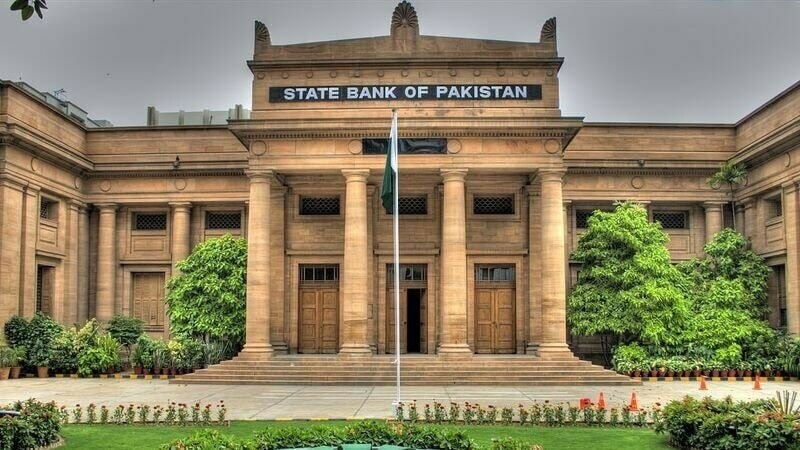
EDITORIAL: The State Bank of Pakistan (SBP) annual report for FY25 encapsulates the significant improvements in major macroeconomic indicators.
First, Gross Domestic Product (GDP) registered growth of 3 percent in 2025 against 2.4 percent the year before (in spite of a dramatic decline in agriculture growth to 1.5 percent in 2025 from 2024’s 6.4 percent). Industrial growth rose by 5.3 percent in 2025 against 2024’s 0.9 percent (in spite of large-scale manufacturing sector registering negative 0.7 percent in 2025 against 0.9 percent in 2024).
The 3.0 percent growth is lower by .04 percent from earlier estimates by the SBP and the Pakistan Bureau of Statistics (PBS) though it is a source of concern that neither the World Bank (2.6 percent) nor the International Monetary Fund (2.7 percent) has upped their growth estimates for Pakistan for last fiscal year.
The 2025 floods began in June this year (the fiscal year ends on 30 June) and because the flood damage assessment was not available by end June this was perhaps not taken into consideration by the authorities but which may have accounted for donor agencies not adjusting the growth rate upward.
The negativity in the LSM sector, the main driver of exports no doubt contributed to a decline in exports as a percentage of GDP — from 11.1 percent on 2024 to 4.3 percent in 2025, while imports due to administrative measures declined massively from 0.9 percent in 2024 to 11.2 percent in 2025 accounting for current account balance of USD 2,113 million in 2025 against negative USD 2,072 million in 2024. This decline in imports may have contributed to negative LSM, given its major reliance on import of raw materials and semi-finished products. In addition, it is relevant to note that the doubling of private sector credit as a percentage of GDP in 2025 against 2024, from 6.1 percent to 12.2 percent, had little impact on LSM, the main private borrower in the economy, which accounts for economists arguing that higher credit was used for speculative investment rather than for productive activity.
Visible improvements in the economy have been documented in the report, including a massive decline in inflation — from 23.4 percent in 2024 to 4.5 percent last fiscal year — and the policy rate — from 20.5 percent in 2024 to 11 percent in 2025. Two observations are in order.
First, the IMF has extended a technical assistance to Pakistan (effectivity July 2025) to overcome “important shortcomings” in the source data accounting for one-third of the GDP and further maintaining that there are issues of granularity and reliability as well as the need to develop a new Producer Price Index.
And second, the decline in the policy rate benefited the government as it enabled it to borrow large sums (1.225 trillion rupees was borrowed from 8 commercial banks to retire the circular energy debt whose servicing costs would be payable by the consumers as is the norm), thereby crowding out private sector credit as well as increase borrowing from multilaterals and bilaterals to strengthen foreign exchange reserves that reached USD 14,506 million by end 2025 (with rollovers from the three friendly countries major contributors) against USD 9,390 million in 2024.
The report noted private savings at 18 percent of GDP (with deposits in national savings centres used by the government under the head unfunded debt therefore not available to the private sector) and government savings at negative 4.9 percent (reflective of budget deficits) while investment (private) was 9.8 percent and public 2.9 percent (as public sector development programme is routinely slashed to meet the budget deficit target).
The report refers to fiscal consolidation reflective of higher revenue collections in 2025 as opposed to the year before; however, July-June 2025 collections fell short of the target agreed with the IMF by 178 billion rupees — with the expected shortfall this year in the first quarter at 198 billion rupees attributed mainly to the flood damage. The shortfall from what is agreed with the Fund has become the norm and indicates the failure of the negotiating team to convince the Fund of what is a realistic target.
The report concludes with the observation that “the outlook is subject to risks emanating from unfolding impact of floods, and uncertain geopolitical environment and global trade uncertainties.” Climate change as well as global trade uncertainties is undoubtedly a serious concern throughout the world and Pakistan is no exception.
However, one would hope that the favourable geopolitical climate that Pakistan is in today would account for some far reaching economic benefits through proactive negotiations targeted to provide some reprieve to the general public (given that 44.7 percent Pakistanis are living below the poverty line) through implementation of a less upfront and more phased reform implementation as well as voluntary sacrifices by the elite in terms of budgeted revenue sources and expenditure allocations.
Copyright Business Recorder, 2025




















Comments
Comments are closed for this article.