


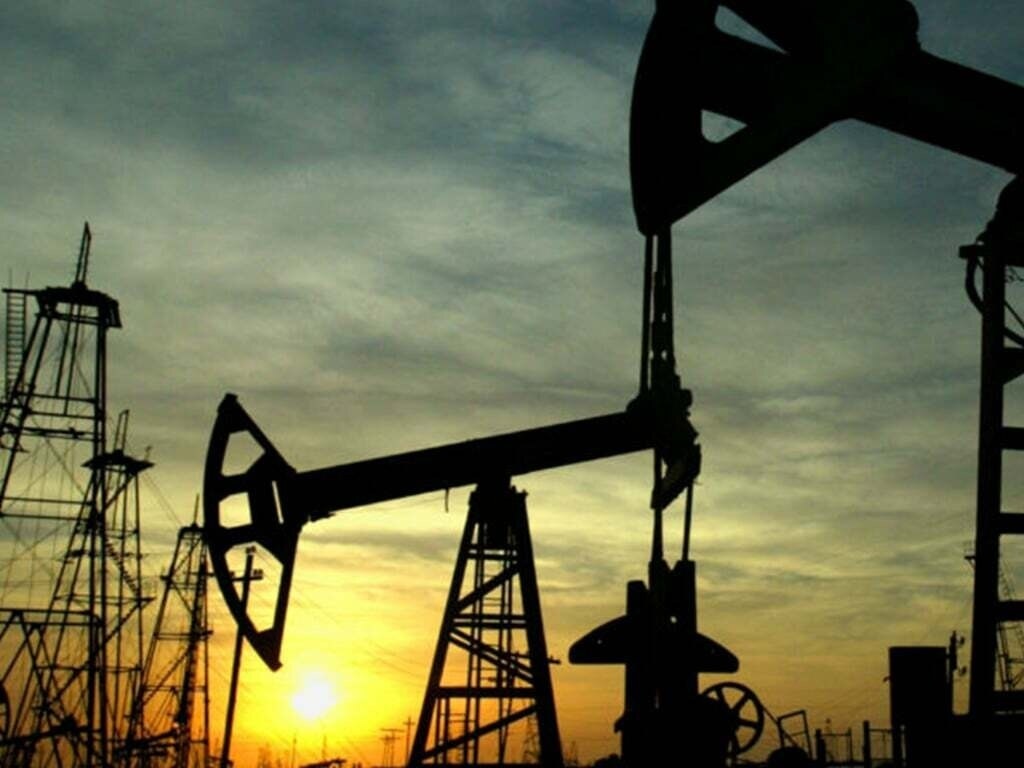

HOUSTON: Brent and US crude futures fell more than USD2 a barrel, or more than 3percent, on Friday as US President Donald Trump’s threat to impose increased tariffs on China cast a shadow over the demand outlook in a market seen as oversupplied.
“The sell-off was driven by a shift to risk-off markets following Trump’s post threatening tariffs on Chinese goods,” said Giovanni Staunovo, an analyst with UBS.
Brent crude futures settled at USD62.73 a barrel, down USD2.49, or 3.82percent, the lowest since May 5. US West Texas Intermediate crude finished at USD58.90 a barrel down USD2.61, or 4.24percent, the lowest since early May. “Today is the culmination of a variety of factors of which Trump’s threat of a massive increase in tariffs on China is just the latest,” said Andrew Lipow, president of Lipow Oil Associates.
Production increases from OPEC, additional output gains in North and South America, and the loss of geopolitical risk after the Gaza ceasefire agreement “are all factors that can be layered on top of Trump’s announcement this morning of tariffs on China,” Lipow said. Trump, who was due to meet Chinese President Xi Jinping in about three weeks in South Korea, complained on social media about what he characterized as China’s plans to hold the global economy hostage, after China dramatically expanded its export controls on rare earth elements on Thursday.
China dominates the market for such elements, which are essential to tech manufacturing. In addition to threatening to cancel the meeting with Xi, Trump said he may impose a massive increase in tariffs on Chinese goods.
Israel and the Palestinian militant group Hamas signed a ceasefire agreement on Thursday in the first phase of Trump’s initiative to end the war in Gaza. Under the deal, which Israel’s government ratified on Friday, fighting will cease, Israel will partially withdraw from Gaza, and Hamas will free all remaining hostages it captured in the attack that precipitated the war, in exchange for hundreds of prisoners held by Israel.
Numerous vessels have been attacked by the Iran-aligned Houthis in Yemen since 2023, targeting ships they deem linked to Israel in what they described as solidarity with Palestinians over the war in Gaza. The Gaza ceasefire deal means the focus can move back to the impending oil surplus, as OPEC proceeds with the unwinding of production cuts, said Daniel Hynes, an analyst at ANZ.






















Comments
Comments are closed for this article.