


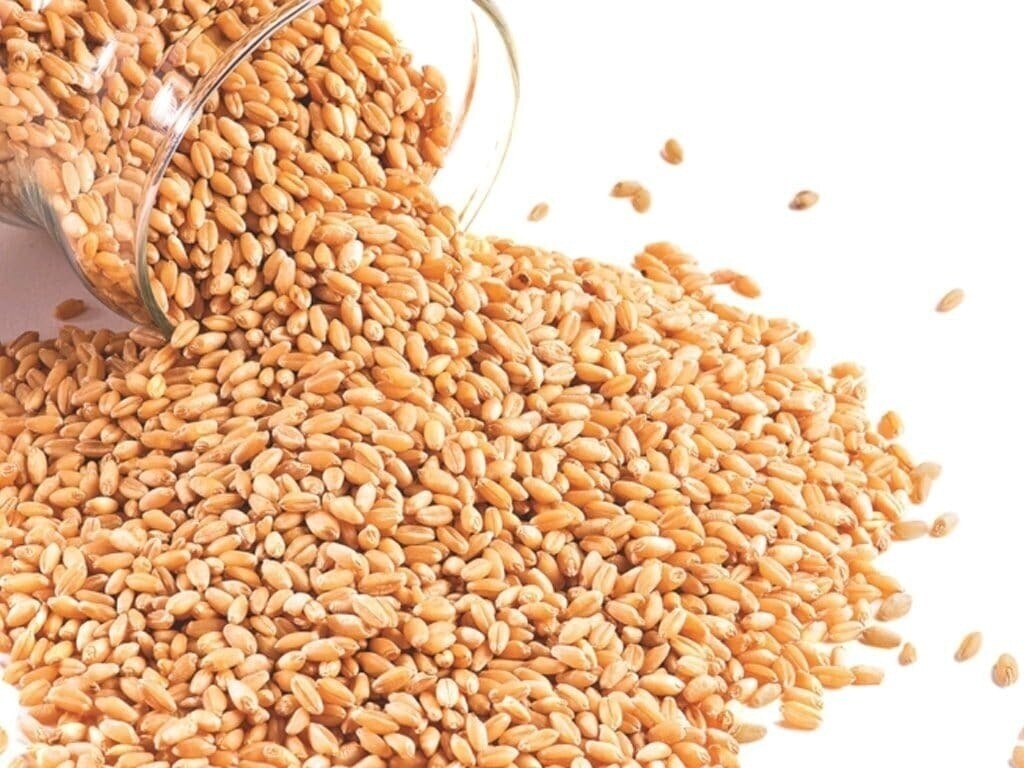

LAHORE: Farmers’ representatives have termed the Rs 3,500 per maund support price for wheat, announced by the Punjab government for the next season, as insufficient to even meet the cost of production, demanding that it be revised upward from Rs 4,000 to Rs 4,500 per maund.
Amid rising input costs and concerns over shrinking profitability, wheat growers across the country have warned of a potential decline in cultivation this season if the government fails to align the procurement price with market realities.
The farmers’ associations pointed out that while wheat in India is priced at around Rs 3,300 per 40 kilograms; the cost of fertilisers, diesel, and electricity in Pakistan is nearly 135 per cent higher, making it economically unviable for growers to continue production under the existing price structure.
Agri Forum Pakistan (AFP) chairman Muhammad Ibrahim Mughal argued that a minimum support price of over Rs 4,000 per 40 kilograms is necessary to sustain cultivation and ensure the country’s food security in the coming year. According to him, Pakistan will require around 30 million tons of wheat by April 2026 to meet the country’s needs for human consumption, animal feed, and seed. To achieve this target, wheat must be cultivated on approximately 23 million acres nationwide. Sowing has already begun in Sindh, while in Punjab; planting is expected to start within the next three weeks. About three million acres in rain-fed (barani) areas are also expected to come under cultivation, provided pricing incentives are sufficient, Ibrahim added.
He suggests that if the government sets the wheat procurement price at Rs 4,000 per 40 kilograms, equivalent to Rs 100 per kilogram, and extends a modest subsidy to urban consumers, flour prices could stabilise around Rs 90 per kilogram, keeping food inflation in check.
Khalid Hussain Bath, Central Chairman of Kisan Ittehad, rejected the decision of the provincial government, termed it “too low” and “disconnected from ground realities.” “Farmers reject the government’s proposed rate,” Bath said, stressing that the support price should range between Rs 4,500 and Rs 5,000 per 40 kilograms based on the steep rise in input costs. “Prices of DAP fertilizer, urea, diesel, and electricity have all skyrocketed, and expenses from land preparation to harvesting have doubled,” he noted.
He accused the Punjab government of announcing superficial farmer-friendly schemes, saying, “Chief Minister Maryam Nawaz is launching projects in the name of farmers, but none have provided any real benefit. Corruption has hollowed out every initiative, whether it’s the Kisan Card or the free tractor scheme.”
Bath further alleged that fake fertiliser and substandard seeds have damaged productivity, while the government has ignored the situation. “Farmers will not be deceived anymore,” he warned, declaring that growers will boycott wheat cultivation until the support price reflects actual costs.
“For three consecutive years, farmers have suffered devastation and can no longer tolerate further injustice,” he said, warning that if the government ignores farmers’ demands, the next year could bring lower wheat output and a potential food crisis.
Copyright Business Recorder, 2025

























Comments
Comments are closed for this article.