


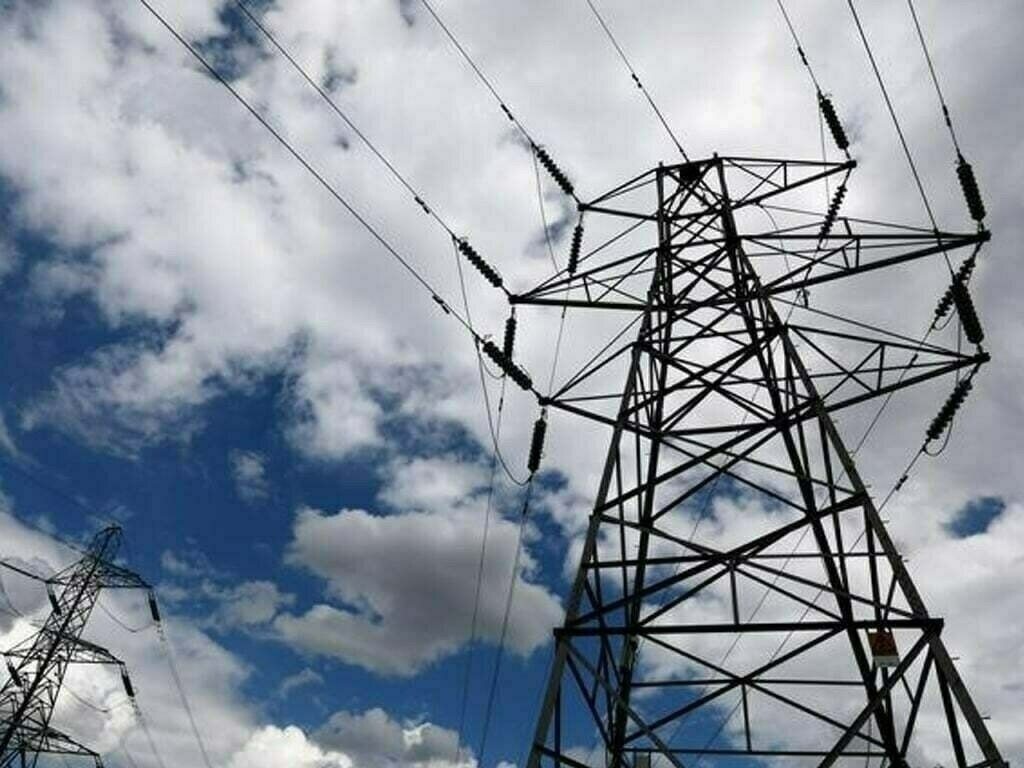

The Independent System and Market Operator (ISMO) recently organized a major event to highlight progress on the Competitive Trading Bilateral Contracts Market (CTBCM). One of the key announcements was the plan to auction 800 MW of capacity to competitive suppliers, an important milestone in opening Pakistan’s electricity market to genuine competition.
The CTBCM is not an untested or experimental model. Similar wholesale electricity market models already operate in Europe, Turkey, India, and several other countries. The rules, frameworks, and lessons from these markets are well documented. Pakistan, therefore, is not inventing a new system but adapting a proven one. The challenge lies in implementation and in ensuring that all participants, consumers, suppliers, and regulators, understand their roles and responsibilities.
One persistent issue is the lack of clarity among bulk power consumers (mainly industries) and investors hoping to become competitive suppliers. Many view “wheeling” of electricity as equivalent to transporting a regular product from one place to another, with a simple delivery fee. But electricity is very different.
Electricity is a unique commodity with characteristics that set it apart from ordinary goods. It must be consumed the very moment it is produced, as it cannot be stored economically in large volumes except through limited and costly technologies like batteries. The transmission and distribution networks move electrons at near-instant speed, making electricity markets far more complex than markets for physical products. Most importantly, demand and supply must remain balanced at all times, since even a brief mismatch can destabilize the grid. The economic and social consequences of such a collapse are enormous, which is why balancing electricity cannot be left solely to market forces, it requires constant oversight by the System Operator (SO).
Electricity markets generally trade two key products: Capacity (the ability to generate when needed) and Energy (actual electricity consumed). Here, today we focus on energy.
The Balancing Mechanism (BM) is one of the most critical tools used by any system operator worldwide. Its purpose is simple: to keep generation and demand in equilibrium in real time. If consumption rises above forecast or generation unexpectedly falls, the SO must act immediately. Through the BM, the operator can purchase adjustments, either by asking a generator to increase or decrease its output, or by compensating consumers to reduce their demand. These purchases and sales of electricity are settled at a spot price known as the System Marginal Price (SMP), which reflects the cost of balancing the system at that moment.
This mechanism is not a forward market with long-term contracts but a highly dynamic system where prices can fluctuate sharply. For instance, a generator running below full capacity may offer to increase its output if the price is attractive, while another generator might even reduce its output if compensated to do so. Similarly, large consumers can agree to temporarily cut their usage when the payment they receive exceeds the value of continuing operations. In Pakistan, however, the demand side rarely takes part in this balancing process. Instead, the system often falls back on forced load-shedding, an approach that is inefficient and misaligned with the principles of modern electricity markets.
Another issue under discussion is whether a single customer can have multiple suppliers. Technically, this is possible with one connection, but the real challenge lies in how the balancing mechanism would function under such arrangements specially with multiple physical connections.
If a customer has multiple connections or meters linked to different suppliers, it creates “blind spots” for ISMO. The operator cannot always see sudden changes happening behind the meter and therefore cannot arrange balancing measures in time. While not impossible, managing such a system would be extremely difficult and could compromise overall stability.
Moreover, all consumers, regardless of their supplier, benefit from the ancillary services of the national grid, such as frequency control, voltage stability, and reactive power support. If some consumers bypass these costs through multiple supply arrangements, the burden unfairly shifts to others, distorting the essence of a competitive market.
It is important to understand ISMO’s dual responsibilities. As System Operator (SO), it ensures that the physical grid remains stable and that generation and demand are balanced in real time. As Market Operator (MO), it manages the financial settlement of balancing actions. Every unit of energy adjusted through the BM must be purchased from someone and consumed by someone, with the costs allocated fairly.
This dual role ensures accountability. Without it, there is a risk of free riders, participants who benefit from the system without paying their fair share.
Pakistan’s energy sector cannot simply focus on acquiring cheaper renewable electricity, even though renewables are vital for sustainability. Renewable energy is intermittent by nature and does not by itself provide capacity adequacy or balancing support. Consumers and suppliers must therefore understand their obligations, both capacity and energy, and be prepared to share the costs of balancing the system.
Equally important is regulatory coordination. With multiple regulators emerging at federal and provincial levels, the risk of overlapping or conflicting decisions is real. The Council of Common Interests (CCI) should step in to ensure clarity of authority and prevent fragmentation. A decision by one authority that undermines another could have serious system-wide consequences, including the possibility of widespread blackouts.
The launch of CTBCM represents a new chapter for Pakistan’s power sector. But success will not come simply from auctioning megawatts or signing bilateral contracts. It will require a deep understanding of how electricity markets function, why balancing mechanisms matter, and how costs must be shared fairly among all participants.
As Pakistan transitions toward this competitive framework, the key to stability lies in education, coordination, and a shared commitment to the principle that electricity is not just another commodity, it is the lifeblood of the economy, and its balance must be safeguarded at all costs.
Copyright Business Recorder, 2025
The writer is the CEO of a consultancy firm specializing in energy research, advisory services, and strategic consultancy























Comments
Comments are closed for this article.