


EDITORIAL: Against the backdrop of the 80th session of the UN General Assembly, a significant diplomatic shift is underway with leading Western nations, including the UK, Canada and Australia formally recognising a Palestinian state on September 21, a move expected to be followed by at least 10 other countries.
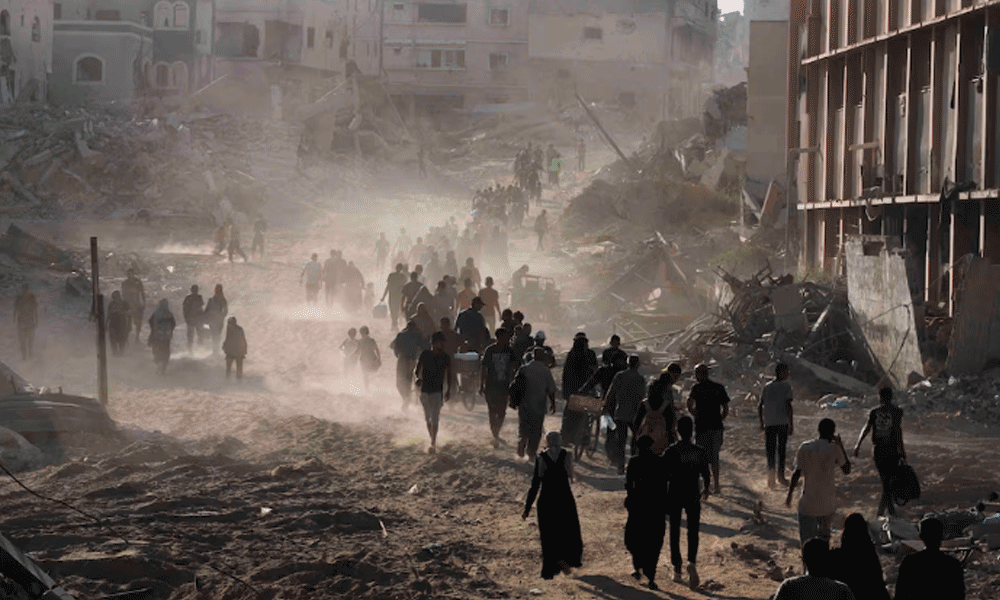
This comes nearly two years after the events of October 2023, which saw Israel launch a relentless bombing campaign on Gaza that has so far taken the lives of 64,000 people, systematically razed the enclave to the ground, and ultimately, destroyed an entire way of life.
The sad fact is that the toothlessness — and indeed, complicity — of many Western powers in the face of Israel’s genocidal campaign has rendered this recognition a belated and largely symbolic gesture, one that will remain impotent without concrete measures to hold Israel accountable.
Nevertheless, these recognitions constitute a profound breach in decades-long Western foreign policy consensus that had always aligned closely with Israeli ambitions in the region. It reflects a substantial shift in public opinion in Europe and North America, making it no longer politically tenable to ignore Israel’s atrocities, as the world watches children dying in breadlines and entire generations being buried beneath the rubble of their own homes.
Moreover, this is also a bid to challenge Israel’s efforts to foreclose the possibility of a Palestinian homeland, even as its military continues to pound Gaza and make further inroads into the West Bank.
Yet for all their historical weight and the potential of these recognitions to lay the groundwork for a future sovereign state and reshape international consensus towards accepting Palestinian self-determination, they will only achieve their purpose if backed by tangible constraints: economic consequences, diplomatic isolation, and most critically, enforceable limitations on Israel’s military capabilities.
This is the essential bridge that turns diplomatic symbolism into substantive change. And that won’t happen as long as the US continues its unconditional diplomatic and military support of Israel, effectively bankrolling its occupation of Palestinian territories while shielding it from any meaningful accountability on the world stage.
It is important to note that the recognitions form part of a broader, largely French-led initiative, which outlines a post-ceasefire vision where a democratically elected Palestinian Authority assumes governance, supported by a UN-mandated peacekeeping force to secure Gaza.
Unsurprisingly, this vision has been roundly rejected by Prime Minister Benjamin Netanyahu’s government, raising fears of heightened confrontation in the Middle East in the coming days. There are now fears that Israel, far from being chastened by this diplomatic schism with its traditional allies, will instead respond by accelerating the annexation of parts of the West Bank.
As reported by The Guardian, even before the recognitions, it had approved plans to build new settlements in the part of the West Bank known as the E1 corridor that would cut the territory in two and sever its links with east Jerusalem. Such a move would, in turn, risk inflaming the Arab world, jeopardising the Abraham Accords and galvanising European support for sanctions on Tel Aviv. With Washington condemning these recognitions as a breach of longstanding US policy, a new transatlantic rift also appears increasingly likely.
It has to be said that there is a profound historical irony in the architects of the Balfour Declaration now formally recognising a Palestinian state after more than a century of backing policies that undermined it. However, for all its symbolic weight, there is a palpable fear that this diplomatic shift comes too late, as the territorial and political reality may have already foreclosed the possibility of a viable sovereign future. The world must now ensure that these recognitions become a foundation for genuine statehood, and not just a historical footnote.
Copyright Business Recorder, 2025
























Comments
Comments are closed for this article.