


Five-year used vehicles: TPB okays commercial import with 40pc extra duty
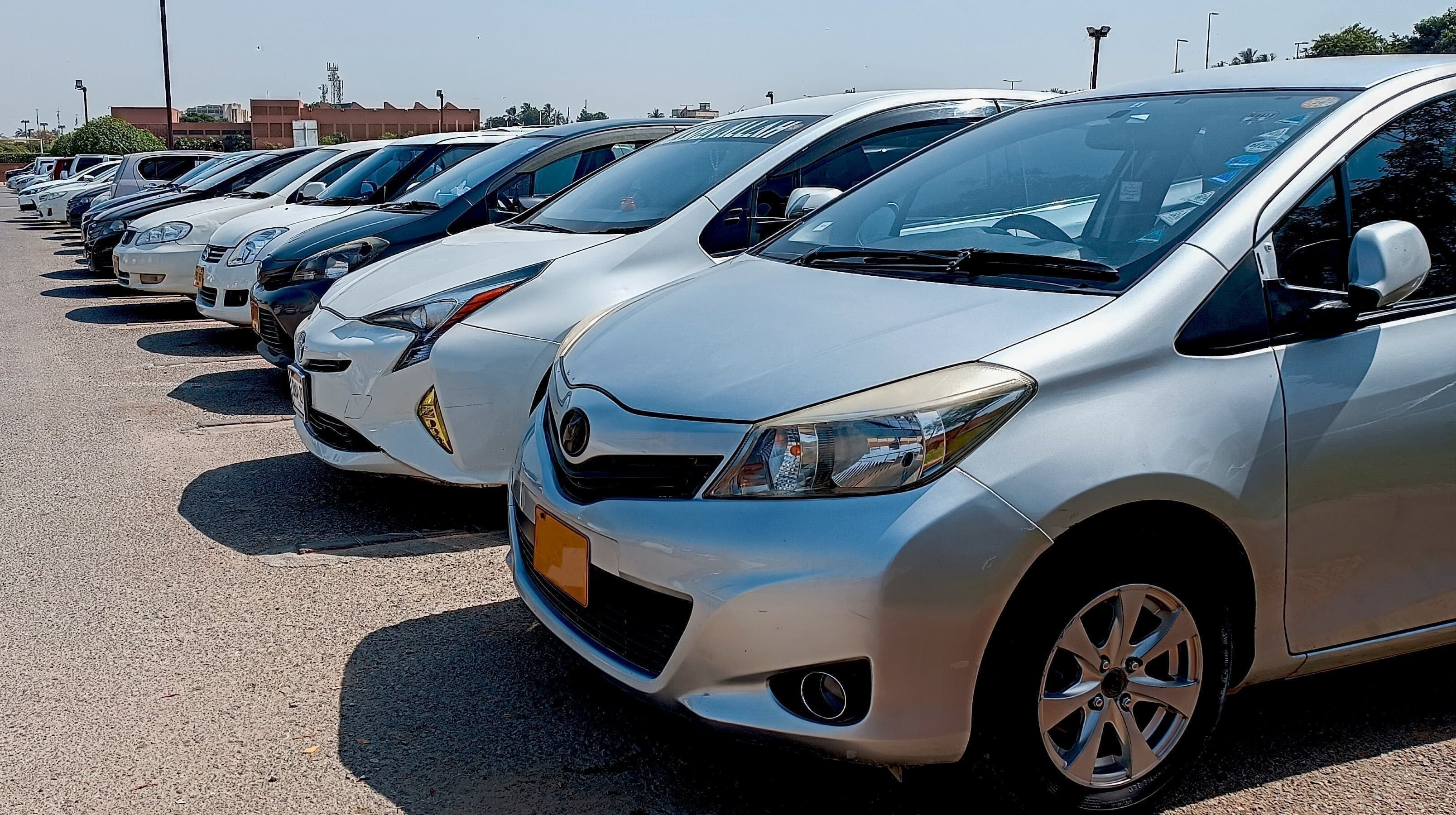

ISLAMABAD: The Tariff Policy Board (TPB) headed by Minister for Commerce, Jam Kamal Khan has formally approved commercial import of five-year old used vehicles with 40 percent additional duty despite strong opposition by the local industry which claims that the used car business is also under FATF radar for monitoring and mitigating risks of Money Laundering (ML) and Anti-Terrorism Financing (ATF), well informed sources in Commerce Ministry told Business Recorder.
The TPB which is comprised of all concerned Ministries including, Commerce, Industries and Production, Finance Division and Federal Board of Revenue discussed the issue of five year used car import in two consecutive meetings.
“TPB has approved the proposal of commercial import of five year old used vehicles. Now the summary will be submitted to the ECC this week for its formal nod,” said an official.
Tariff reforms to impact positively on auto sector: report
According to agreement with the IMF, Pakistan has to reduce its tariff gradually: ARD on commercially imported used vehicles by 10 per cent each year starting from 40 per cent in FY 2025-26.
“In line with Pakistan’s commitments with the IMF under Extended Fund Facility (EFF), it has been agreed that all quantitative restrictions on the commercial importation of used motor vehicles will be removed during FY 26Q1. Initially this will apply only to vehicles less than five years old, subject to compliance with minimum environmental and safety standards. This age limit restrictions will subsequently be removed from July 2026 onwards,” the sources added.
The proposal which has been finalized by the TPB for the ECC says “used vehicles fall under PCT 8703, initially not older than 5 years until June 30, 2026, and thereafter the vehicle age limit will be removed. Additionally, the commercial importation shall be allowed subject to compliance with the environmental and safety standards as notified by the Ministry of Industries and Production or by the concerned Ministries/ Divisions / Departments.”
The country’s auto industry, in its communication with the government has submitted numerous proposals to regulate used car imports, drawing on extensive industry background and global policies, while reiterating its strong dissent against tariff reductions and the opening of commercial used car imports.
“It look like the industry voice is unheeded and steps to de-industrialize the most precious engineering and manufacturing sector are being accelerated,” the industry said adding that Pakistan’s auto industry represents 13 world-leading brands, including Toyota, Honda, Suzuki, and Hyundai, involving 1200 auto parts makers, supporting 1.5 million jobs, and attracting approximately US$ 5 Billion in investment for tooling, facilities, and technology transfer. Pakistan is unique as it is the 16th country globally (out of 197) that manufactures all four segments of vehicles: cars, trucks, buses, tractors, and motorcycles, despite historically low and erratic volumes.
Under delusion of growth, Pakistan is undergoing a trade liberalization drive as part of its national tariff policy, committed to donors like the IMF and World Bank, which aims to drastically reduce the national average tariff over five years. Although the auto industry was initially exempted until June 30, 2026, under the 4th Auto Policy AIDEP 21-26, government communications suggest upcoming drastic tariff reductions for automotives.
These include: (i) Custom duties to be reduced from 100 percent-50 percent (based on engine displacement) to a flat 15 percent ;(ii) Regulatory duties reduced from a maximum of 90 percent raises concern at slump to zero in five years; and (iii) Additional Custom duties reduced from 7 percent to Zero in four years.
Beyond these reductions, the commercial import of used cars is being opened without any age limit, a practice “only seen in poorest countries in Africa and pacific islands like Zimbabwe, Togo, and Somalia”. No country with CKD (Completely Knocked Down) vehicle manufacturing allows such imports.
Presently, used car imports are only allowed for overseas Pakistanis. However, this provision is being illegally exploited for commercial purposes by transferring wealth abroad through Hundi and Hawala, which poses a significant threat to Pakistan’s financial credibility.
“The used car business is also under FATF radar for monitoring and mitigating risks of Money Laundering (ML) and Anti-Terrorism Financing (ATF),” the industry said, adding that it conducted a detailed study on: (i) global used light duty vehicle export and policy landscape ;(ii) used car import policies in Australia and New Zealand; and (iii) proposal for Pakistan to regulate used car import.
The report highlights robust multi-stage environment and bio-diversity friendly, quality/ safety regulatory compliant, import procedures in countries like New Zealand and Australia:
New Zealand employs a two-stage inspection and certification system. This involves pre-export inspections (often in the exporting country, e.g., Japan, by NZTA-approved organizations) verifying vehicle identification, odometer readings, and checking for damage (water/fire, structural, rust).
Upon arrival, an entry certification by Waka Kotahi-appointed certifiers includes both document and physical inspections to ensure compliance with New Zealand standards for emissions, frontal impact, brakes, electronic stability control, and overall condition. Repairs for any issues must be certified by third and fourth parties, leading to a valid Vehicle Identification Number (VIN) and a 3-year Warrant of Fitness (WoF). New Zealand also uses a mandatory vehicle efficiency labelling scheme for all imports.
Australia is utilising a highly integrated and digitally managed Road Vehicle Standards (RVS) framework. This system, managed via the ROVER portal and supported by the Register of Approved Vehicles (RAV), ensures all imported used vehicles meet Australian Design Rules (ADRs) and adhere to stringent border controls, including asbestos prohibition and rigorous bio-security measures. The framework provides clear, risk-based entry pathways, enhancing consumer confidence and promoting a fair market.
For Pakistan, the industry has recommended a structured system to regulate used car imports by aligning with global best practices.
Administrative measures include developing mutual recognition agreements with Japan, South Africa, and other right-hand drive CKD countries to ensure pre- and post-shipment inspections by accredited agencies. Vehicle data should be exchanged electronically with Pakistan, while a redressal mechanism must allow the return of non-compliant units.
Pre-shipment certifications from credible organizations like the Japan Automobile Appraisal Association would guarantee compliance with roadworthiness, emissions, crash safety, airbag performance, and UN regulations, along with proof of fresh maintenance and a minimum quality rating.
Furthermore, all imported vehicles should undergo post-shipment verification within a designated processing zone, and importers must ensure after-sales service and spare parts availability for at least ten years through binding arrangements with the concerned ministries.
Fiscal measures: Recalibrating duty and tax frameworks to create fairness while discouraging environmentally harmful imports. The current monthly depreciation rate used for tax calculation should be reduced from 1 percent to 0.25 percent, capped at 36% overall, while the minimum import trade price must be fixed in consultation with industry stakeholders.
Duties and taxes on vehicles below 1300cc, particularly under SRO 577(I)/2005, should be rationalized to eliminate distortions. Additionally, recognizing that used vehicles generally emit higher levels of pollutants, a progressive carbon levy should be imposed based on the age of the imported vehicle, ensuring both fiscal discipline and alignment with environmental objectives.
The Industry explicitly expressed its note of dissent regarding tariff reduction and the opening of commercial import of used cars. The industry has communicated that these two measures will “devastate the industry in an irreversible way” and cause the “engineering foundation of 30 years to perish”.
“We reiterates two key points provide effective protection to the local industry, ban used car imports, as no CKD country currently allows it,” said CEO, Toyota Ali Asghar Jamali, in his letter to the Ministry saying that Toyota’s import of used cars commercially is streamlined and efficient. Leveraging its global network, Toyota can procure used cars in bulk, ensure full regulatory compliance, and deliver superior after-sales services through its authorised dealerships in Pakistan. With IMC’s robust financial backing, a diverse range of world-leading Toyota products can be introduced to the Pakistani market.
“Thirteen automotive brands in Pakistan, with global operations in diversified business solutions (including CKD manufacturing and importing new and used cars), warn the government of potential deindustrialization and rising unemployment due to trade and tariff liberalization policies. They may reluctantly diversify their business under these government-directed policies, which could conflict with national interests and the “Make in Pakistan” initiative,” Jamali added.
Copyright Business Recorder, 2025


























Comments
Comments are closed for this article.