




The recent rains have once again exposed Karachi’s crumbling infrastructure. It was not a record-breaking downpour. This city has weathered far worse, but the flooding that choked its main arteries and disrupted essential utilities revealed the harsh reality faced by its twenty million inhabitants.
The core issue is that Karachi lacks a political voice. As a result, it is ignored. Those sitting in Lahore, Rawalpindi, and Islamabad have little understanding of how vital Karachi is to the country.
With the main port and bulk of Pakistan’s trade flowing through this city, any disruption here stalls the entire nation’s supply chain without alternatives. Karachi is also the financial hub; its importance to Pakistan cannot be overstated.
Authorities are highly sensitive to development and governance in Punjab, especially Lahore, yet silence prevails whenever Karachi’s systems break down. If Pakistan aspires to become a middle-income economy, Karachi must develop on par with other major cities.
While Lahore serves as a cultural hub and Islamabad as the seat of power, neither is the engine of growth. Economic activity and professionalism in Karachi outpace Punjab’s cities. This is the city that deserves to be showcased, much before Lahore or Islamabad, because it truly is the beating heart of business in the country.
To achieve sustainable growth, authorities must urgently uplift Karachi and make it livable. A comprehensive development plan is essential, and leadership must take ownership. Lahore benefits from continuity in development regardless of which political party governs. Karachi lacks this consistency.
The failure of development here cannot be blamed solely on the rule of law, contractors, or bureaucracy, as the same class of interests manage to deliver relatively better outcomes elsewhere.
There was some decent progress in Karachi in the early 2000s. Infrastructure improved, roads were built, and the city began a path toward modernization.
While pace and quality were debated, a path existed. After 2008, however, that path disappeared. The degradation of water, sewage, power, gas, and other utilities has accelerated.
This became painfully clear when the city virtually shut down after just a few hours of rain. Schools closed for three days, power outages were extended to prevent electrocution, and countless vehicles were stranded.
Attempts by authorities to draw false parallels with the floods in Khyber Pakhtunkhwa or heavy rains in Mumbai distract from their responsibility to restore Karachi’s livability.
It seems no one holds a real stake in the city. Even rural Sindh is faring better than Karachi. Today, the city is governed by the Pakistan People’s Party (PPP), which rules both the province and the city administration, yet genuine concern is lacking.
The city’s residents are fed up with this imbalance. The elite and industrialists have not taken the initiative. Even Karachi’s most upscale neighborhoods and commercial centers are barely accessibly via broken roads.
Even affluent localities such as DHA are among the worst places to live. Industrial zones, hosting some of the country’s most vibrant businesses, are in deplorable condition.
In contrast, Punjab boasts modern industrial areas such as Sundus in Lahore and FIDMIC in Faisalabad, developed only recently. Karachi’s last major industrial development, Port Qasim, dates to the last century.
Karachi desperately needs industrial parks and infrastructure to support dynamic industries, entrepreneurs, and skilled workers.
Yet its people endure the worst conditions for living and working. Other cities, such as Sialkot, provide examples where business communities have taken charge and developed their areas. Karachi’s businessmen have not yet claimed ownership of their city.
This city is a microcosm of Pakistan, home to all ethnicities and perhaps the largest Pashtun and Baloch populations in the country.
Karachi represents Pakistan to the world. If Karachi does not develop, Pakistan’s economic progress will remain a distant dream. And lest anyone should forget, Karachi’s plight is a stark reminder that without genuine representation and ownership, the city, and by extension the country, cannot thrive.
Copyright Business Recorder, 2025
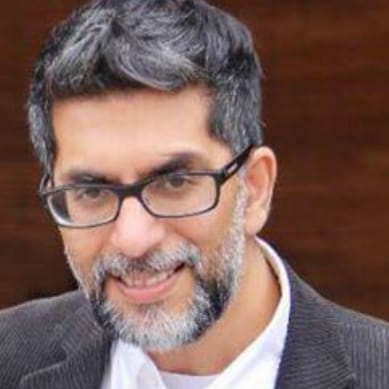
Ali Khizar is the Director of Research at Business Recorder. His Twitter handle is @AliKhizar




















Comments
Comments are closed for this article.