


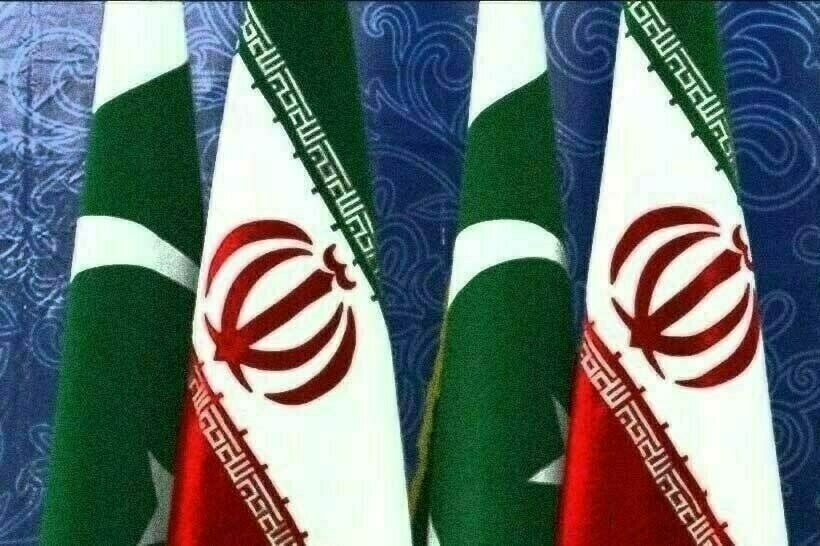
EDITORIAL: It is a promising signal that Iran and Pakistan have chosen to deepen economic cooperation at a time when the region — and indeed the world — is realigning itself under shifting power equations. A USD 10 billion annual trade target is no small ambition, and President Pezeshkian’s first official visit to Pakistan since taking office underlines Tehran’s readiness to work with Islamabad to meet it. The warmth on display, from Lahore to Islamabad, and the repeated gestures of solidarity exchanged between the two delegations reflect encouraging maturity in bilateral ties.
But ambition alone doesn’t move trade. As with most things in this part of the world, the bigger story lies in what isn’t being said. The last time Pakistan tried to pursue a transformative energy partnership with Iran, through the Iran-Pakistan gas pipeline, the entire project was brought to its knees by American pressure and the threat of sanctions. Today, the geopolitical temperature is even higher — and the sanctions’ regime is far more aggressive. So the question is simple: how exactly do both sides plan to reach that USD 10 billion mark?
The Americans have made it clear that even friends and strategic partners are not exempt from the rules. India was sharply reprimanded for engaging too openly with Russia. European states have faced secondary threats for exploring trade that could circumvent restrictions. In this environment, it is inconceivable that Washington will sit idle while two Muslim neighbours forge an expansive trade relationship with one of the world’s most heavily sanctioned economies.
And yet that’s precisely why this initiative matters. If Pakistan and Iran can demonstrate an effective, legal framework to grow trade while navigating the sanctions’ minefield, they may offer a blueprint for others in the region facing similar dilemmas. But that framework has to be clearly articulated. Otherwise, this remains yet another round of high-sounding intent with little prospect of implementation.
Border markets, local currency settlements, barter mechanisms, and third-party intermediaries have all been discussed in the past. But without serious institutional design, and real political will, they haven’t gone far. If this renewed push is to succeed, both capitals must show how the mechanics of trade will be shielded from punitive action, how banks and customs authorities will be protected, and how businesses will be incentivised to take part despite the obvious risk.
There is also a diplomatic layer that cannot be ignored. For Pakistan, this balancing act will only become harder as it tries to maintain strategic relations with both Iran and the west. The same applies to Iran, which must decide how to engage regional players without endangering its existing partnerships. Quietly, both sides likely understand that a successful trade expansion must also include a quiet understanding with Washington; or, at the very least, the ability to convincingly demonstrate that the arrangement does not violate international obligations.
It is also worth asking why there hasn’t been more transparency from both governments about how these goals will be achieved. The statements from the Iranian president were full of brotherly warmth and regional vision. The Pakistani side echoed those sentiments. But beyond calls for unity and generic pledges of cooperation, there is still little detail on how a sanctions-proof architecture will be built.
This silence is understandable, perhaps. But it is also dangerous. In an economic environment as fragile as Pakistan’s, and as constrained as Iran’s, lofty goals without credible roadmaps invite not just scepticism, but policy fatigue. Stakeholders — whether state-owned firms, private traders, or regional partners — need clarity before they can commit.
Still, this moment holds promise. For once, both countries are aligned in political vision and economic intent. If they can now align on execution, the results could be transformative. But they must also be realistic. In today’s world, trade isn’t just about tariffs and logistics; it’s about sovereignty, resilience, and the skill to navigate hostile global currents.
That’s the test before them now.
Copyright Business Recorder, 2025




















Comments
Comments are closed for this article.