



Pakistan’s oil marketing sector started FY26 on a mixed note, with July 2025 petroleum product sales totalling 1.22 million tons. This represented a modest 2 percent increase compared to the same month last year but a steep 22 percent drop from June 2025.
The figures highlight how the sector is grappling with both temporary disruptions and longer-term structural changes in how fuel is consumed.
Petrol demand reached 0.61 million tons, up 4 percent year-on-year, thanks to higher automobile sales and tighter control on smuggled Iranian fuel. Yet, volumes fell 16 percent from June as heavy monsoon rains and flooding disrupted mobility, and a sharp price increase of PKR 13–14 per litre weighed on consumer sentiment and discretionary driving.
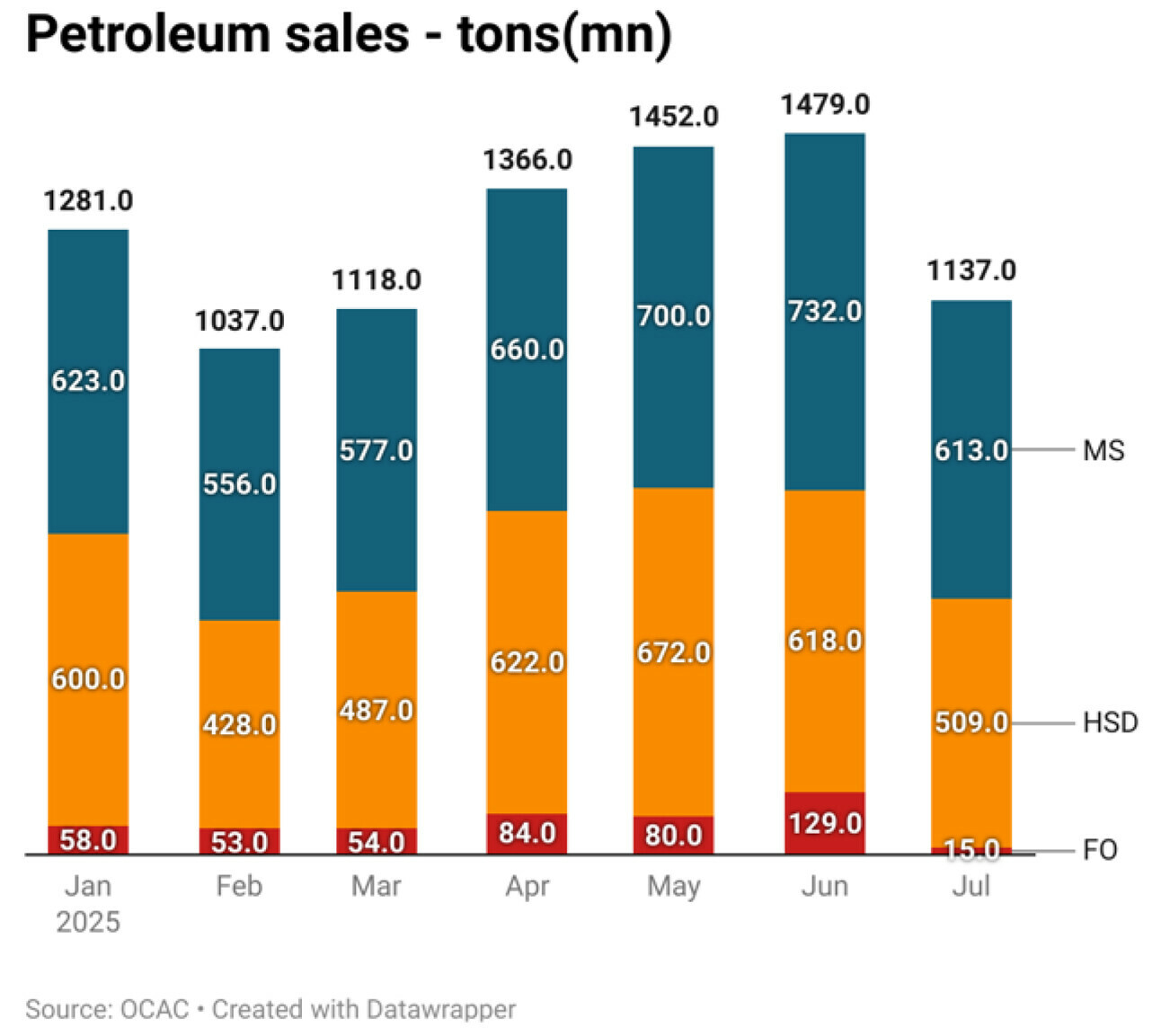
High-speed diesel (HSD) followed a similar path. Sales climbed 9 percent year-on-year to 0.51 million tons, supported by a rebound in transport and industrial activity and better enforcement against fuel smuggling. However, demand dipped 18 percent month-on-month because the agricultural Kharif sowing season had ended, and prices jumped by PKR 20–22 per litre, putting pressure on freight and farm operations alike.
Furnace oil sales, meanwhile, slumped to a historic low of only 15,000 tons—a staggering 80 percent year-on-year and 88 percent month-on-month drop. The decline highlights the ongoing structural shift away from furnace oil-based power generation, a trend accelerated by the government’s imposition of a Rs77 per litre Petroleum Development Levy that made furnace oil-fired power generation prohibitively expensive.
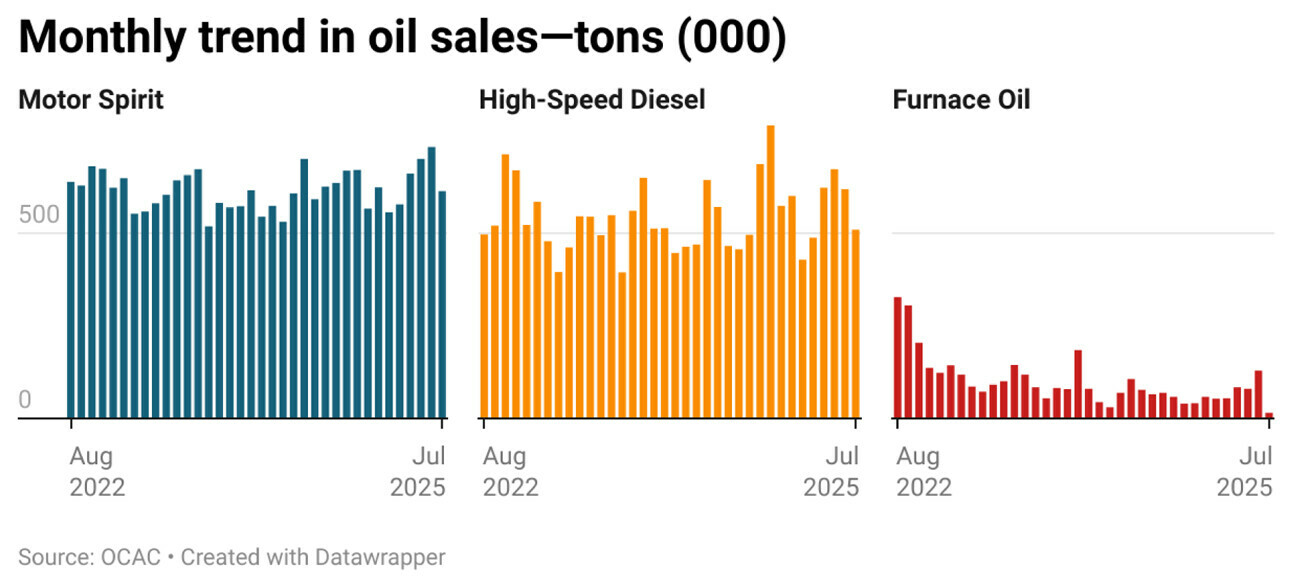
Part of the month-on-month drop can also be traced back to pre-buying in June, when many bulk consumers stocked up in anticipation of July’s price hikes. This temporary adjustment, combined with severe flooding that slowed transportation and industrial activity, amplified the shortfall.
Even so, there are signs of resilience. Excluding furnace oil, sales were up 8 percent year-on-year, pointing to a gradual recovery in underlying fuel demand, supported by improving economic activity and consistent government efforts to curb illicit fuel inflows.
Looking ahead, there is cautious optimism for the rest of FY26. Global crude prices are expected to ease as OPEC+ continues to raise output, potentially softening domestic fuel prices in the months ahead. As the monsoon season recedes, normal mobility and agricultural activity are likely to support fuel consumption.
Market expects overall petroleum product sales to grow between 7 and 10 percent this fiscal year, driven primarily by petrol and diesel demand, while furnace oil is set to remain on a structural downward path as Pakistan continues its shift toward more efficient and environmentally friendly energy sources.




















Comments
Comments are closed for this article.