


Key scientific institutions: Senate body concerned at stagnant state
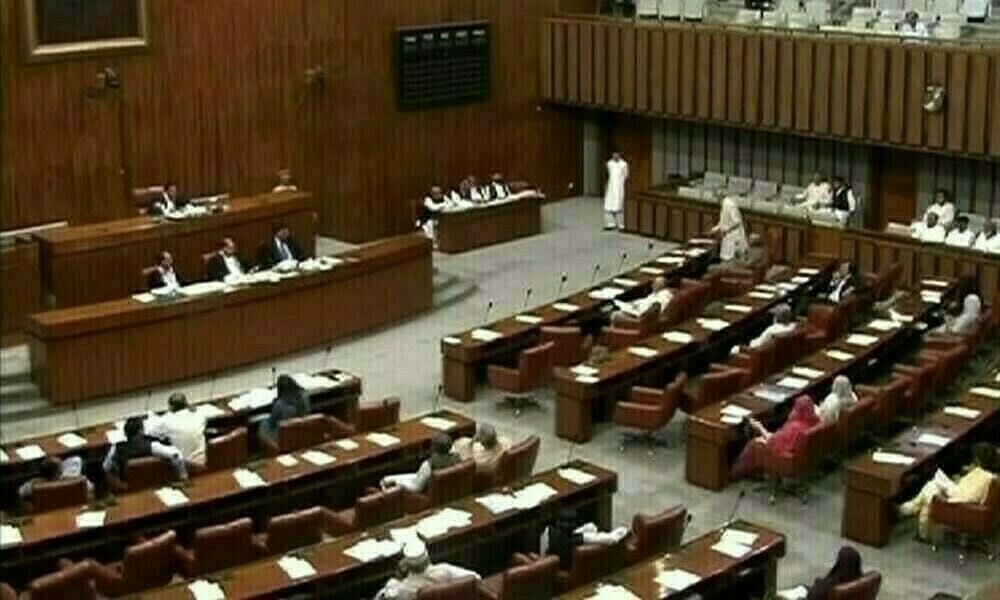

ISLAMABAD: A meeting of the Senate Standing Committee on Science and Technology chaired by Senator Kamil Ali Agha expressed grave concerns over the stagnant state of Pakistan’s key scientific institutions, warning that persistent inaction is crippling the nation’s research and innovation potential.
The meeting, held at the Parliament House, Thursday, was attended by senators, Husna Bano, Nasir Mehmood, Saeed Ahmad Hashmi, Dr Afnanullah Khan, and Nadeem Ahmed Bhutto. Also present were the Federal Minister for Science and Technology, senior officials of the ministry, and representatives from the Pakistan Council for Science and Technology (PCST) and the Pakistan Council of Scientific and Industrial Research (PCSIR).
Officials revealed that the National Commission for Science and Technology (NCST), formed in 1984 as a 26-member statutory body under the prime minister’s chairmanship, has held only three meetings since its inception, with the last one taking place in 2001 — a stark indicator of institutional neglect. As per the PCST Act 2017, the PCST serves as the Secretariat of the NCST but remains under threat of rightsizing, further destabilising the sector.
Chairman Kamran Ali Agha termed the Commission’s performance “highly unsatisfactory,” demanding to know why scientists and industrialists have not been appointed since 2020. Officials confessed that despite repeated correspondence from 2017 to 2023, the proposed nominations expired before they could meaningfully contribute. If the members in this body are not complete yet, how will the Commission be functional? the chairman asked pointedly.
In response to this institutional paralysis, the chairman directed the formation of a proper committee within 15 days, with a clear agenda to revive and streamline the work of the NCST and PCST. “There is a building, the institution exists — keep working!” Senator Agha emphasised, rejecting any speculation about closures before clear decisions are made.
The Committee also scrutinised Pakistan’s underwhelming budgetary allocation for science and technology, with the joint secretary admitting that a mere 0.16 per cent of GDP is devoted to the sector, resulting in outdated equipment despite capable human resources. When asked by Senator Dr Afnanullah Khan about this year’s budget, the ministry disclosed that only Rs4.5 billion had been released — an amount the committee, unanimously, termed inadequate to meet national innovation goals.
Adding a global perspective, Senator Dr Afnanullah Khan highlighted China’s ambitious plan to establish a solar power plant in space by 2028, urging that Pakistan must invest in futuristic energy solutions and public awareness campaigns for solar technology. Chairman Agha echoed this, stressing that falling behind in emerging technologies would widen the innovation gap.
Equally alarming was the committee’s discussion on harmful consumer products.
Under the Pakistan National Quality Policy (PNQP) 2021, which sets the framework for national and international testing standards, Senator Afnanullah Khan raised serious concerns over widely sold “tea-whitening” products masquerading as milk alternatives, were products that pose grave health risks, including cancer.
The joint secretary endorsed these concerns, confirming that such products are indeed a major cause of cancer, and backed the committee’s call for stringent legal action, including possible bans and the closure of companies selling unsafe substitutes. The committee strongly recommended an immediate ban and the ministry assured that a detailed briefing and necessary enforcement measures would be presented in the next meeting.
Wrapping up, Chairman Agha warned: PCST and the National Commission are important institutions. Without them, the ministry will come to a standstill.
Copyright Business Recorder, 2025




















Comments
Comments are closed for this article.