


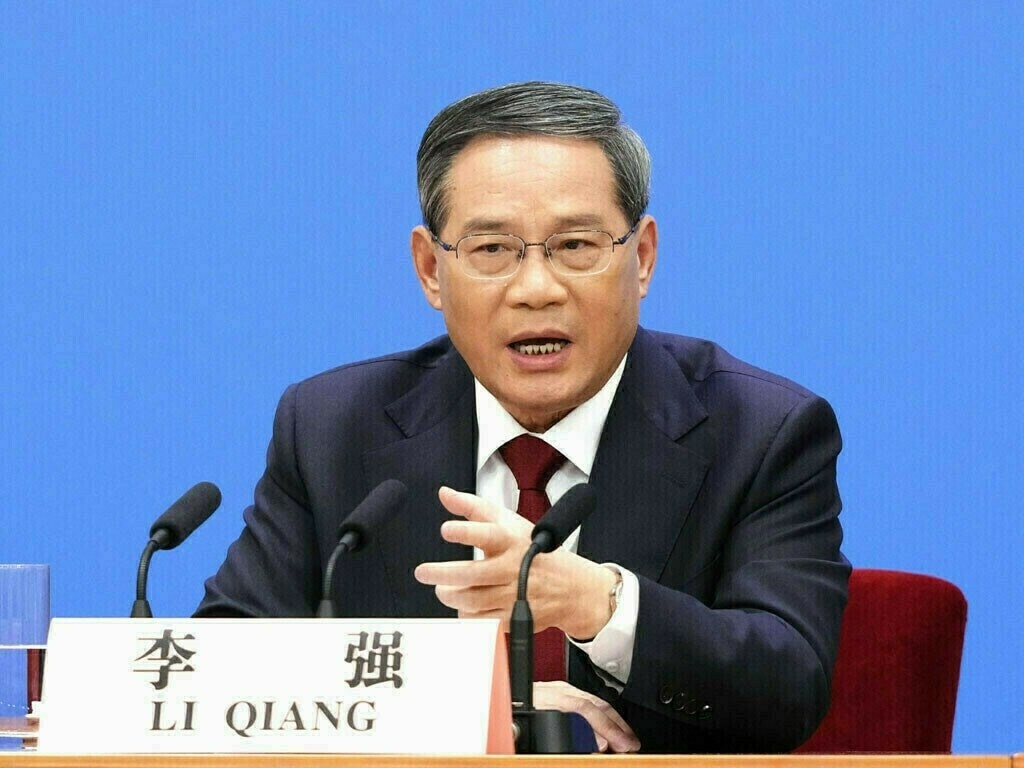

TIANJIN, (China): Chinese Premier Li Qiang warned on Wednesday that global trade tensions were “intensifying” as he addressed the opening ceremony of the World Economic Forum.
Officials including Singaporean Prime Minister Lawrence Wong are among those attending this week’s gathering in the northern port city of Tianjin, known colloquially as the “Summer Davos”.
Li said the global economy was “undergoing profound changes” — a thinly veiled reference to swingeing tariffs imposed by US President Donald Trump.
“Protectionist measures are significantly increasing and global economic and trade frictions are intensifying,” Li added.
“The global economy is deeply integrated and no country can grow or prosper alone,” he said.
“In times when the global economy faces difficulties, what we need is not the law of the jungle where the weak fall prey to the strong, but cooperation and mutual success for a win-win outcome,” Li added.
Beijing’s number two official also painted a bullish picture of the Chinese economy, the world’s second-largest, which has been beset by slowing growth and a lull in consumer spending.
“China’s economy continues to grow steadily, providing strong support for the accelerated recovery of the global economy,” he said.
Beijing, he added, was “stepping up our efforts to implement the strategy of expanding domestic demand”.
Li said this was “promoting China’s growth into a major consumption powerhouse based on the solid foundation of a major manufacturing powerhouse”.
Beijing is eyeing growth this year of around five percent — a target viewed as ambitious by many economists.
Officials have since late last year rolled out a series of steps intended to boost spending, including key interest rate cuts and steps to encourage homebuying.
But results have been varied, just as added pressure on trade from US tariffs threatens to hit the country’s vast manufacturing sector.
Li’s speech at the WEF gathering sought to portray China as a staunch defender of a rules-based international trading system that is now under attack by the Trump administration.
His comments echoed remarks the day before by President Xi Jinping to Singapore’s Wong during a meeting in Beijing in which he called for the countries to resist a “return to hegemony” and protectionism.
Other leaders on Wednesday shared a sense of unease about being forced to choose between superpowers in a new historical period marked by increasing fragmentation and conflict.
Wong told WEF President and CEO Borge Brende during a public discussion that governments should be cautious about “abandoning the concept of economic integration”.
“Integration cannot guarantee peace, but I think it certainly gives us a better chance for peace than a ‘me first’ approach,” he said.
Vietnamese Prime Minister Pham Minh Chinh struck a similar chord, pointing out that the United States is Vietnam’s largest export market and China its largest source of imports.
When asked about recent trade frictions, Chinh said his country needed to pursue a “balanced” foreign policy that would allow it to be “a friend of all countries”.
“We have a good balance but we also need to be prepared as things have gone topsy-turvy lately,” he added.






















Comments
Comments are closed for this article.