


A blueprint for climate resilience: The impact of AKAH in Northern Pakistan
- Pakistan contributes less than 1% to global carbon emissions, yet remains most vulnerable to climate change
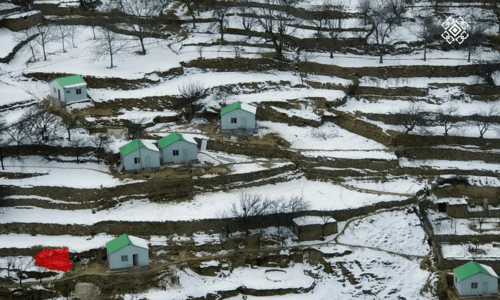

As climate change intensifies, Pakistan’s mountainous north has become one of the world’s most precarious frontlines. From glacial lake outbursts to paralyzing snowstorms, the region faces a relentless cycle of climate-induced disasters. The Aga Khan Agency for Habitat (AKAH) has emerged as a critical force – offering not just emergency relief, but a forward-looking model for resilience rooted in community, data, and design.
In the remote valleys of Gilgit-Baltistan, where the terrain is breathtaking and the climate increasingly unforgiving, Mohammad Shareef’s story is one of quiet resilience.
When unprecedented floods struck his village in Ghizer in August 2022, he lost his home, his tailoring shop, and an uncle. It was a moment of total devastation.
While the world debated the cost of inaction on climate change, in the high mountains of Northern Pakistan, AKAH was already acting – with speed, local knowledge, and long-term vision.
“We were completely in shock,” Shareef told Business Recorder. “But the next day, AKAH came and extended help and brought us shelter.”
His experience is emblematic of a broader crisis – and a quietly transformative response.
“The weather outlook for this year reflects increasingly erratic summer patterns, with National Disaster Management Authority (NDMA) projecting a 2.5°C rise in temperatures as well as monsoon rainfall up to 380mm,” Ejaz Karim, Head of Emergency Management at AKAH told Business Recorder.
For perspective, the 2022 floods submerged one-third of Pakistan, displaced eight million people, and inflicted economic damage exceeding $30 billion.
“This year, below-average snowfall has compounded the situation, and the abrupt rise in temperature has triggered extensive glacial and snowmelt, pushing rivers to peak discharge levels,” he added.
“With monsoon rains expected to enter the country by the last week of June, there’s a significant risk of flooding in low-lying areas of Khyber Pakhtunkhwa, Punjab, and Sindh.”
Disaster response, reimagined
Established in 2016 under the Aga Khan Development Network (AKDN), AKAH has pioneered a climate resilience model that blends community-based preparedness with data-driven systems and infrastructure designed for long-term sustainability.
In Gilgit-Baltistan and Chitral – regions that oscillate between catastrophic summer floods and lethal winter snowstorms – AKAH’s work has redefined what timely and effective disaster response looks like in fragile geographies.
Earlier this year, that same model was tested again by an unprecedented snowstorm that blanketed the Gilgit-Baltistan and Chitral regions with 5 to 7 feet of snow. Roads were blocked, communication severed, and avalanche risk soared. Yet despite 58 recorded avalanche events, no lives were lost.
One of AKAH’s key interventions was the evacuation of 132 families – comprising 840 individuals, including 369 males and 471 females – who were safely accommodated with host families.
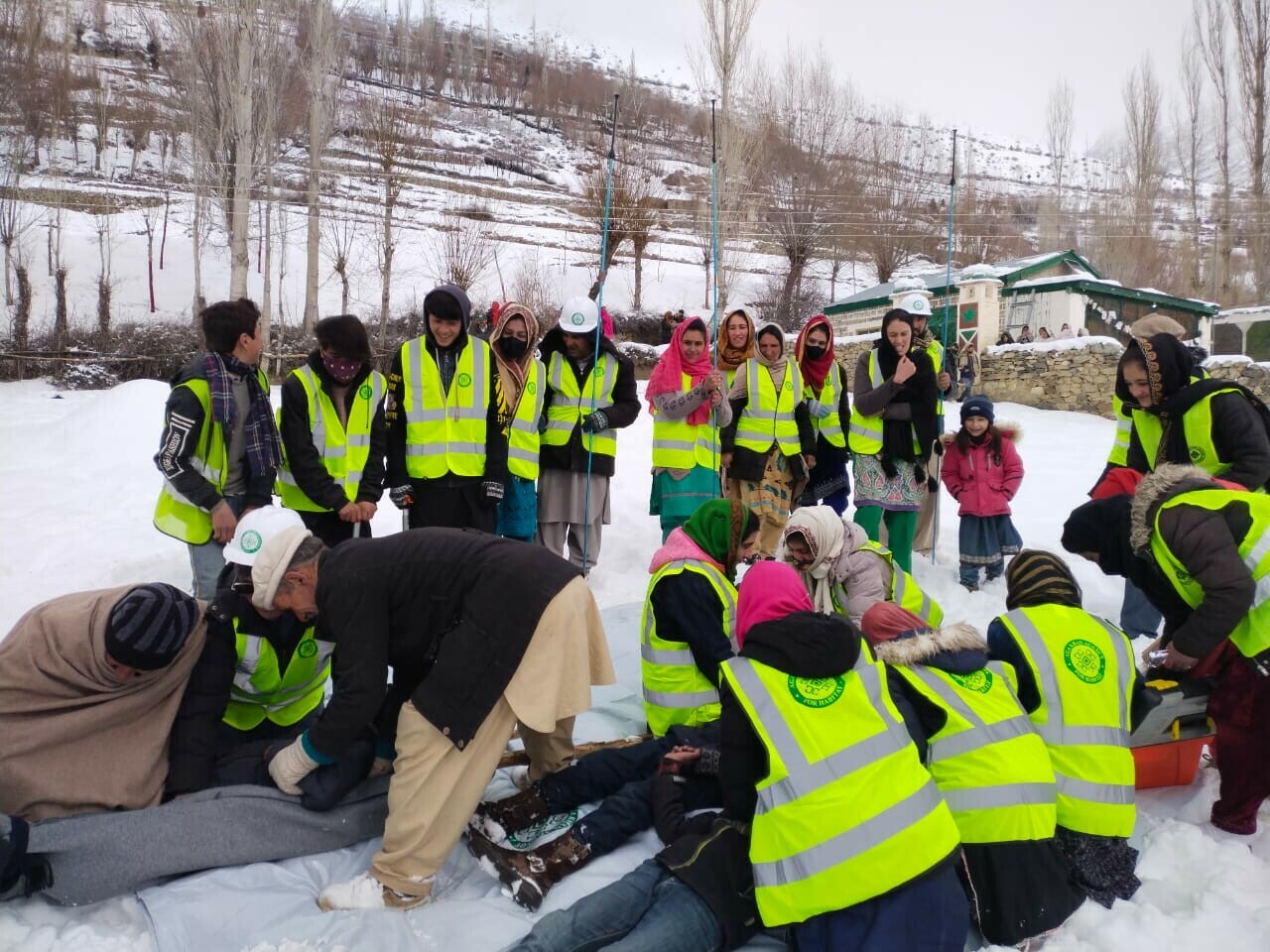
“This outcome wasn’t accidental,” added Karim. “It was the result of strategic foresight and thousands of trained volunteers already embedded in the community.”
But the storm still had tragic consequences. Road accidents along the Karakoram Highway and in the surrounding valleys claimed four lives, highlighting just how narrow the margins are in such conditions.
“The majority of passengers managed to escape narrowly,” Karim noted, reinforcing the vital importance of preparedness and rapid response.
Today, AKAH supports a network of over 40,000 emergency response volunteers – nearly half of them women. These volunteers conduct early warning alerts, evacuations, search and rescue operations, and first aid – ensuring a response that is both immediate and locally anchored.
Infrastructure as climate insurance
Beyond emergency relief, AKAH is investing in long-term resilience. The agency has supported the construction of over 2,400 disaster-resilient homes, 250 schools, 25 healthcare facilities, and numerous community centers – many in some of Pakistan’s most isolated, hazard-prone areas.
“Our mission is to create habitats that allow communities to be resilient to disasters, adapt to climate change, and thrive,” said Karim.
To support early action, AKAH also operates 53 community-managed weather monitoring posts, monitors 15 glacial lakes and manages early warning systems across 258 avalanche-prone villages.
Fourteen of the most hazard-prone hotspots in Gilgit-Baltistan and Chitral are now equipped with integrated early warning systems and meteorological instrumentation – critical in a region where hours can mean the difference between survival and catastrophe.
From humanitarian aid to economic resilience
Pakistan contributes less than 1% to global carbon emissions, yet it remains one of the countries most vulnerable to climate change.
In this context, AKAH’s model provides a compelling case study – not just in humanitarian effectiveness, but in economic foresight.
Its model of proactive adaptation – fusing community engagement, resilient infrastructure, and real-time data – demonstrates that disaster response need not be reactive, nor prohibitively expensive. Rather, it can serve as a foundation for long-term economic resilience.
By embedding capability where it is needed most, the agency reduces the burden on state systems, lowers future aid dependency, and accelerates recovery timelines.
“In Gilgit-Baltistan, sudden torrents could severely damage arable land, infrastructure and villages along major river valleys,” Karim told Business Recorder
“Dormant channels and medium to large catchments are also expected to activate, posing threats to remote settlements. The built environment, particularly in Gilgit-Baltistan, remains vulnerable to the increasing frequency of such natural phenomena.”
“Resilience is not just about surviving the next disaster,” said Karim. “It’s about creating the conditions for communities to thrive despite it.”
As global conversations around climate finance and adaptation accelerate, AKAH’s work in Pakistan presents a compelling blueprint – one that prioritizes dignity, efficiency, and local agency.
It is not merely about building back better. It is about building forward, and wisely.

























Comments
Comments are closed for this article.