


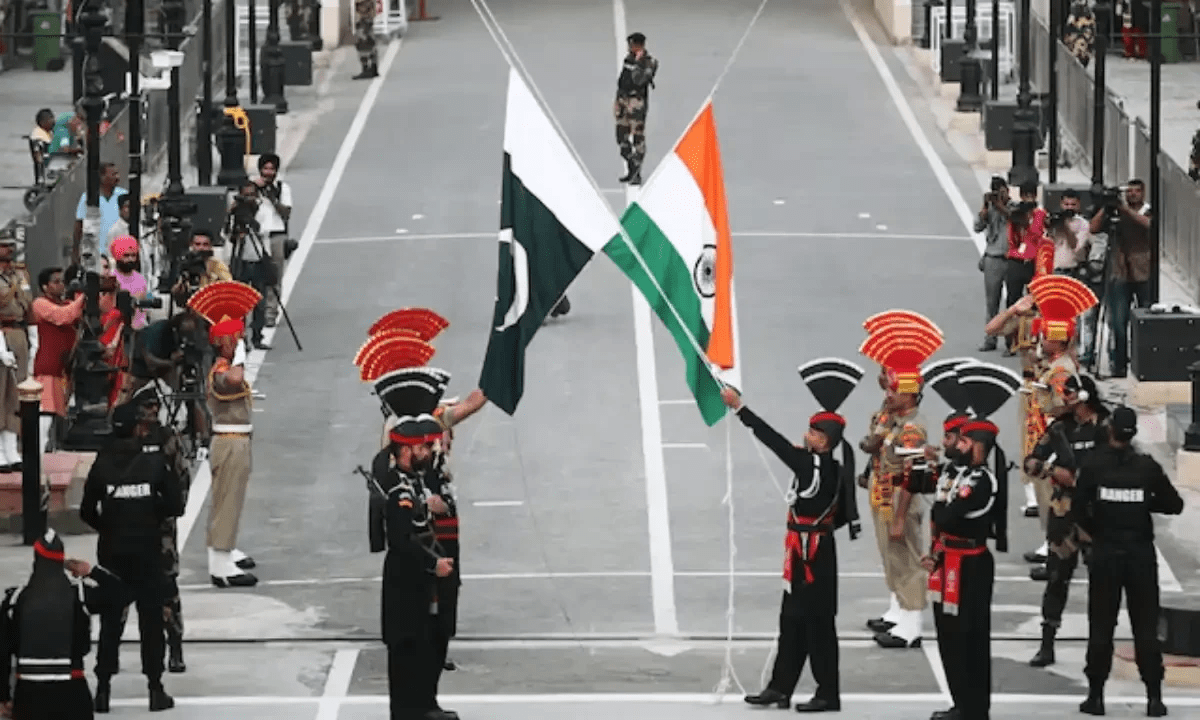
EDITORIAL: That India-Pakistan bilateral relationship has further nosedived is a fact. This development cannot be viewed in isolation from the changing global landscape, where China is emerging as a new power.
It has become increasingly clear that China and Pakistan are aligned when it comes to confronting India militarily. On the other hand, the US support for India remains ambiguous.
After the events of 2019, India appeared successful in removing the Kashmir dispute from the Western narrative. However, India’s biggest setback is the fact that Pakistan has now successfully elevated the Kashmir dispute to the global agenda.
For many years, India attempted to portray Pakistan as an “exporter” of terrorism, diplomatically and economically, isolating it through measures such as maintaining Pakistan on the FATF grey list and disrupting international cricket events in Pakistan.
Initially, India achieved some success, but Pakistan has demonstrated resilience, distancing itself from extremist elements and revisiting its policies. The global context has evolved significantly. The narrative of “Islamic terrorism” has become less prominent and nuanced.
The West no longer readily acquiesces to India’s allegations against Pakistan. The Pahalgam tragedy in which Pakistan had no role whatsoever is a strong case in point.
But India still attacked the Pakistani civilian sites, causing casualties among civilians. Labelling these sites as “terrorist camps”, it expected Pakistan not to defend itself or respond to despite violating country’s sovereignty and territorial integrity.
India must realise that Pakistan is neither Afghanistan nor Syria, and its actions are transparent to the global community. Moreover, the incessant misinformation propagated by Indian media has significantly damaged India’s credibility.
Politically, this situation is a setback for Modi’s government, which has drawn sharp criticism from independent journalists and commentators, potentially affecting weakening Modi’s position in the upcoming Behar elections.
Conversely, internal conflicts within Pakistan have significantly subsided, and the military has successfully restored its public image. Internationally, Pakistan is regaining strength after a difficult period. It is important to note that some Western media outlets, along with certain elements in the US and EU, still favour India.
However, US President Donald Trump’s unpredictability has placed Pakistan and India on an equal footing. In other words, President Trump’s approach to South Asia implies fairness and equity, where both the parties are being treated equally.
China, Turkey, and other nations have openly supported Pakistan, while India essentially receives unconditional backing from Israel and the Afghan Taliban.
The geopolitical dynamics are shifting. The trade war between the US and China increasingly favours China, the world’s largest producer of goods. As Trump focuses inwardly, US interest in the region declines, further weakening India’s position.
Be that as it may, the situation remains fluid, and India is likely to make efforts to regain ground. It may intensify its support to Baloch Liberation Army (BLA) and other insurgent outfits in Balochistan to foment instability in Pakistan.
Additionally, the newfound warmth that India has received from the Afghan Taliban could hurt the prospects of improvement in Pak-Afghan bilateral ties.
The May 2025 events have clearly shown the underlying resilience of Pakistan as a responsible state. However, our primary vulnerability is our economy, necessitating urgent economic and governance reforms.
National unity is essential; political differences must be resolved, and cohesion fostered. Despite current optimism, the government lacks strong public support. In other words, public disaffection with it could resurface. Improving the government’s domestic image through softer, more inclusive governance practices is crucial to maintaining stability and progress.
Last but not least, it is increasingly clear that the so-called world’s largest democracy, India, has now turned itself into a preposterous 21st century opportunistic state, a loose cannon, and an incorrigible hypocrite. It went too far down the military route and lost credibility, if it had any.
Copyright Business Recorder, 2025






















Comments
Comments are closed for this article.