


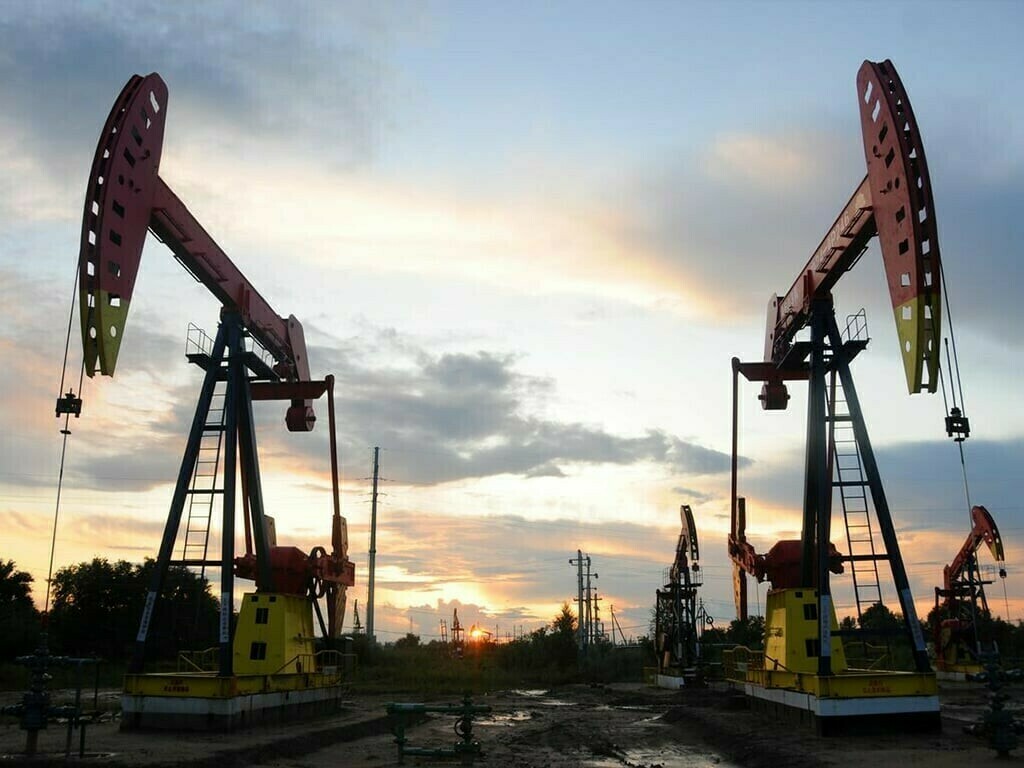

CALGARY: Canada’s oil field drilling and services sector is already showing signs of slowing due to U.S. President Donald Trump’s threatened tariffs, triggering fears that an expected industry rebound could stall if such levies go forward.
Employment levels in the Canadian drilling sector collapsed between 2014 and 2020 due to sustained low oil prices and reduced production during the COVID-19 pandemic. Activity has improved since 2020, but Trump’s threat to impose a 10% tariff on the 4 million barrels per day (bpd) of Canadian crude imported into the U.S. could upend that, industry representatives said.
When volatility affects oil markets, oilfield service companies are often the first hit as their oil producer customers look to delay or defer spending.
Precision Drilling, Canada’s largest drilling rig operator, saw a steeper-than-expected slowdown in its Canadian well servicing segment in the fourth quarter of 2024.
“It seems that some of the tariff uncertainty slowed down customer decision-making,” said CEO Kevin Neveu during a conference call last month.
A TD Cowen report from February predicted Canadian oil producers will “err on the side of conservatism” due to uncertainty over tariffs. Analysts at the bank reduced their 2025 Canadian rig count forecast by about 5% as a result, to average 175 active rigs versus a prior projection of 185.
TD Cowen also downgraded its recommendation for two Canadian drilling stocks — Precision Drilling and Ensign Energy Services — from “buy” to “hold.”
Trump vows March 4 tariffs for Mexico, Canada; China faces extra 10%
“I know that certainly the anxiety level is rising,” said Mark Scholz, president of the Canadian Association of Energy Contractors (CAOEC), in an interview. “Any sort of investment reduction will have an immediate and very, very quick effect on our industry.”
Scholz emphasized the slowdown thus far has been small, involving “just a handful” of rigs. He attributed it to uncertainty within the broader Canadian oil industry about the timing, duration and market impacts of tariffs.
While a 10% tariff on Canadian oil is not likely to immediately impact most oil producers’ plans, at least near-term, smaller companies could get hit, warned Dane Gregoris, managing director with Enverus Intelligence Research.
“A lot of (oil company) budgets are pretty set up at this point and disclosed. They might be hitting the low-end of their (forecast) ranges, but I can’t imagine massive changes to capital budgets,” he said.
Still, there are other concerns among producers, including the possibility of retaliatory tariffs by Canada, which would raise the prices of inputs and drilling rig equipment imported from the U.S., said Gurpreet Lail, president of industry group Enserva.
Sand, for example, is among the items the Canadian government has identified on its list of proposed counter-tariffs. Sand is used heavily by the oil and gas industry in the hydraulic fracturing, or fracking, process.
If tariffs do come into effect, said Lail, it will likely mean job losses in a sector that still has not recovered to where it was a decade ago. Last year, total employment in Canada’s drilling sector was approximately half what it was in 2014.
CAOEC’s November 2024 forecast had projected 2025 would see the sector’s highest level of employment in ten years, but Lail said that is now in doubt.
“We thought we had finally seen a light coming at the end of the tunnel here, and people were getting back to work,” she said. “But this is not good news.”
























Comments
Comments are closed for this article.