


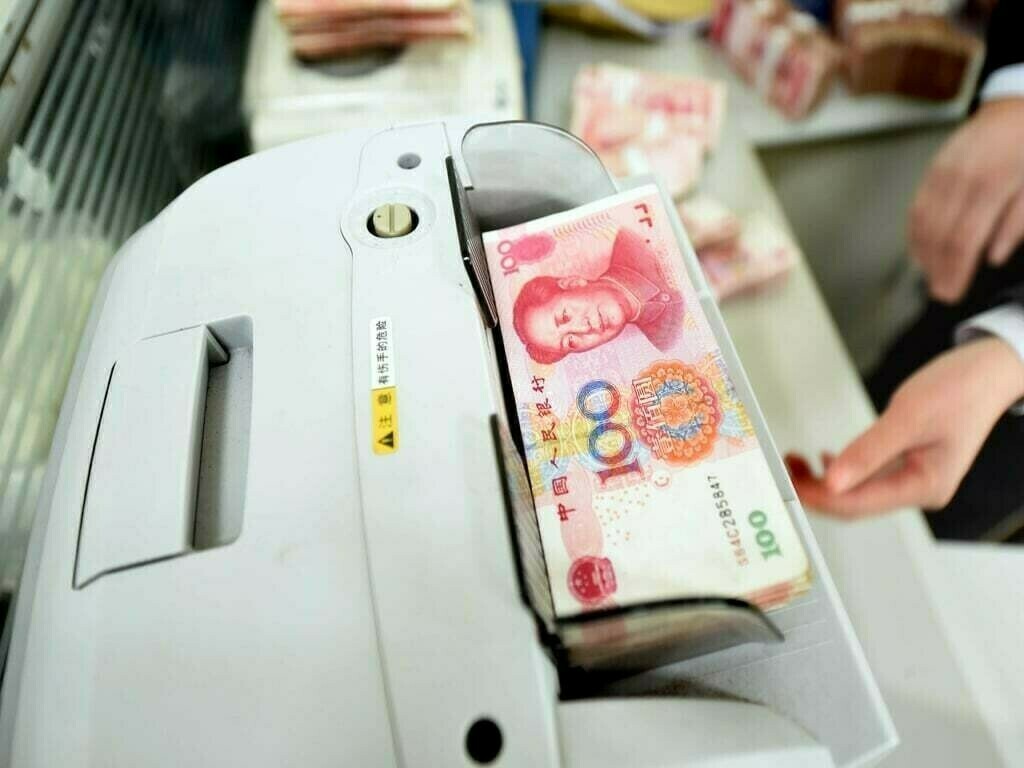
HONG KONG: China’s yuan hovered near a three-week low against the dollar on Tuesday, as US President Donald Trump’s latest round of tariffs renewed trade concerns and kept the greenback buoyed.
Trump substantially raised tariffs on steel and aluminium imports to 25% on Monday, increasing the risk of inflation flare-ups and a multi-front trade war.
The move follows a 10% tariff on Chinese imports that took effect earlier this month, with China responding through retaliatory duties on US energy and other goods implemented on Monday.
By 0245 GMT, the yuan was 0.05% lower at 7.3078 to the dollar, after breaching the psychologically important 7.3 per dollar level on Monday.
Its offshore counterpart also weakened to trade at 7.3126 yuan per dollar.
Trade tensions between the world’s two largest economies was one of the main drags on the yuan during Trump’s first term. The yuan fell more than 12% against the dollar between March 2018 and May 2020.
“RMB depreciation was more reflective of USD strength due to Trump’s broad tariff policies,” Ken Cheung, chief Asia currency strategist at Mizuho Bank in Hong Kong, said in a note.
Yuan slips as investors focus on Sino-US trade relations
The yuan could show more resilience due to support from the People’s Bank of China and prepositioning flows for the trade war. Offshore and onshore spot levels are expected to settle near the 7.3 handle as the central bank maintains its fixing guidance to anchor sentiment, he added.
Prior to the market opening, the PBOC set the midpoint rate , around which the yuan is allowed to trade in a 2% band, at 7.1716 per dollar, 1,351 pips firmer than a Reuters’ estimate.
The central bank has set its official guidance on the firmer side of market projections since mid-November, which analysts and traders say is a sign of unease over the yuan’s decline.
Elsewhere, Fed Chair Powell is due to speak on Tuesday for the semi-annual monetary policy testimony before the Senate Banking, Housing and Urban Affairs Committee. His comments on tariffs and inflation are likely to be closely monitored.
Markets are largely expecting the Fed to hold rates steady at its March meeting, with expectations for a cut of at least 25 basis points not climbing above 50% until June, according to CME’s FedWatch Tool.






















Comments
Comments are closed for this article.