


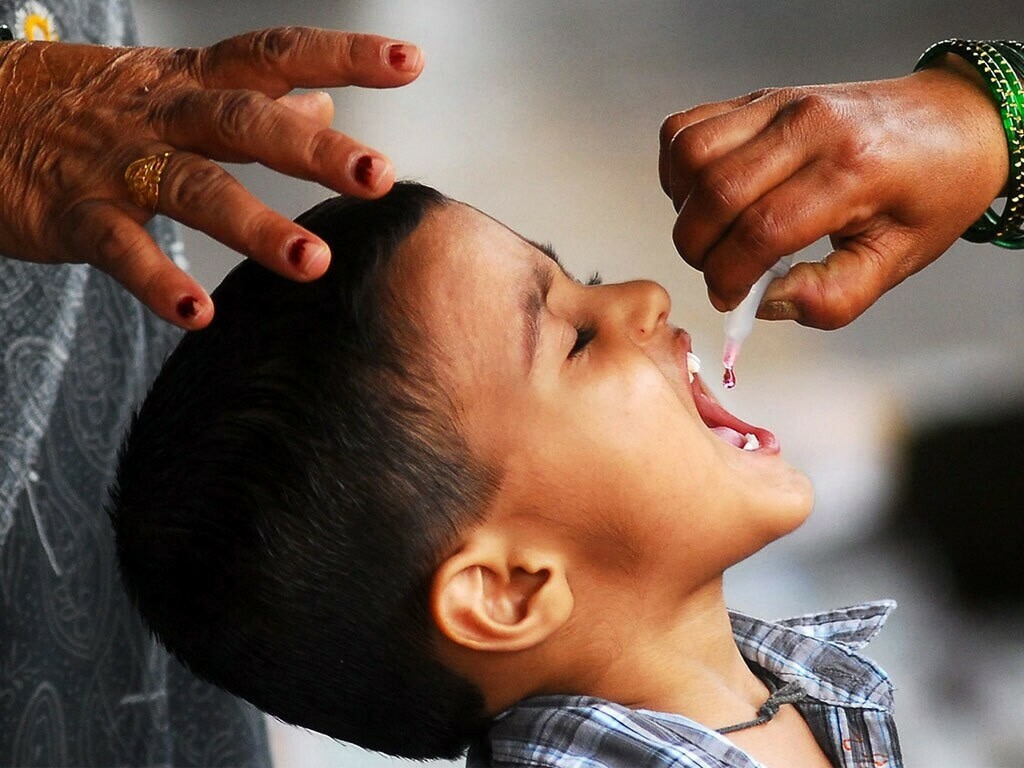

LAHORE: With 16 districts infected, Punjab faces significant risks of poliovirus transmission, particularly from regions where the virus remains endemic.
In response, Punjab is set to launch the first National Immunization Days (NIDs) of 2025 on February 3 (Today), aiming to immunize 23.3 million children under five against polio.
Head of the Punjab Polio Programme, Adeel Tassawar, emphasized the urgency of the campaign, citing genetic sequencing data that confirms the circulation of both local and imported poliovirus in the province. “The presence of poliovirus in environmental samples underscores the need for heightened vigilance, swift responses, and a collective effort to eliminate this disease from Pakistan,” he stated.
The seven-day campaign will run in Lahore, Rawalpindi, and Faisalabad, while in other districts, it will last for five days. Over 200,000 polio workers and supervisors, including 5,000 transit team members, 16,600 area in-charges, 3,999 union council medical officers, and 180,000 mobile polio team members, will participate in the drive. The Punjab Emergency Operations Centre (EOC) has also deployed experts to ensure a smooth rollout, particularly in high-risk areas.
Punjab’s polio eradication efforts face challenges due to the movement of mobile and migrant populations. To counteract this, Tassawar highlighted the importance of high-quality door-to-door vaccination campaigns and strategically placed immunization posts.
To improve tracking and reduce the number of missed children, digital logbooks have been introduced to enhance monitoring and accountability. However, Mr. Tassawar stressed that greater focus is needed on identifying and vaccinating children missed in each round. “We must ensure that every child is protected. Data integrity and quality are key to making this campaign a success,” he said.
He also called on the media to play a critical role in polio eradication efforts. “The media must take the lead in covering vaccination campaigns comprehensively, reinforcing the urgency of repeated vaccinations as a parental, religious, and societal responsibility,” he urged.
Tassawar reiterated the importance of ensuring 100% vaccination coverage. “Polio eradication is a collective responsibility. While our health workers are delivering life-saving vaccines, it is essential for parents, civil society, and the media to support this effort. If we vaccinate every child, every time, we will achieve population immunity and eliminate poliovirus once and for all,” he concluded.
Copyright Business Recorder, 2025

























Comments
Comments are closed for this article.