


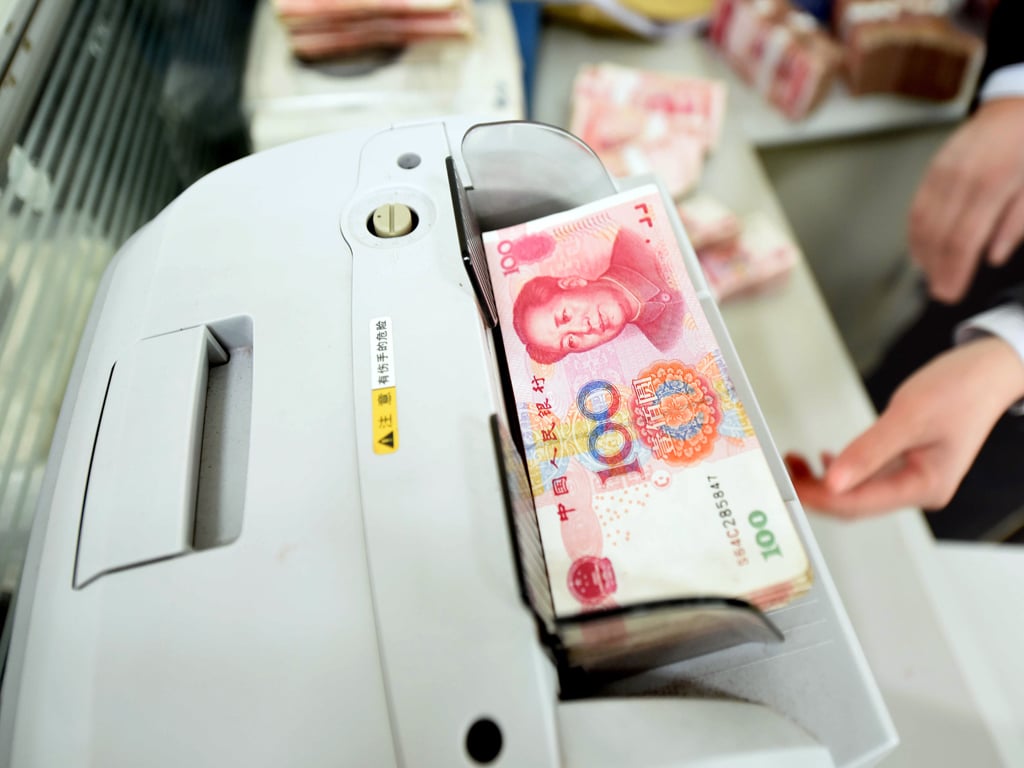
SHANGHAI: China’s yuan strengthened against the dollar on Thursday, underpinned by continued year-end corporate demand for the local currency, but some economists expect Beijing to start reining in the currency’s rise amid concerns about its impact on exports.
Prior to market opening, the People’s Bank of China (PBOC) set the midpoint rate at 6.3980 per dollar, 77 pips weaker than the previous fix of 6.3903. In the spot market, the onshore yuan opened at 6.3922 per dollar and was changing hands at 6.3882 at midday, 39 pips firmer than the previous late session close.
Traders said demand for the yuan remained strong as companies sought to convert their dollar receipts into the local currency. They expected the trend to continue for now, supporting the yuan. Chinese companies traditionally have higher demand for the local currency towards year-end for various payments. Some currency traders said the recent yuan rally has also inspired companies to sell the greenback to limit exchange rate losses.
However, some economists said the stronger yuan might not be sustainable as it could start to bite China’s export competitiveness, prompting authorities to curb its strength. “Due mainly to concerns about being labelled a currency manipulator, the PBOC’s net purchase of FX is just zero since the beginning of 2020 despite massive inflows of FX via the current and financial accounts,” Lu Ting, chief China economist at Nomura said in a note. “The strong yuan ... will result in a major backlash for future exports.






















Comments
Comments are closed for this article.