


Fed will not keep interest rates low for government's benefit, Waller says
- "My goal today is to definitively put that narrative to rest. It is simply wrong. Monetary policy has not and will not be conducted for these purposes."
- The Fed's board members and the central bank's powerful chief are appointed by the president with approval of the US Senate, but the governors' long terms and protection from partisan dismissals are meant to insulate the central bank from political pressures.
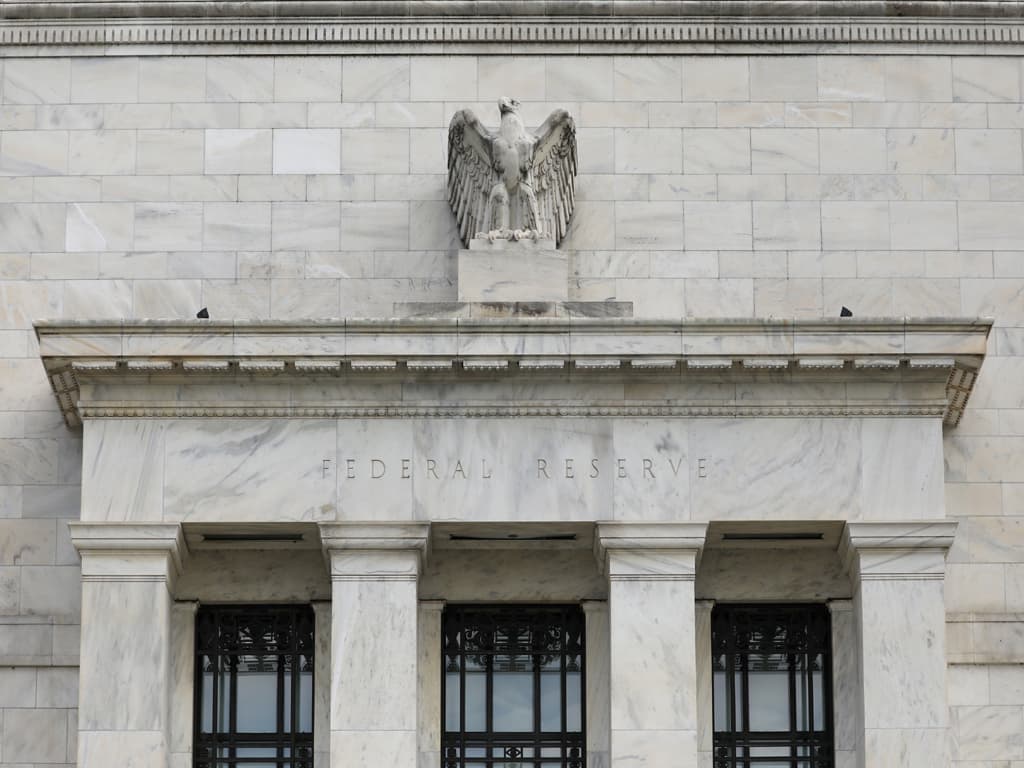

WASHINGTON: The Federal Reserve won't bend its interest rate or bond-buying policies to help finance the federal government's rising deficits, Christopher Waller said on Monday in his debut speech as a member of the US central bank's board of governors.
"Because of the large fiscal deficits and rising federal debt, a narrative has emerged that the Federal Reserve will succumb to pressures to keep interest rates low to help service the debt and to maintain asset purchases to help finance the federal government," Waller said in remarks prepared for delivery at an online event organized by the Peterson Institute for International Economics.
"My goal today is to definitively put that narrative to rest. It is simply wrong. Monetary policy has not and will not be conducted for these purposes."
Policy, he said, will be set "solely to fulfill" the Fed's mandated goals of achieving maximum employment and stable inflation.
The comments were Waller's first since he joined the Fed's board of governors in December, after serving as executive vice president and research director at the St. Louis Fed, and he used them to wade into a potentially contentious issue.
The Fed's board members and the central bank's powerful chief are appointed by the president with approval of the US Senate, but the governors' long terms and protection from partisan dismissals are meant to insulate the central bank from political pressures.
The Fed has pledged to keep its benchmark overnight interest rate near zero and continue its $120 billion in monthly bond purchases until the recovery from the economic fallout of the coronavirus pandemic is more complete.
At the same time, the federal government has piled up record debt financing the response to the pandemic, something policymakers have been comfortable doing because the US government can borrow money so cheaply on international markets.
Once the Fed's goals for the economy are met, that means interest rates might start to rise, making US debt service more expensive - and possibly leading to pressure on the Fed to expand its own holdings of government debt to hold rates down.
While the Fed and the US Treasury have worked closely together on many issues - and jointly set up and managed several programs during the recent crisis - that cooperation must have limits, Waller said, noting the longstanding arguments in favor of central bank independence.
If a central bank determines, for example, that rates need to rise to control potential inflation, policymakers need the independence to do that even if elected officials oppose the idea.
"There are sizable costs if cooperation turns into fiscal control," Waller said.


















Comments
Comments are closed for this article.