


US COVID vaccine hopeful using Gates Foundation cash to prepare for human trial
- "We believe there is real potential," Vandenberghe said in an interview. "That being said, we're not naive. There's 300 vaccines racing towards the door and biology is complex."
- AAVs are already used in gene therapies sold by Novartis , including its $2.1 million-per-patient Zolgensma for spinal muscular atrophy.
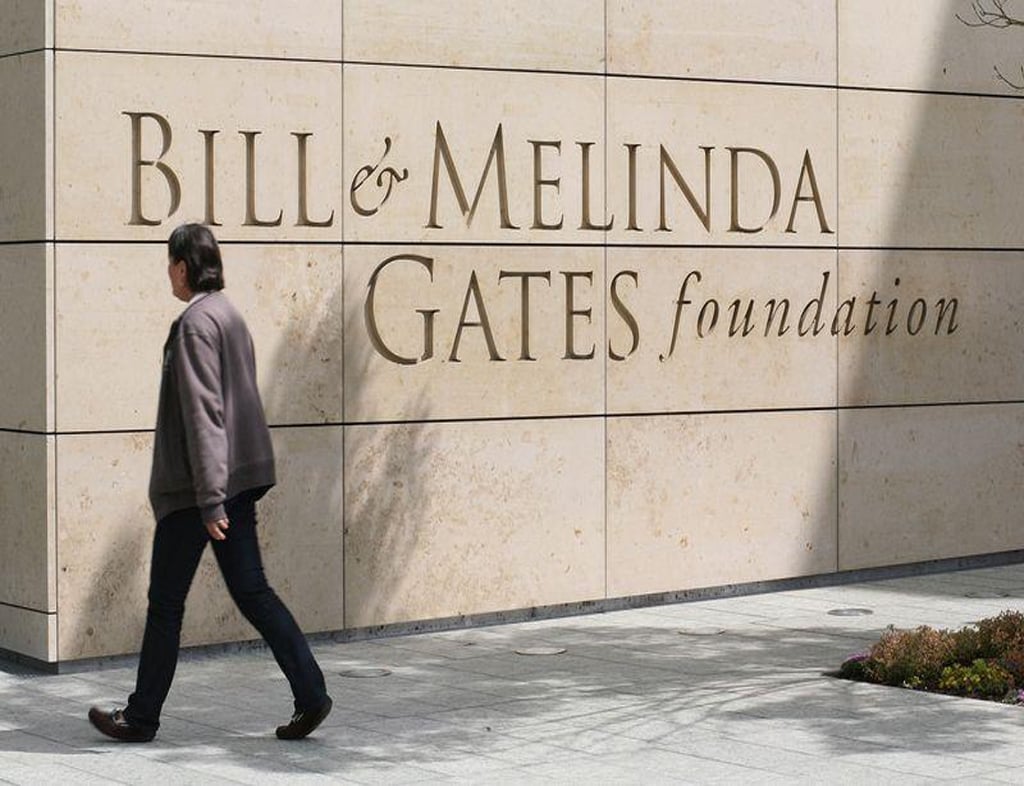

ZURICH: Scientists who normally focus on fixing defective genes said on Friday that up to $2.1 million from the Bill & Melinda Gates Foundation will help them move their COVID-19 vaccine candidate toward 2021 human trials.
Harvard University scientist Luk Vandenberghe and University of Pennsylvania gene therapy head James Wilson said primate safety and efficacy tests have proven promising for their single-dose candidate, targeted for room-temperature storage.
"We believe there is real potential," Vandenberghe said in an interview. "That being said, we're not naive. There's 300 vaccines racing towards the door and biology is complex."
Their candidate relies on an adeno-associated virus (AAV), deemed harmless to humans, to deliver DNA fragments from the new coronavirus, telling human cells to make a protein that provokes an immune response.
AAVs are already used in gene therapies sold by Novartis , including its $2.1 million-per-patient Zolgensma for spinal muscular atrophy. The Swiss company's gene therapy unit is backing the project with technical assistance and supply.
Other COVID-19 vaccines use viral vectors, too, though AstraZeneca and Oxford University's shot, Russia's Sputnik V and Johnson & Johnson's one-dose candidate rely on so-called adenoviruses to transport coronavirus DNA.
Gates Foundation money will support more pre-clinical tests ahead of a overseas safety trial in a still-undisclosed location where vaccines are not broadly available, Vandenberghe, who runs Mass General Brigham hospital's Grousbeck Gene Therapy Center in Boston, said.
Though previously unused in approved vaccines, he is optimistic AAVs will be safe, since only tiny amounts are needed compared to what is required for gene therapies that have been given to many patients.
While he predicts every approved COVID-19 vaccine dose available through 2022 will see use, Vandenberghe acknowledged his group's success also hinges on finding a deep-pocketed partner with vaccine experience to bankroll large-scale production.
"We've already invested more than $10 million," he said. "If indeed we want to meet the time lines we were just talking about, this needs a commercial larger vaccine player to be accelerated, like an AstraZeneca for Oxford's."






















Comments
Comments are closed for this article.