


A commodity exchange is a market where buyers and sellers of commodities can interact. Typically, these exchanges offer standardised contracts with varying maturities called 'futures contracts'. These contracts may be 'cash settled' or 'physical delivery-backed'.
To understand the difference between these two kinds of 'futures contracts', assume that party A enters a one-month futures contract for one ton of wheat, with party B. One month after the contract was entered; the price of a ton of wheat had risen by Rs 200. If the futures contract were cash settled, party B would pay party A the differential amount of Rs 200. In case of a physical delivery contract, party B would deliver 01 ton of wheat to party A, as stipulated by the prior agreement.
What is PMEX? Formerly known as the National Commodity Exchange Limited; Pakistan Mercantile Exchange (PMEX) is the country's first and only online commodity futures exchange. PMEX was formed in 2002, although it formally began operations in May 2007 with the launch of its first product, 'gold futures contract'. This listing was followed by the first gold physical delivery in August of 2007. Subsequently, more products including futures contracts for rice, palm olien, crude oil and silver have been added to the list of offerings at the exchange.
The demutualised exchange is jointly owned by six shareholders, including National Bank of Pakistan, Karachi Stock Exchange, Lahore Stock Exchange, Islamabad Stock Exchange, Pak-Kuwait Investment Company and Zarai Taraqiati Bank. Shareholdings of each of these stakeholders are presented in the table below:
The board of directors of the institution includes 13 members, of which 6 represent each of the shareholding institutions, 6 are independent directors appointed by the Securities and Exchange Commission of Pakistan (SECP), while the chief executive of PMEX is the thirteenth director. The functioning of the exchange is regulated by the SECP; while other relevant legislations pertaining to the PMEX include Commodity Exchange and Futures Contract Rules 2005 as well as internal regulations.
At present, the exchange has 313 members and 120 registered brokers, of whom 42 are currently active. Since this is a demutualised exchange, membership is open for all applicants. PMEX offers two kinds of memberships: Universal and Commodity Specific. Universal membership costs Rs 2.5 million, while the member must also exhibit net worth of at least Rs 20 million.
Universal members can offer all listed products of the exchange to their clients. Commodity-specific membership costs Rs 750,000; while a net capital balance of Rs 10 million is required. The number of active brokers increased by 30, during FY11 as investors' interest has been heightened in the wake of surging global prices of commodities.
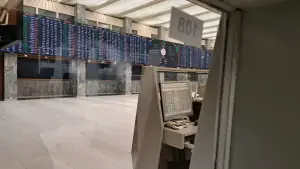
The commodity boom has also attracted many new investors to the exchange, because of which its trading volumes have surged in recent months. In April 2011, PMEX observed record monthly volume of Rs 68 billion, surpassing the combined volume of the three stock exchanges which tallied Rs 66 billion, during the same month. Operating hours at PMEX were recently increased to 21 hours per day, in view of fast-changing realities of international commodity futures markets; facilitating greater participation of local investors.
As a consequence, traded volumes at PMEX increased by a whopping 671 percent, to Rs 490 billion in FY11 compared to Rs 63 billion in the previous year, while the number of investors at the exchange also grew by about 245 percent over the same period.
What can be traded? At present, multiple futures contracts are available for gold, silver, crude oil, palm olien, rice, sugar, and Kibor rates. Those contracts which are based on international market prices of commodities such as crude oil are cash-settled while physical delivery is offered on gold contracts and efforts are underway to offer the same kind of contracts for locally produced commodities such as rice and sugar.
Efforts are currently underway to introduce futures contracts for cotton and maize. Over the next five years, PMEX intends to increase its focus on agri-products while also increasing its reach in agricultural zones of the country. Under this plan, four offices will be opened during FY12, while approvals will be sought from the regulator for more offices in the future.
The exchange is also developing linkages for the establishment of an independent warehousing framework which can be used to store commodities that can be traded then through physical delivery-backed futures contracts.
How does it work? The functions of the exchange can be broadly classified into five different categories: IT and systems, analytics, operations, compliance and product research and development. These departments perform functions ranging from
===================================

Shareholder      No of        share

               shares (mn)      (%)

===================================

NBP                 9          47.4

KSE              3.64          19.2

LSE              2.27          11.9

ISE              2.27          11.9

PKIC             0.91           4.8

ZTBL             0.91           4.8

-----------------------------------

Total              19           100

===================================
Source: PMEX
COURTESY: Economics and Finance Department, Institute of Business Administration, Karachi, prepared this analytical report for Business Recorder.
DISCLAIMER: No reliance should be placed on the [above information] by any one for making any financial, investment and business decision. The [above information] is general in nature and has not been prepared for any specific decision making process. [The newspaper] has not independently verified all of the [above information] and has relied on sources that have been deemed reliable in the past. Accordingly, the newspaper or any its staff or sources of information do not bear any liability or responsibility of any consequences for decisions or actions based on the [above information].
All information and data used are from reliable source(s) and subjected to extensive research after diligent and reasonable efforts to determine the soundness of the source(s). This analysis is not for the benefit of or discredit to any person, scrip or tradable instrument.
The content(s) of this analysis shall not be construed as an advice or recommendation to trade. No relationship of client will be created between Business Recorder and user of this information. Professional advice must be taken by the reader before making investment/trading decisions. BR disclaims any liability for investment(s) made or liability accrued on basis of this analysis. The content(s) including all opinion(s), statement(s) and information are subject to change without prior notice and/or intimation.















Comments
Comments are closed for this article.