



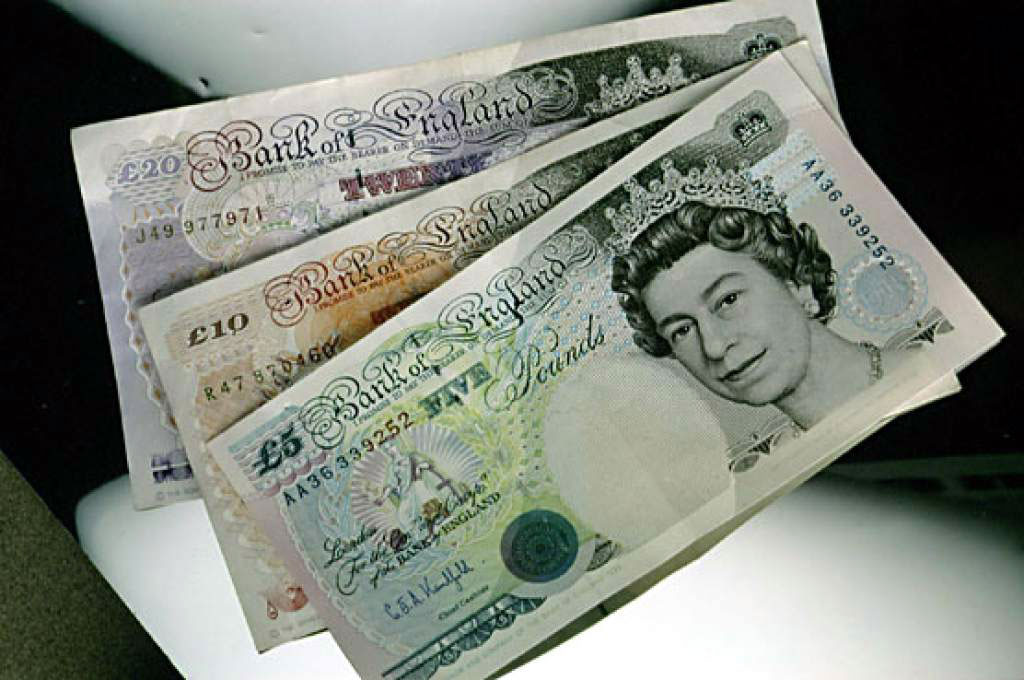
 LONDON: Sterling handed back early gains to trade lower on Wednesday after a reading of UK wages missed forecasts and a report that a deal needed to form a government could be delayed until next week.
The pound had been recovering from its almost 3 percent slide since Prime Minister Theresa May unexpectedly lost her parliamentary majority in elections last Thursday.
But the BBC report that a deal to obtain support from Northern Ireland's Democratic Unionist Party, which May needs to form a government, would not now be signed on Wednesday, drove the pound back into negative territory against both the dollar and the euro.
"One of the things we thought was very positive for sterling was that we'd extended the life of the parliament to give a very large window after the end of the two-year negotiation period (on Brexit)," said Adam Cole, head of G10 currency strategy with RBC in London.
"That no longer looks like the case."
By 1010 GMT, sterling was down 0.1 percent on the day at $1.2738, having traded as strong as $1.2797 earlier. It was also 0.1 percent weaker at 87.95 pence per euro.
The wages numbers added to a handful of worrying signals since the election for an economy that is now trailing many of its European contemporaries.
Pay grew at the slowest pace since February 2016, rising an annual 2.1 percent in the three months to April compared to forecasts of growth of 2.4 percent.
That followed a rise in inflation to its highest level in four years, adding to the pain for British consumers who already seem to be easing back on the spending which propped up Britain's economy in the aftermath of last year's Brexit vote.
"Falling real wage growth is not a new theme, but the fact that inflation-adjusted wage growth has continued to fall to its lowest level for 3-years, is likely to keep a lid on the GBP and firmly keep the BOE on hold for some time," Kathleen Brooks, research director at City Index wrote in a note.
Ten-year gilt yields were down more than 4 basis points on the day at 0.99 percent and their spread over 10-year Bunds tightened by 4 basis points to 73 basis points.
A number of major banks and asset managers have raised the prospect of the Bank of England buying more debt to provide more stimulus for the economy if it slows sharply in what promises to be a politically turbulent year.
One problem is that any further stimulus would be likely to weaken the pound further and only add to inflation, in turn hurting consumers and household incomes.




















Comments
Comments are closed for this article.