


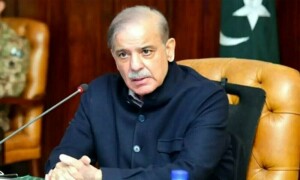
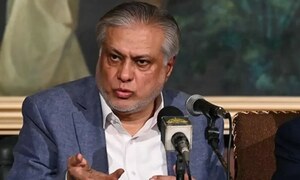
Nobody can probably beat Prime Minister Shaukat Aziz in publicising the achievements of the present dispensation. Speaking at a press conference at the Governor House in Karachi on 3rd January, 2007 about the economic performance during 2006 and prospects for 2007, he dwelt at length on the success of reforms undertaken by his government.
Covering a wide range of areas, the Prime Minister asserted that "the economic reforms have brought about improvements in the national economy: the rupee remained strong, local and direct foreign investment improved, government borrowings remained under control and growth rate, despite difficult times, remained at 6.6 percent. The country is now likely to achieve seven percent GDP growth during 2007. The per capita income has already reached $850". Without reforms, the US dollar would have cost Rs 120 in the open market. There was some pressure on the inflation front but the balance of payments and current account positions were under control. "Things are now heading in the right direction", the Prime Minister added.
Shaukat Aziz also underlined the need for continuity of economic policy. Referring to people under distress in the earthquake affected areas, he said that the government was trying to create an environment where people could stand on their own feet. "They would be helped in establishing their own economic outlets so that the uprooted families are once again financially self-supporting". Efforts would be made to create employment opportunities, augment income generation activity, minimize poverty and improve the social sector. Talking about a labour survey to be released at a press conference in Islamabad, the Prime Minister revealed that according to its findings, both poverty and unemployment had gone down in the country.
Looking at the overall situation, we feel that the present government has done a reasonably good job in managing the economy over the last few years. It has introduced a number of reforms in key areas of the economy, often involving tough decisions, and important economic aggregates have generally shown an improvement. Growth rate of the economy has picked up, budget deficit has been reduced, foreign exchange reserves have gone up, privatisation and deregulation have moved forward at a brisk pace, the country is no more isolated from the rest of the world, and above all there is no threat of insolvency. Seen from the position when President Musharraf took over, these are no mean achievements. However, to say that everything is now hunky-dory and in a state of bliss would be an exaggeration which, unfortunately, has become a matter of habit for the top government functionaries but serves no real purpose.
In fact, the trend of some of the economic aggregates should be a cause of concern for the government authorities. The saving rate in the economy, for instance, is too low to sustain a growth rate of around seven percent in the medium to long-term. Tax revenues as a percentage of GDP continue to be stagnant. The high level of inflation, particularly the food inflation, is still a looming threat to the economy and a source of misery for a vast majority of the population. We don't know the results of the survey to be released by the government but poverty and unemployment seem to be rampant in the country. The most disturbing area is the external sector of the economy. Current account balance of the country, after recording surpluses for three consecutive years from FY01 to FY04, is again under a great deal of strain and poised to show a deficit of around 5.5 percent of GDP during FY07. This is not only unsustainable but a huge downside risk to the economy.
The government, instead of beating its drums, should, in our view, take stock of the situation dispassionately and seriously attend to the emerging weaknesses of the economy. We are saying this because ordinary Pakistanis will not be easily impressed by such pronouncements. They know by experience that every government tries to give a positive spin to the events and the reality is known only after that government disappears from the scene. Arguably, the present government is different and trying hard to uplift the economy with a reasonable degree of success but it would be better to let the facts speak for themselves.











Comments
Comments are closed for this article.