



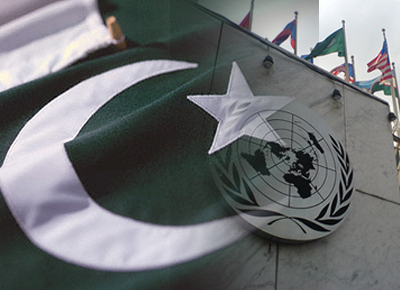
 UNITED NATIONS: Pakistan plans to reconfigure its development pathway that would put the private sector as a growth-driver in an open market environment so as to bring a "qualitative change" to the lives of the people, a senior Pakistani diplomat said Monday.
"We aim to unlock the true potential of the private sector and investment both domestic and foreign as driver of economic growth through introduction of market reforms and competitiveness," Raza Bashir Tarar, deputy permanent representative to the UN, told the General Assembly Second Committee, which deals with economic and financial matters.
Speaking in the general debate on the world economic situation, the Pakistani delegate said that economic reforms were being undertaken despite the ongoing unfavorable global economic situation, domestic security and damages caused by consecutive massive floods during the past two years.
He said that frontier economies continued to suffer volatility in the incoherent global economic-governance architecture and that Pakistan would aim to build flexibility and the policy space required to enhance the abilities of the least developed countries.
A review of Pakistan's development paradigm, Tarar said, had led to a new focus on bringing qualitative change to the lives of ordinary Pakistanis, eliminating reliance on aid and the international economic system, and removing bottlenecks from the internal market.
Welcoming the Secretary-General's 'Sustainable Energy for All' initiative, he noted its timeliness, saying the United Nations system remained vital in helping countries meet the Millennium Development Goals and, most importantly, in maintaining a trajectory in a time of declining resources.
On climate change, the Pakistani delegate said, full agreement could only come about if unresolved issues, particularly the future of the Kyoto Protocol pact, which is aimed at fighting global warming, were addressed.
Outlining Pakistan's support for the green economy, he stressed that greening must be voluntary and based on national circumstances. Implementation would only work in line with the Rio principles, in particular that of common but differentiated responsibilities, he said, proposing an agreement on green policy space.
An agreement in Rio would depend on a viable reconfiguration of the institutional arrangements needed to meet the challenge of sustainable development.
Identifying problems in the current institutional set-up, he emphasized the need to focus on implementation and compliance, adding that to ensure such an outcome, Pakistan, he added, proposed strengthening the United Nations Environment Programme (UNEP).

















Comments
Comments are closed for this article.