



 DUBAI: Inflation in Oman climbed to a 27-month high on an annual basis in July, while the Gulf Arab state's budget surplus widened to 2 percent of economic output in the first seven months of the year on robust oil prices, data showed on Sunday.
Upward price pressures in the small non-OPEC oil producer, whose government faced public protests this year with calls for more jobs and an end to graft, are expected to persist to some degree this year, fuelled by the government's social handouts.
Annual inflation in the sultanate accelerated to 4.6 percent on an annual basis in July, its highest level since April 2009, from 4.0 percent in June, finance ministry data showed.
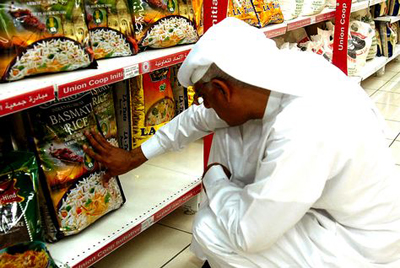
On a monthly basis, consumer prices grew 0.5 percent in July, up from a 0.1 percent increase in the previous month, fuelled by higher food costs.
"Inflation is being driven by the same upward pressure on food prices that we are seeing in other parts of the region," said Simon Williams, MENA chief economist at HSBC in Dubai.
"The numbers may pick up a little further when they capture the seasonal Ramadan effect, but over the rest of the year the pace of price growth is likely to moderate."
Analysts polled by Reuters in June expected Oman's average inflation at 4.0 percent in 2011 after 3.3 percent in 2010 while the central bank forecasts a 4-5 percent range for this year.
Growth in food prices, which make up a third of consumer expenses, remained at 0.4 percent month-on-month in July, while housing costs increased by 0.2 percent. Transport prices fell by 0.2 percent compared with July, the data showed.
BUDGET SURPLUS
Protests prompted Sultan Qaboos bin Said, a US ally who has ruled Oman for 40 years, to promise $2.6 billion in spending in April. He also announced plans to create 50,000 new jobs, among other measures.
However, robust oil prices have been helping the sultanate, which is expected to receive $10 billion in aid from wealthier Gulf neighbours, to stay in the black despite the spending boost.
Oman's budget surplus rose to 442.3 million rials ($1.2 billion) in January-July, the data also showed on Sunday, or 2 percent of gross domestic product according to Reuters calculations, from 386.6 million in the January-June period.
"Government expenditure has been strongly expansionary in Oman with increases in both current and investment spending," said Monica Malik, chief economist at EFG-Hermes in Dubai.
"Oil prices have, however, risen at a much higher pace and we expect the fiscal surplus to widen this year," said Malik, who expects a surplus of 13.7 percent of GDP this year.
Government expenditure stood at 4.7 billion rials in January-July, up 17.8 percent from the same period a year ago, the data showed. The country's finance minister said earlier this month spending should rise to 9.2 billion rials in 2011 from the original 8.1 billion plan.
Oman based its 2011 budget on a projected oil price of $58 a barrel and expected a deficit of 850 million rials. Analysts polled by Reuters in June forecast a surplus of 4.8 percent of gross domestic product in 2011.
The sultanate sold its crude at an average price of $100 per barrel in January-July. Oil fell to six-week lows on Friday as fresh concerns about the euro zone added to the economic gloom.
Copyright Reuters, 2011













Comments
Comments are closed for this article.