



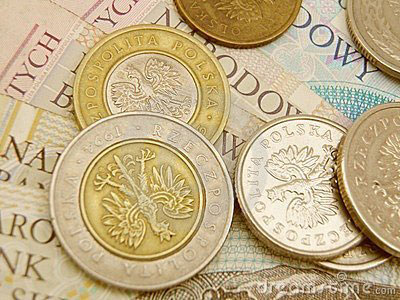
 BUDAPEST/WARSAW: Central European currencies firmed slightly on Friday ahead of a meeting of the Polish central bank where it is not expected to follow Thursday's monetary easing by the European Central Bank.
The zloty firmed 0.3 percent against the euro by 0857 GMT and the forint 0.2 percent, but both units were weaker from levels in the last session before the ECB meeting.
"(The) policy easing by the ECB, by widening the interest rate differential (to Poland's advantage), will be supporting zloty appreciation in the next weeks, granted the MPC (Monetary Policy Council) will keep rates unchanged today," Millennium analysts said in a note.
Poland's 10-year government bond yield dropped 2 basis points to 2.87 percent, an almost 140 basis point spread over Spain's comparative yield.
The ECB's rate cuts and its bond buying scheme make assets in European emerging markets relatively more attractive.
The region's assets initially rose on Thursday, but retreated during ECB chief Mario Draghi's news conference.
"The ECB gave it from one hand and took it away with the other hand," Erste analysts said in a note, referring to Draghi's comment that further rate easing was unlikely.
The Polish central bank is the first in Europe to meet after the crucial ECB meeting.
Analysts in a Reuters poll projected that the Polish bank would keep rates on hold until a hike next year even though rate setters appointed by the new government, which has urged monetary stimulus, have got a majority in the bank.
Investors will closely watch the bank's comments as the region's healthy economic growth can continue to lift the zloty if the bank shows no sign that it would weaken it, market participants have said.
"Here we are thinking about additional conventional and/or unconventional easing in Hungary and Poland, a rethinking of the EUR/CZK cap (in the Czech Republic) or possibly a more aggressive monetary policy stance in Serbia," Raiffeisen said in a note.
Since the Federal Reserve's December rate hike, Serbia has been the only central bank in the region to cut rates. It had to intervene in the market to prevent a dinar slide.
Serbia will hold snap elections on April 24.
While tension rises on the border of neighbouring Macedonia and Greece, with thousands of migrants stranded there, a new uncertainty appeared in Serbia as floods forced the government to declare a state of emergency.
The dinar was flat at 123.38 against the euro.
The leu was also steady.
Romania's annual inflation dipped further into the negative, to -2.7 percent, in February, but that did not trigger concern that the central bank, which expects a surge in wages to lift inflation, will change its hawkish stance.




















Comments
Comments are closed for this article.