


Bangladesh to raise fuel prices to ease deficit

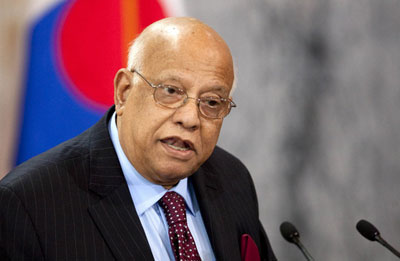 DHAKA: Finance Minister Abul Maal Abdul Muhith said Bangladesh would increase imported fuel prices to reduce losses incurred by the state-run Bangladesh Petroleum Corporation and to rein in an expanding balance of payments deficit.
"We have no alternative but to raise fuel prices to ease pressure on hard-earned foreign exchange reserves and stop further expansion of the balance of payments deficit (BOP)," the minister told Reuters in an interview before leaving meetings in Washington with the World Bank and the International Monetary Fund (IMF).
The decision to raise fuel prices was discussed last week at a cabinet meeting chaired by Prime Minister Sheikh Hasina, who has gone to New York to attend the UN General Assembly meeting.
"We spend more money on importing oil but have to sell it (to domestic consumers) at a lower price, making the state-owned oil importing and distributing agency suffer more losses and bring added pressure to the national budget," the minister said.
He did not say by how much the price may go up or when.
An IMF mission, led by David Cowen of its Asia and Pacific department, visited Bangladesh last week. It asked Bangladesh, at a meeting with Muhith, to adjust oil prices in line with rising international markets.
The IMF said that despite strong export performance, the BOP recorded a deficit in the 2010/11 fiscal year (July-June) mainly because of increased imports of oil, textile and capital goods, and weak aid inflows.
As a result, gross foreign exchange reserves have come down to a little more than $10 billion from a record $11 billion-plus in late 2010.
The BoP swung into a deficit of $635 million in the fiscal year to June, compared with a surplus of $2.87 billion a year earlier, central bank officials said.
"We have sought a $1 billion loan from the IMF to face-down pressure on the BOP," the minister said.
The IMF said that BOP pressures are likely to intensify over the near to medium term because of rising oil import volumes and import-intensive infrastructure investment.
It also stressed the need to contain subsidy costs, as their rapid rise threatens to eat the fiscal space being created by a larger tax take and social and development spendings.
Bangladesh will have to spend $6.17 billion on importing oil in the 2011/12 fiscal year, more than double the previous year, as it buys more fuel at higher cost to fire up new power plants aimed at easing electricity shortages.
Muhith said that fuel imports would increase mainly due to the setting up of about 30 oil-operated power plants.
He said that in the last two and half years, the oil price has nearly tripled in international markets. In December 2008, oil was $34 a barrel, but now it is between $103 and $104.
"We face a number of risks in our economy this year and before raising the oil price we will consider those risks," the finance minister said without explaining.
He said the budget deficit in the current fiscal year could exceed a projected 5 percent if a huge oil subsidy is needed.
The bigger subsidy might force the government to borrow more money from the banking system and that may fuel inflation.
"If we do not adjust oil prices, the subsidy may be more than $2.1 billion for fuel import alone in this fiscal year," the minister said.
Copyright Reuters, 2011













Comments
Comments are closed for this article.