



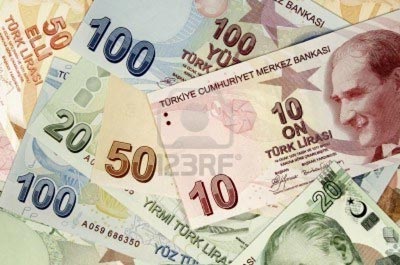
 ISTANBUL: The Turkish lira weakened on Monday in line with global dollar strength and on investor concern that the June 7 parliamentary election will produce political instability and possibly a coalition government.
Sentiment was also undermined by the state seizure of Islamic lender Bank Asya on Friday and data on Monday that showed exports slid 19 percent in May.
The lira fell 0.73 percent against the greenback at 2.6836 at 0851 GMT, bringing losses this year to 13 percent, one of the weakest performances among major emerging market currencies.
"Uncertainty over the general election outcome may lead to negative sentiment toward Turkish assets continuing this week," said Erkin Isik, a strategist at TEB-BNP Paribas, predicting a weakening trend for the lira towards its April lows.
The lira outperformed in mid-May on expectations of the election producing a one-party AK Party government but without a super majority needed for President Tayyip Erdogan to boost his powers.
However it has since edged back towards the record low of 2.7435 per dollar hit on April 24.
Analysts also weighed up the 19 percent slide in May exports, which reflected euro depreciation against the dollar, protests in the auto industry and bad weather.
"Government officials were expecting exports to start recovering in April/May, but it appears that the recovery could take a little bit longer than desired," said BGC Partners chief economist Ozgur Altug.
Markets were concerned after Turkish authorities took over Bank Asya on Friday, the Islamic lender caught up in a feud between Erdogan and U.S.-based Muslim cleric Fethullah Gulen.
The main share index fell 1.17 percent to 82,011.29 points. Bank Asya shares are not regularly traded, having been moved to the bourse's watch list market last September, where companies are kept under surveillance.
The benchmark 10-year bond yield rose to 9.28 percent from 9.19 percent on Friday.
Despite the downturn in exports, separate data showed a slight improvement in Turkish business conditions, with HSBC's Purchasing Managers Index breaking above the "no change" mark for the first time since December.
That represented a "glimmer of hope" for the Turkish economy, William Jackson of Capital Economics said in a note to clients.
However, he said signs of rising price pressures were "worrying" and signalled that inflation was more likely to rise over the next 18 months.

























Comments
Comments are closed for this article.