



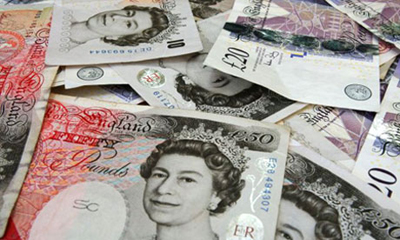
 LONDON: Sterling sank below $1.56 on Tuesday, hitting a one-week low as the dollar rebounded and data showed UK consumer prices fell last month from a year ago, the first annual decline since 1960.
Two days of gains for the dollar, on its worst run in four years since mid-April, have curbed a rally for sterling that followed a victory for Prime Minister David Cameron's Conservatives at elections on May 7.
The market broadly favours Cameron, but his promise to further cut public spending holds risks for economic growth and may further delay any rise in domestic interest rates.
The fall in consumer prices -- a 0.1 percent decline versus forecasts for no change -- bolstered expectations the Bank of England will hold off raising rates until well into next year.
"Pretty disappointing numbers, and they are a negative for sterling for sure," said Alvin Tan, a strategist with Societe Generale in London.
"But it is the euro that's borne the brunt of things this morning, and sterling is just a reflection of that to a certain extent, although the inflation numbers have added to the weakness."
British government bond futures extended gains by more than 10 ticks after the data to reach a session high of 117.93, up 81 ticks on the day.
The pound also fell against the euro after the data. But after earlier gains, it was still up almost half a percent on the day at 72.00 pence per euro. By 0954 GMT, it was trading 0.8 percent lower at $1.5536.
Overall, the outlook for the UK economy remains better than expectations for its European peers. Retail sales numbers later in the week may swing the focus back in that direction.
"While the pound dropped on the news (on inflation), it wasn't as sharp as it could have been," said Jake Trask, a corporate dealer at online retail broker UKForex, arguing that a short spell of deflation would help consumer spending power after years of below-inflation pay rises.

























Comments
Comments are closed for this article.