



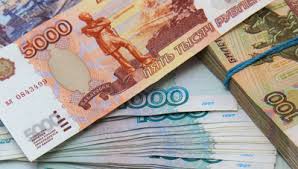
 MOSCOW: The rouble fell for a second day on Wednesday on fading hopes that OPEC will agree to cut oil output and as foreign-currency sales dried up after exporters finished paying a major tax to the state budget.
At 1130 GMT, the rouble was around 1.2 percent weaker against the dollar at 46.81 and 1.3 percent weaker at 58.29 versus the euro.
Traders said market moves were exacerbated by thin trading, meaning even small purchases of foreign currency were capable of moving the market sharply.
"There's practically no foreign currency offer at the moment. In the morning there was some but it was bought up. After foreign currency dipped for tax payments it started to be bought up at lower levels," said Dmitry Deev, a currency trader at Credit Suisse. Russian exporters on Tuesday finished paying the mineral extraction tax, one of the main monthly taxes for which they convert export earnings in dollars into roubles.
"A reduction in expectations that OPEC will cut production has been added to this," Deev said. Members of the Organization of Petroleum Exporting Countries (OPEC) meet in Vienna on Thursday to discuss a possible cut in output to bolster prices, which have fallen some 30 percent since the summer. Russia is not an OPEC member.
Analysts say the results of the meeting could have a major impact on the rouble. Russia relies on oil and gas for about two-thirds of its exports so swings in their prices have a big impact on its balance of payments.
On Wednesday, oil benchmark Brent was broadly flat at $78.30 a barrel but not far off a four-year low. Russia sees an average oil price of $80-90 per barrel in the medium- and possibly long-term, Finance Minister Anton Siluanov said on Wednesday, a day after talks between Russia and other oil powers yielded no agreement on how to address a growing oil glut. Stocks fell.
The dollar-based RTS index was down 2.6 percent to 1,027 points while the rouble-based MICEX was 0.2 percent lower at 1,526 points.


























Comments
Comments are closed for this article.