



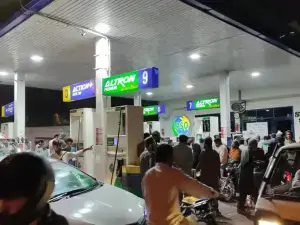
As if the electricity woes were not enough, the countrymen faced tough days last week -- battling to get their fuel tanks filled with gasoline - which turned out to be either a rare commodity or an expensive one. The gasoline shortage still persists in some parts of the country, although the extent of the issue has eased at large.
Whos to blame is the big question. And the answer isn the easiest to find as stakeholders blame each other for the fuel shortage. Complacency on the governments part played a huge role in the fuel shortages reaching ugly levels. There appears to be a visible lack of coordination amongst the stakeholders - that needs to be addressed on priority basis. The Attock Refinery, whose plant shutdown for maintenance significantly reduced local petrol production, had reportedly informed the government about the plants non-availability for the period. The government should have realised the gravity of the issue on hand, but it rather took the traditional route of letting the problem grow steeper.
The government could have averted the crisis-like situation had it paid heed to the refineries notices. Considering the problems that the refineries face when it comes to capacity utilisation, arrangements for timely import consignments should have been made. Ogra has instead issued notices to refineries asking for reasons of less than optimal production.
And the refineries for that matter have the ground well covered. Gasoline production is fast becoming a loss-making job at most of the refineries and the persistent circular debt problem is only making matters worse. Despite periodic money injection, the circular debt still stands firm and strong as Dr. Asim Hussain himself acknowledged it to have ballooned to unimaginable high levels of Rs421 billion (on aggregate basis).
The refineries often fall short of cash to run their day to day operations that often results in less than optimal efficiency and delays in oil imports. The circular debt, unfortunately, shows no signs of receding anytime soon despite repetitive claims from the government of working towards eradicating it.
The role of OMCs is of more critical importance in this case as they are supposed to maintain a minimum 20 days reserve stock in case of emergency, in the name of strategic reserves. Ogra has issued notices to the OMCs, as there was an abject failure on OMCs part to showcase their reserve stock when it was most needed.
Whether or not, the reserve stock is meant only for warlike situation needs more clarification, but the government could have urged the OMCs to bridge the supply shortage, had it acted more timely. Some circles also blame the refineries and the OMCs to have deliberately created the situation in order to get their demands fulfilled. For the sake of better transparency, these allegations require an inquiry into the matter. In order to avert such a situation to surface again, the government should take concrete steps to eliminate the circular debt spiral and should also move towards deregulating the petroleum chain to get more efficiency.















Comments
Comments are closed for this article.