



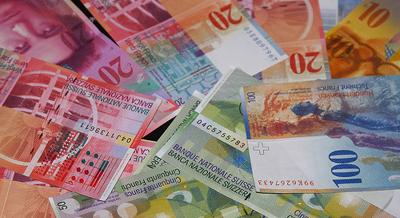
 LONDON: The Swiss franc rose to its highest in nearly 21 months against the euro on Thursday, triggering speculation that the Swiss National Bank may intervene soon to keep a lid on the currency and ward off the threat of deflation in Switzerland.
The franc has been rising steadily this month, partly due to safe-haven flows given the conflict between Russia and Ukraine.
Momentum has picked up in recent days as more investors sold the single currency after European Central Bank President Mario Draghi said last week that the bank was prepared to respond with all its available tools should inflation drop further.
That has led markets to speculate that the ECB may resort to asset purchases, or quantitative easing, sooner rather than later, leading to a drop in euro zone yields and diminishing the euro's allure.
The euro fell to 1.20545 francs on trading platform EBS, its lowest since early December 2012 and down 0.1 percent on the day. It has lost nearly 1 percent so far this month, on track for its biggest monthly loss since early 2013.
A sustained drop in the euro could test the SNB's three-year old pledge to cap the franc at 1.20 francs per euro.
"The likelihood of the ECB taking further measures is increasing, should long-term inflation expectations fall further," said Esther Reichelt, currency strategist at Commerzbank.
"This is exerting downward pressure on euro/Swiss franc. So long as such speculation persists, it will be difficult for it to recover on a sustained basis."
Analysts said a further drop in the euro may see the SNB intervene in the currency market or take other measures. Options include lifting the cap to 1.25 francs per euro from 1.20 to weaken the currency or impose negative rates at its September meeting.
"With rates at the zero lower bound and an illiquid bond market limiting the SNB from doing quantitative easing, the main monetary policy tool would be to raise the euro/Swiss franc floor," Morgan Stanley analysts said in a note.
"While this is not our base case for the September meeting, the floor could form an increased part of the monetary policy debate."


























Comments
Comments are closed for this article.