


Won, ringgit down on euro uncertainty; Greek vote eyed

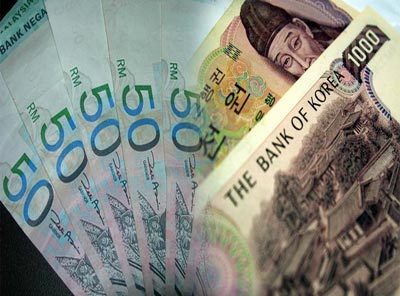 SINGAPORE: Emerging Asian currencies on Friday shrugged off gains in other markets after Greece clinched a deal with lenders to plug a looming funding gap, with the South Korean won and the Malaysian ringgit suffering from dollar-short covering.
The euro remains vulnerable to any negative news from Greece, putting pressure on emerging Asian currencies, while worries about the slowing US economy are weighing on the dollar.
"Markets have no strong convictions. European sovereign worries will linger for sure, and the Fed didn't offer much clarity in its policy path beyond this year," said Andy Ji, Asian currency strategist at Commonwealth Bank of Australia in Singapore.
Greece reached a deal with international lenders on Thursday on an austerity plan which would allow it to get closer to much-needed financial aid in July.
But the austerity plan, which includes deep spending cuts and more tax hikes, still needs to be approved by the Greek parliament next week, and the emergency funding would only be enough to tide Athens over until September unless the European Union can cobble together a second rescue package.
"More importantly, the market is eying contagion risk beyond Greece through bank holdings of Greek debts," Ji said. "The stress testing of European banks that are being conducted right now will be truly stressful for EUR and general risk sentiment."
Emerging Asian currencies have suffered from profit-taking in recent weeks as heightened concerns over the euro zone's debt crisis and a slowing global economy drove investors out of riskier assets.
But some market watchers are now expecting a rebound, citing views that the European Union will eventually have to inject money into Greece.
"I have started to turn my view from risk aversion to risk seeking from now till July because I think that the EU and Greece will eventually roll over Greek debt because Greece is 'too big to fail'," said Kenneth Kan, head of emerging markets forex trading at Credit Agricole Corporate and Investment Bank in Singapore.
"There is still the risk of the USD gaining ground after QE2 ends but I think that it will be an August trade so would rather focus on Greece for now."
WON
The won eased as investors covered dollar-short positions and on importers' dollar demand.
But the South Korean currency recovered some falls on exporters' demand for settlements and as it found a support around a 20-day moving average of 1,081.3 per dollar.
Foreign investors also turned to net buyers of Seoul shares.
An economist said the won is expected to find further support from bond inflows in the longer term.
"Foreigners' bond investments would increase more as long as China's reserves grow. Foreign central banks are already buying many Korean bonds," said Cho Jaesung, an economist at Shinhan Bank in Seoul.
The won rose 0.7 percent against the dollar for the week as a central bank in central Asia bought it earlier this week to buy the country's bonds.
It is the best performer among emerging Asian currencies with a 5.2 percent gain versus the greenback so far this year.
SINGAPORE DOLLAR
The Singapore dollar weakened past 1.2367 per US dollar, the 38.2 percent Fibonacci retracement level of its rises between May and June pressured by offers from US investment banks and European names.
A weaker-than-expected industrial output data also put pressure on the currency.
Still, the city state currency stayed firmer than a 55-day moving average of 1.2378.
If the Singapore dollar ends the day softer than the 3.2 percent retracement and the 55-day moving average, it has room to weaken more, probably to 1.2399, the 50 percent retracement.
The baht threatened to weaken past 30.69 per dollar, the 61.8 percent, retracement of its strengthening trend between January and April, on gold investors' dollar demand to buy gold on dips.
If the level is clearly broken, the Thai currency may head to 30.73, the low of June 16.
The baht, the worst performer among emerging Asian currencies so far this year, has been under pressure from worries about global risk aversion and domestic political uncertainty.
"It could rise a little further and the gains would accelerate with lower gold prices," said a Bangkok-based dealer, adding gold investors are likely to buy more gold on dips.
Gold investors usually buy gold on dips and sell on rallies, the dealer said.
Gold is headed for its worst week since a commodity-wide rout in early May.
PESO
The Philippine peso rose on Fitch's upgrade of sovereign rating but gave up some of rises on worries about the Greek debt crisis.
The peso also found resistances at 43.36 per dollar, around the 50 percent retracement level of its gains between late May and early June.
Copyright Reuters, 2011
















Comments
Comments are closed for this article.