



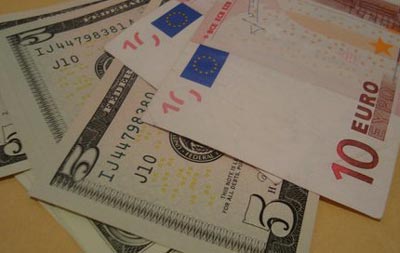
 NEW YORK: The euro edged higher from a six-week low against the dollar on Monday after data showed manufacturing in the euro zone accelerated last month, but gains were limited by speculation the European Central Bank may soon cut interest rates.
Traders said the euro could stay under pressure before the ECB's policy meeting on Thursday.
Plunging inflation in the region has led a growing number of banks, including UBS and RBS, to forecast a cut in the refinancing rate as soon as this week.
"European manufacturing PMIs show marginal improvement but (the data) doesn't alleviate concerns of a dovish ECB later in the week," said Scott Smith, market analyst at Cambridge Mercantile Group.
The euro gained 0.3 percent to $1.3522, after a survey showed the manufacturing Purchasing Managers' Index rose to 51.3 from September's 51.1, in line with an earlier flash reading and with the consensus forecast of economists.
Earlier, the euro fell to $1.3441, according to Reuters data, its lowest level since Sept. 18 and well below a two-year high of $1.3832 struck on Oct. 25.
The drop in the euro, which shed more than 2 percent last week, triggered a rush to hedge against further weakness.
One-month euro-dollar implied volatility, a gauge of how choppy a currency is expected to be, jumped to 7.525 percent.
Manuel Oliveri, FX strategist at Credit Agricole, said the ECB is unlikely to cut the refinance rate this week, but given the downside risks to inflation from a stronger currency, ECB chief Mario Draghi may flag a cut in the deposit rate, which would be negative for the euro.
A cut in the deposit rate, at which banks park excess cash with the ECB, to negative territory would make holding the euro expensive and force investors to sell it.
It would also make the euro a funding currency for carry trades, in which investors borrow in a cheap currency to buy a higher-yielding one.
The euro's bounce nudged the dollar index down from a six-week high of 80.930 hit in Asia, the strongest since mid-September. It last stood at 80.531, down 0.2 percent on the day.
The dollar had risen in Asia after comments from Dallas Federal Reserve Bank President Richard Fisher.
Speaking at a conference of business economists in Sydney, Fisher said he was concerned that corporate credit spreads have narrowed too much and added that he does not see the Fed's balance sheet rising to $6 trillion or more.
Against the yen, the dollar slipped 0.1 percent to 98.58 yen. Data on Monday showed orders for a wide range of US-made capital goods sank more than previously estimated in September, a sign companies cut their investment plans sharply as Washington hurtled to the brink of default.
But other data suggested factory activity accelerated in October.
The Australian dollar edged higher, supported by stronger-than-expected retail sales. It rose 0.7 percent to $0.9507, edging away from Friday's three-week low of $0.9421.




















Comments
Comments are closed for this article.